

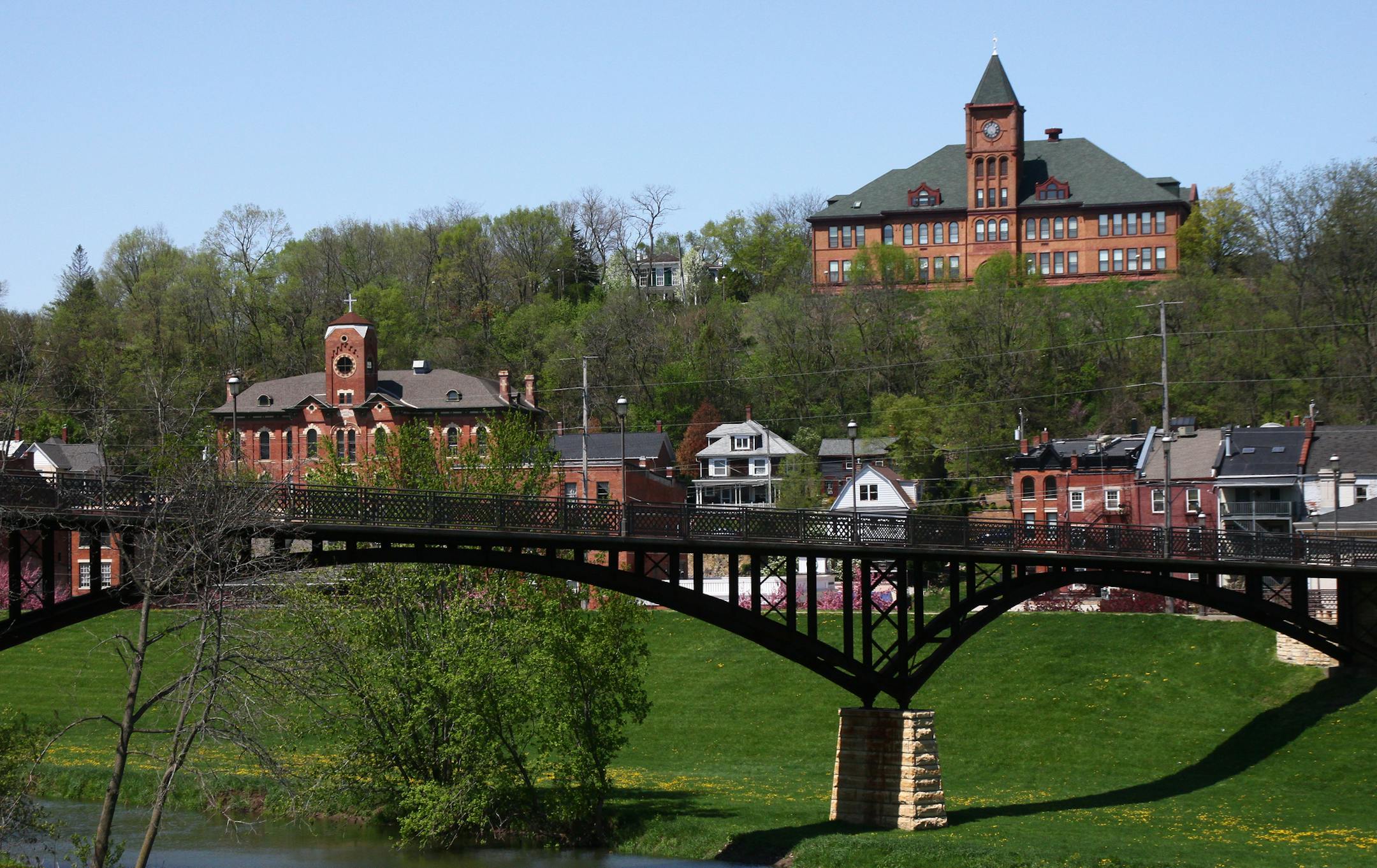
Settled in a velvet armchair in the formal parlor of a mansion-turned-museum, I stared into the darkened dining room beyond and waited for Galena's past to collide with its future.
Then Galena's favorite couple — Ulysses S. Grant and his wife, Julia — materialized from the dining-room shadows and proudly welcomed me to their historic town, he in uniform, holding his trademark cigar, she in a long, bell-skirted gown.
They're holograms — life-size, 3-D holograms — projections more suited to "Star Wars" than the Civil War. Brainchildren of the Galena and U.S. Grant Historical Museum, they're symbolic of other 21st-century changes underway in this nearly 200-year-old community in Illinois' northwest corner.
Galena is going green, as green as the green shutters that grace so many of its handsome 19th-century homes. And it's doing it without fanfare.
Visitors invariably hear a lot about Grant, who left for the Civil War from here. But no tourist trolling the Main Street shops is likely to hear about — let alone visit — the gleaming 1,440-panel solar array that powers the town's new sewage plant.
I've always been fond of the Grants, but I am way beyond fond of Galena itself. When it comes to this little town, I'm flat-out biased, so watching it embrace modern technology — without losing its Victorian charm — has been a treat.
I fell in love with Galena 40 years ago, on an assignment to cover a Civil War re-enactment for the Star Tribune. It was dusk when I drove into town, and the redbrick canyon that is Galena's Main Street was wall-to-wall with off-duty blue and gray.
I felt as if I'd stepped into history. After more visits than I can count, I still feel that way.


