

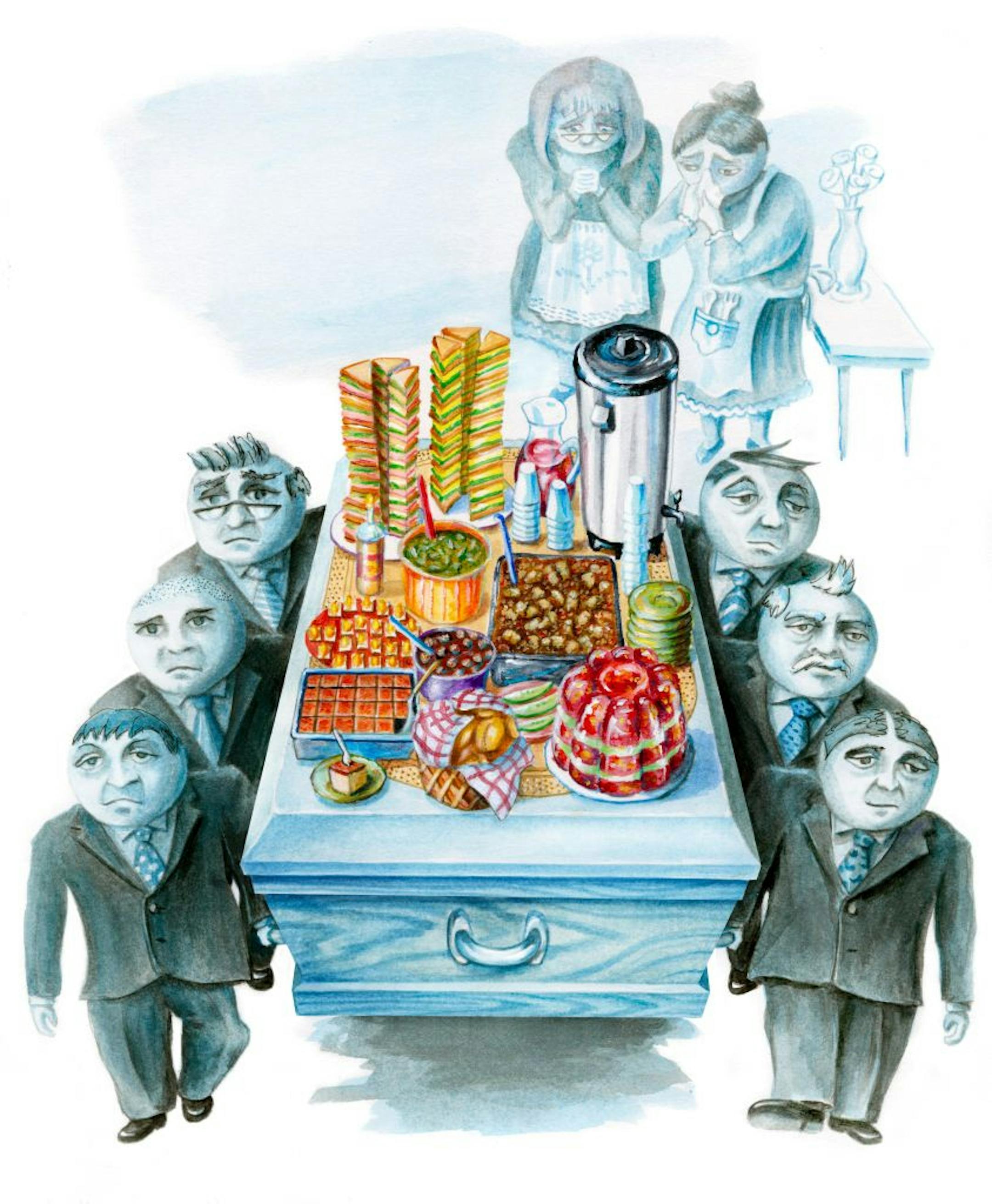
Funeral food was as heavy as it was predictable where Janet Letnes Martin grew up in rural North Dakota. "We had to feed the men who came in from the fields for the service," she said. The co-author of the books that have been adapted into the long-running "Church Basement Ladies" musicals, Martin remembers the standard spread, the handiwork of bustling Lutheran matrons."We always had hot dish, pickles, red Jell-O and cake. Sandwiches. Minced ham on white, egg salad on wheat and Cheez Whiz with olives on rye."
Now 65, Martin is surprised by what is served at funerals she attends.
"Salads!" she exclaimed. "They are into trendy food in the Cities."
In the Upper Midwest, a post-funeral feed has long been expected. It provides a time for attendees to offer one-on-one condolences to the grieving family, and for relatives to extend their thanks to those who came to pay their respects.
But the tradition is in transition. While old-school funeral food remains deeply lodged in Minnesota's DNA, a rising number of funeral meals are prepared and served by a caterer rather than a lady in an apron in a fellowship hall.
One reason is a dwindling number of volunteers on church funeral committees, those invariably female workers ready to spring into action on short notice and spend half a day cooking, serving and cleaning up. Longtime workers are aging and not always being replaced by their daughters.
"We have a strong human need to be together when there's loss," said Bob Albers, distinguished visiting professor of pastoral care at United Theological Seminary in New Brighton. "Fellowship can be a time of healing. But churches are grappling with the issue of volunteerism. Women used to look for things to do during the day. Now they're working. They're not unwilling; they simply don't have time for that kind of service."
At the same time, heightened standards for taste and quality have diminished the regard some hold for classic fare.


