

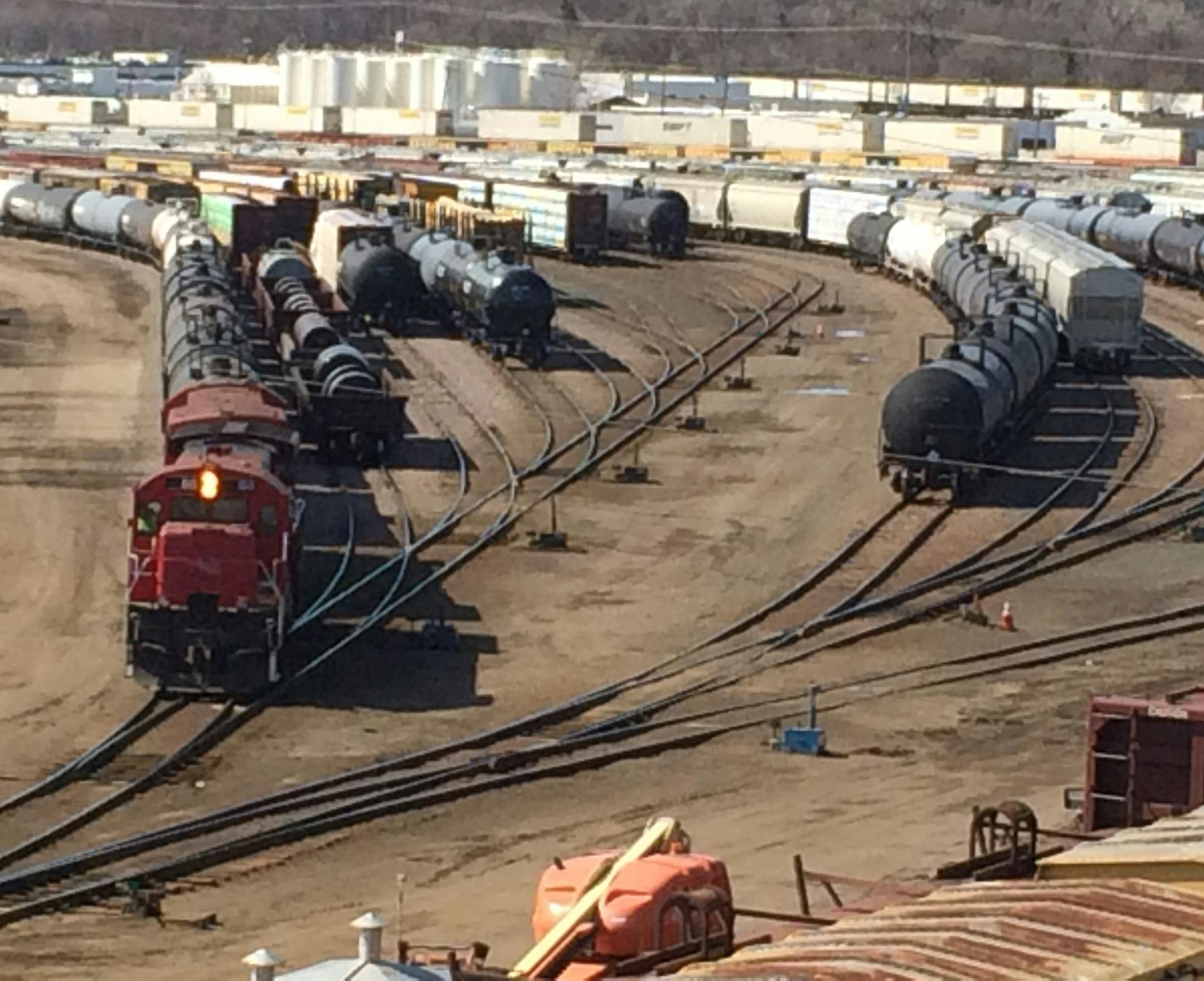
On a dead-end street in St. Paul, Susan Juaire runs a home day care with a scenic overlook of boxcars, locomotives and railroad tracks. Though she doesn't like it, Juaire has gotten used to the constant noise of shipping containers being loaded between trucks and trains.
She can't say the same thing about the long lines of tank cars that roll by daily, without stopping.
"It makes you wonder," she said. "You never know totally what's in there."
Her husband, Barry, thinks they ought to have a way to find out. It doesn't take much for a train to derail, he said. "If they've got something hazardous there that could blow up the whole neighborhood, I'd like to know that, and what safety precautions they have."
Good luck with that.
Through public websites, the Juaires can learn about plenty of other potential hazards in their neighborhood. They can find out that Magellan Midstream's petroleum pipeline runs through Roseville, and that Northern States Power's natural gas pipeline roughly follows Rice Street. They can identify the exact locations of dozens of contamination sites, hazardous waste generators, tank farms and pollution permits, including BNSF Midway Hub's state hazardous waste permit three blocks west and the city-owned underground petroleum storage tanks just across the tracks.
What they can't know in any detail are the hazards rolling on tracks through the Midway every day. There are no websites listing the types and frequency of shipments, or even the top hazardous cargoes. Because terrorists might use that information, it's classified under post 9/11 federal rules as "security sensitive," available to emergency managers and firefighters, who must promise not to share it with anybody else.
In other words, when it comes to hazardous rail freight, the public just has to have faith.


