

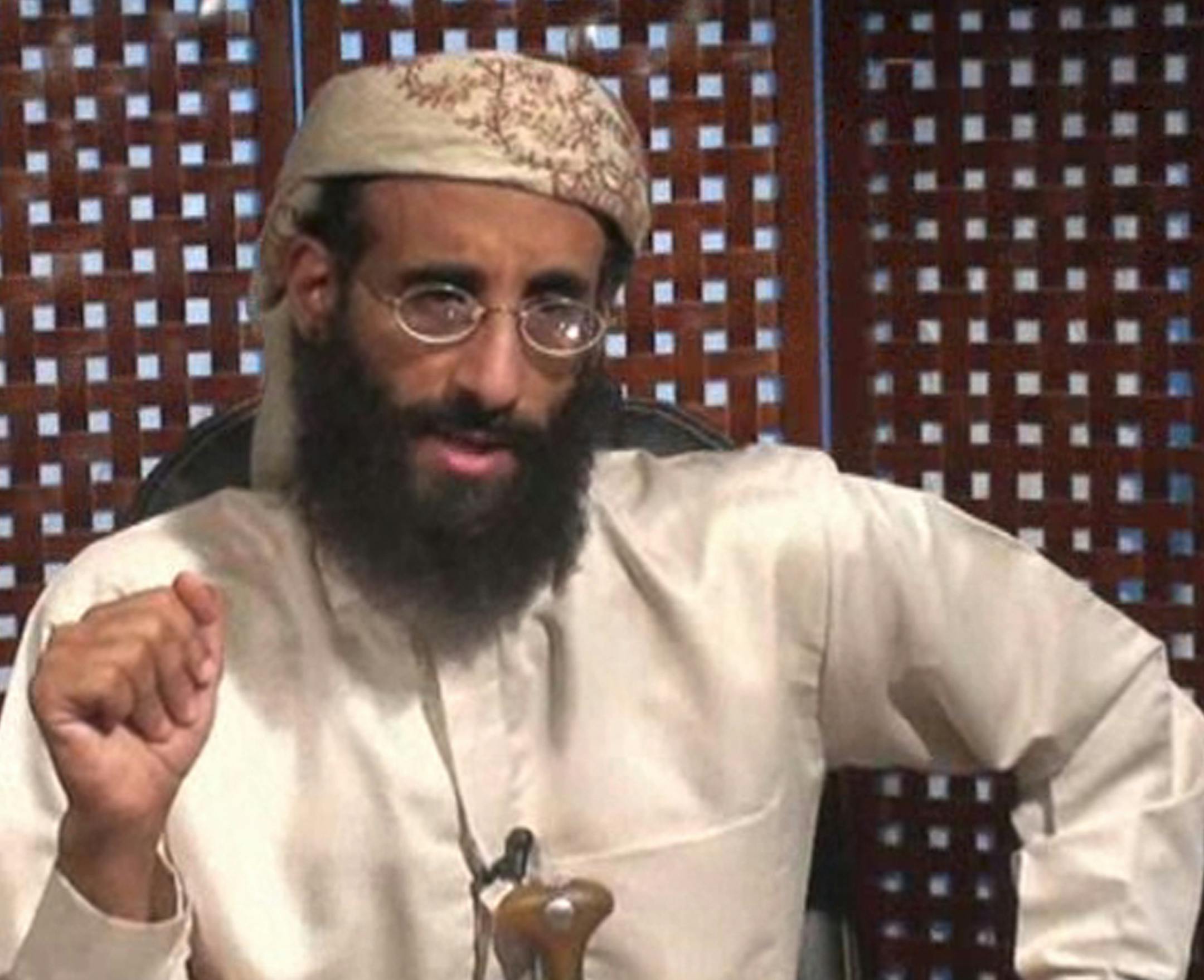
The death warrant for an American-born terrorist carried an innocuous title.
"Applicability of Federal Criminal Laws and the Constitution to Contemplated Lethal Actions Against Shaykh Anwar al-Aulaqi."
That memo, written in July 2010 by a U.S. Department of Justice lawyer, gave the Pentagon and the CIA legal backing for the drone-fired missile that killed al-Awlaki, also known as al-Aulaqi, in Yemen in September 2011. The fact that the public is finally reading it now shows both what's good and what's bad about the law that's supposed to keep government from operating in secret.
Starting in 2010, news organizations and nonprofit groups filed Freedom of Information Act requests for the memo. In late June, a federal judge ordered the memo's release, handing victory to the American Civil Liberties Union and the New York Times.
"These are memos that our government uses to support the fact that they can kill U.S. citizens without what most people view as full due process," said Eric Ruzicka, a Minneapolis lawyer with Dorsey & Whitney and part of the team representing the ACLU. "It concerns me when our government has processes that are not open. We aren't a government of secret laws."
Born in New Mexico in 1971, al-Awlaki was a Muslim preacher seen as a moderate after the 9/11 attacks who turned against his native country and became a leader of Al-Qaida of the Arabian Peninsula. Before his death, al-Awlaki was already well-known from media reports for his role in the failed 2009 attack on a Northwest Airlines jet by the "underwear bomber," as well as his communications with Fort Hood shooter Nidal Hasan, who killed 13 people in 2009, and the would-be Times Square car bomber in 2010.
Ruzicka estimated that his firm logged more than a thousand attorney hours pursuing the FOIA litigation. What emerged in June, on the order of the U.S. Court of Appeals for the Second Circuit, was a memo scrubbed of any details of the case against al-Awlaki, but still offering insight into how the Obama administration justified the assassination of an American citizen overseas.
Written by David Barron, then a lawyer with the Justice Department's Office of Legal Counsel, the memo was tailored to al-Awlaki's individual circumstances. An attack on him was allowed under Congress' post-9/11 authorization of military force, and his capture was "infeasible at this time," Barron wrote. The memo then describes how his killing would not amount to a war crime or be barred by the Fourth or Fifth Amendments.


