

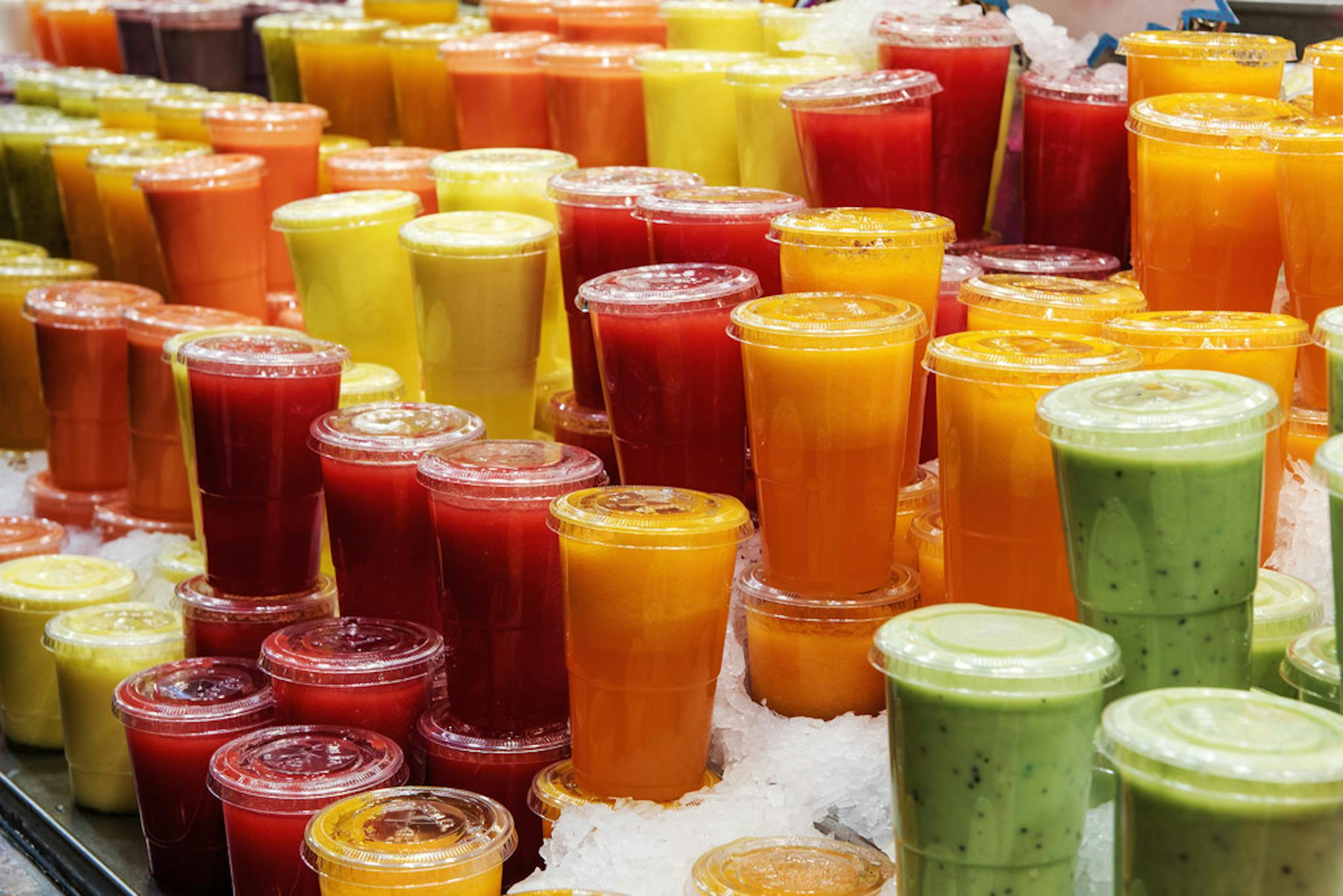
Drinking soda doesn't just threaten to make us fat, it could be linked to a higher risk of cancer, judging from a new study. But here's the more surprising part: so could fruit juices.
Increased daily consumption of about 3.4 ounces of soda — roughly a third of a can of Coke — was associated with an 18% greater risk of some cancers in a study published in the British Medical Journal. The likelihood of breast tumors alone rose even more, by 22%. When people drank the same amount of unsweetened fruit juice, they were also more likely to develop cancer, the researchers found.
The research, part of an effort in France to investigate links between nutrition and health, is one of the first to find a connection between sweet drinks and cancer. "All beverages — either with sugar or without — are safe to consume as part of a balanced diet," the American Beverage Association said. Beverage companies are providing more choices with reduced or no sugar, smaller package sizes and clear calorie information, the industry group said.
The researchers tracked 97 beverages and 12 artificially sweetened ones. The correlations they found don't necessarily mean the beverages alone lead to cancer. The study didn't seek to understand the reason for the link, though the researchers speculated that sugar's effect on visceral fat, blood-sugar levels and inflammation may play a role. Additives found in sodas and pesticides in fruit could also have an impact, they wrote.
"These data support the relevance of existing nutritional recommendations to limit sugary drink consumption, including 100% fruit juice," the authors wrote.


