

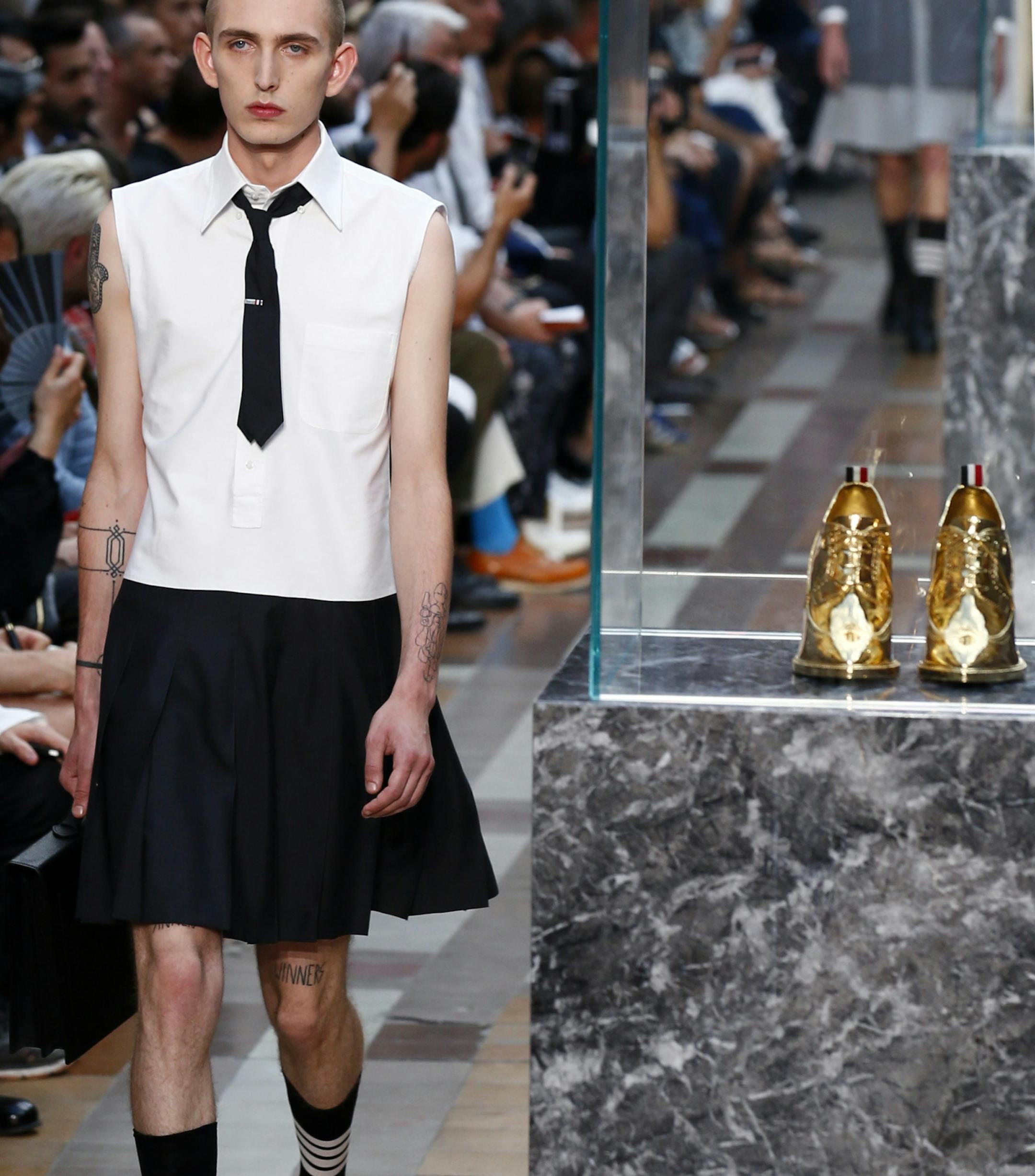
What's the difference between men's and women's clothing? These days, the lines are blurred.
On runways around the world, designers are shaking up long-held societal and sartorial views of who should wear what. Take luxury designer Thom Browne. For his spring/summer 2018 men's collection, the native of Allentown, Pa., re-envisioned the traditional men's suit with high and low skirts.
"You start one way as a baby, but why shouldn't you be able to choose your own path as opposed to culturally people telling you which way to go?" the designer told Women's Wear Daily. "It's about being open-minded to experience life the way you want it."
Gucci creative director Alessandro Michele has infused his collections with pieces for men and women that are a hodgepodge of colors, textures, prints, fits and refreshed silhouettes. The message: Beauty is beauty — regardless of gender.
Some mall brands and fast-fashion stores have joined the gender-fluid conversation. This spring, Swedish retailer H&M released a 19-piece unisex denim line made with organic and recycled cottons. At HM.com, hoodies, simple shirts, frayed shorts and more are pictured on both a male and female model and sized XS through L. Last year, Spanish clothing retailer Zara rolled out a 16-item gender-neutral collection of T-shirts, sweatshirts, denim basics and Bermuda shorts called Ungendered.
In 2015, Minneapolis-based Target announced that it would begin phasing out gender-based signage for toys, bedding and other departments. It kept them for size-related items such as clothing but aims to offer balanced gender options.
In June, Arizona State University Prof. Kate Hinde sparked a Twitter storm when she moved NASA graphic tees from Target's boys department to the girls department and tweeted a photo of it, driving home the message that girls can be scientists, too. Target responded by saying that it also sells NASA shirts for girls (although others noted that they were hard to find near the back).
"I don't think it's a fad. I think it's cultural," says Mary Wilson, assistant chairwoman for fashion design art at the Fashion Institute of Technology in New York City. "I think it's an evolution of society itself. Look at how we're almost becoming genderless in terms of identity outside of clothing. So maybe sooner than later we'll be looking at each other as individuals and not as segmenting who we are by what we're wearing."


