

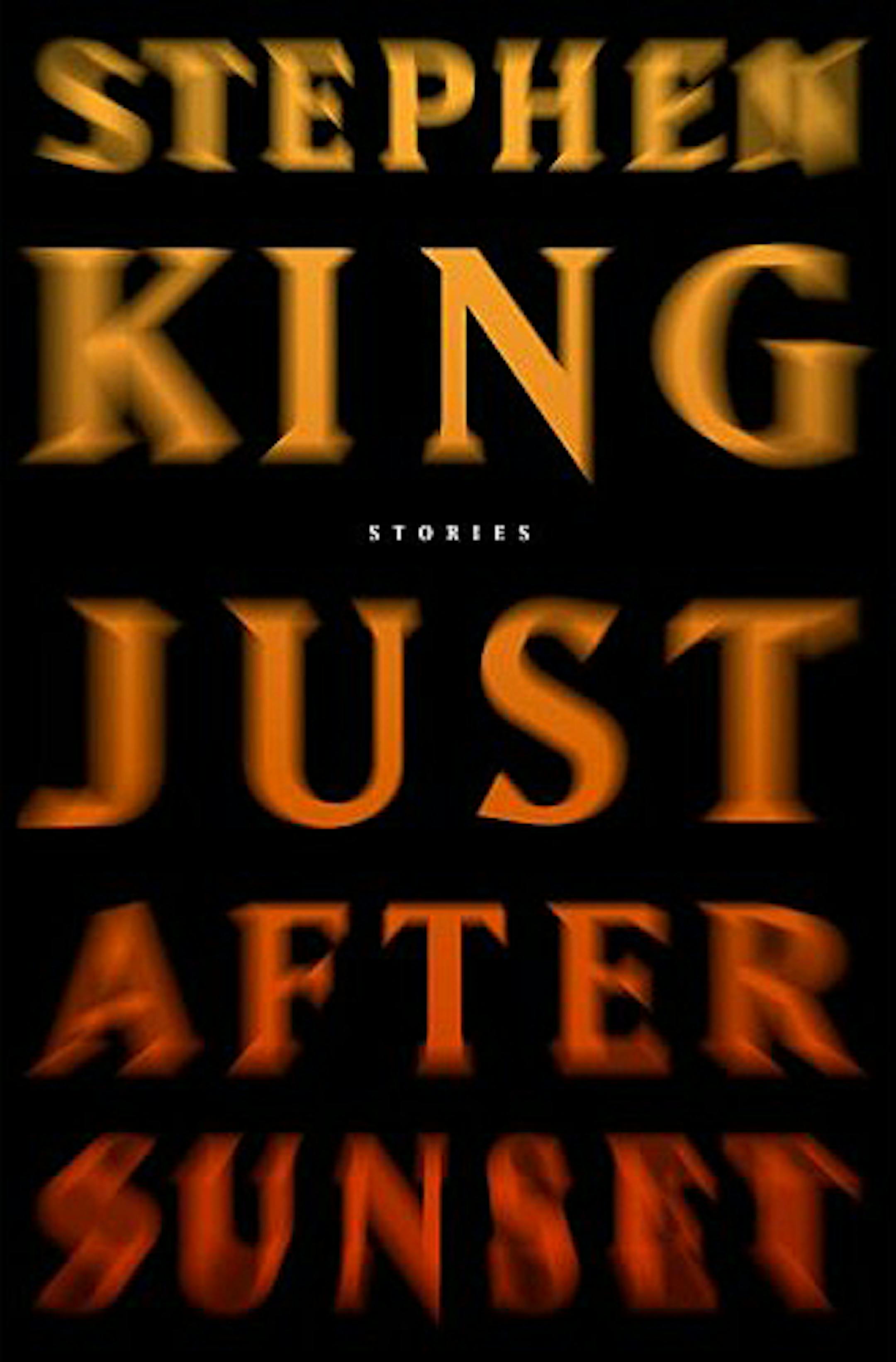
Before Stephen King became the franchise he is, in the early 1970s, he was a high school English teacher who supplemented his meager earnings by writing short stories for now long-dead magazines: Cavalier, Dude, Adam. But as he became successful, he focused more on the novels that regularly vaulted him to the top of bestseller lists.
There were still forays into short fiction -- most recently, "Everything's Eventual," a collection published six years ago. But it wasn't until he was asked to edit "Best American Short Stories 2007" that his enthusiasm for the genre was rekindled.
The result of that enthusiasm is "Just After Sunset," a collection of 13 short stories of uneven quality. And as King fans know, uneven means that some are very good, some are wonderful and the rest are exceptional. If this kid ever finds his stride, he may yet make something of himself.
What I find remarkable is how varied they are in theme. Some deal with the afterlife ("The New York Times at Special Bargain Rates" and "Willa"), some with ESP ("Harvey's Dream") and some with the need to stand up to evil ("Rest Stop").
The last is one of my favorites. In it, a writer is in a lonely Florida rest stop restroom when he hears a couple arguing in the ladies' room next door. It's late at night. No one else is around. The nearest cop may be miles away. And before long, the argument turns violent and it becomes obvious that the woman is being hurt.
What to do? He can ignore it and go about his business, or he can act. It is a simple morality play, but one that has ramifications from here to, say, the Sudan.
Another favorite is "The Things They Left Behind," about a man who felt survivor guilt because he called in sick on Sept. 11, 2001, from his job in the World Trade Center. Mementos from his co-workers' desks turn up in his apartment and keep him awake with their constant indecipherable chatter. He finds peace when he returns them to his former colleagues' loved ones, memories for them to cherish.
What ties all these stories together is King's consummate skill. He knows how to press the buttons that release the demons that we all struggle to keep hidden. In fact, as he notes in an afterword, he writes many of his stories "to pass on what frightens me to you."


