

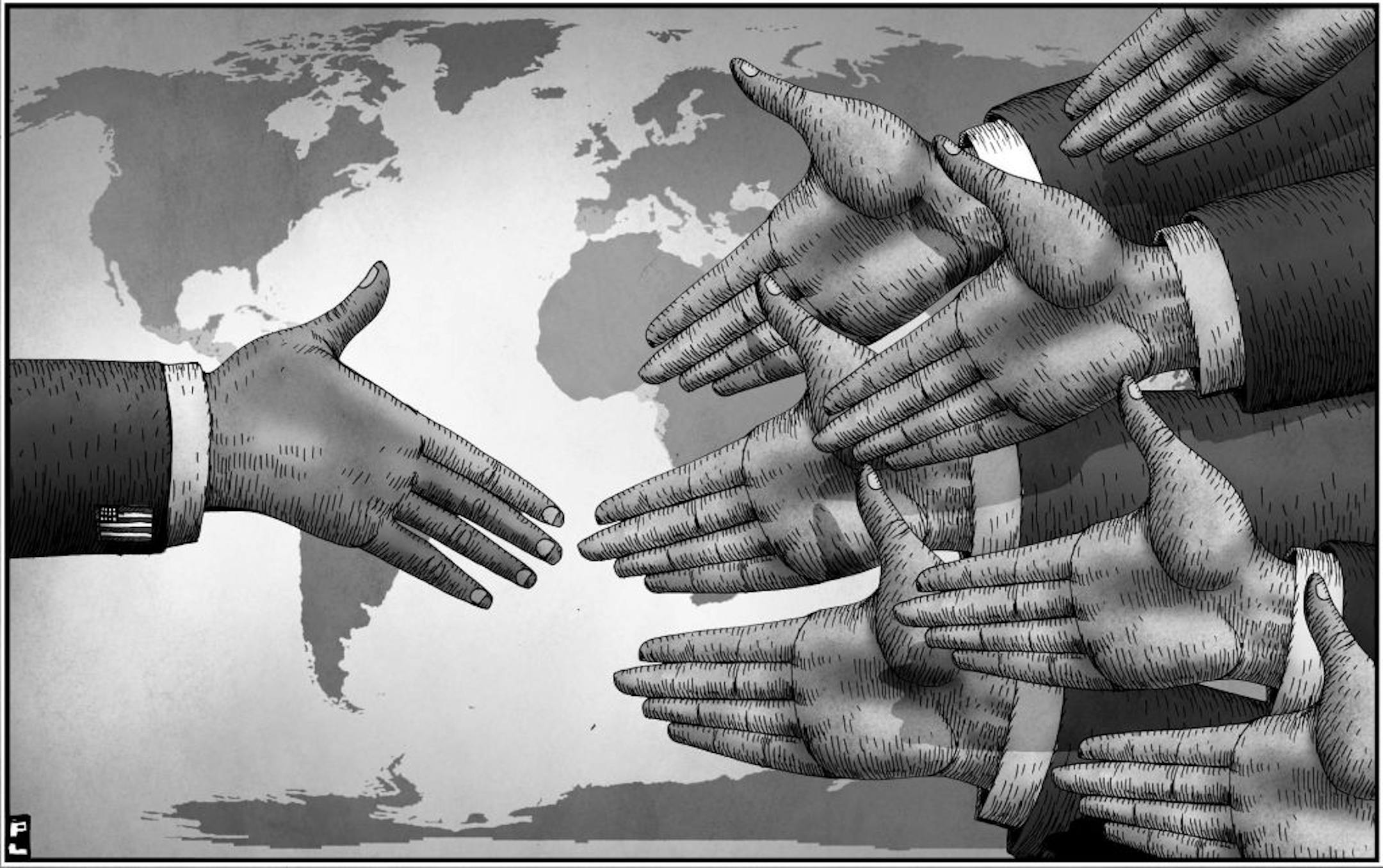
Proponents of the Korea-U.S. Free Trade Agreement must assume that Americans have very short memories or are indifferent to attempts to undermine their best interests.
In the hope that we'll glaze over the economic and social costs incurred from the North American Free Trade Agreement (NAFTA) and similar successive agreements, today's free-trade advocates evoke images of lines of cargo ships loaded with American-made goods headed for foreign markets and rosy relationships with trading partners.
If only it were that simple.
Modern agreements delve into areas far beyond the scope of which free trade was originally intended. If they simply addressed tariffs and quotas, the debates around pending agreements would likely be less contentious.
But most trade deals now include imprudent restrictions on food safety standards, harmful agricultural provisions, limits on access to generic medicines and much more.
To boot, if any of our national, state or local policies get in the way of corporations making a buck, trade deals that follow the NAFTA model allow us to be sued in international tribunals for having "barriers to trade."
Corporate protectionists don't say anything about those issues. Instead they like to use the fear tactic of saying that America will "fall behind" in the global marketplace if Congress does not approve free trade agreements ("Move forward on free trade," June 7).
Pointing to the European Union-Korea agreement, they cry the E.U. will beat us to the economic punch. But what they conveniently fail to mention is that the E.U. negotiated a much better trade deal than we did.


