It was impossible to grow up near Philadelphia without learning the lore of Valley Forge, the stories of starving, poorly clothed, disease-plagued men of the Revolutionary War army.
But I don't recall that I ever heard about the women.
Last month, with help from a new book and a tour with its author, I took a fresh look at the venerable Valley Forge National Historical Park, where more than 400 women served, nursed and comforted the men of the Continental Army during the brutal winter encampment of 1777-78.
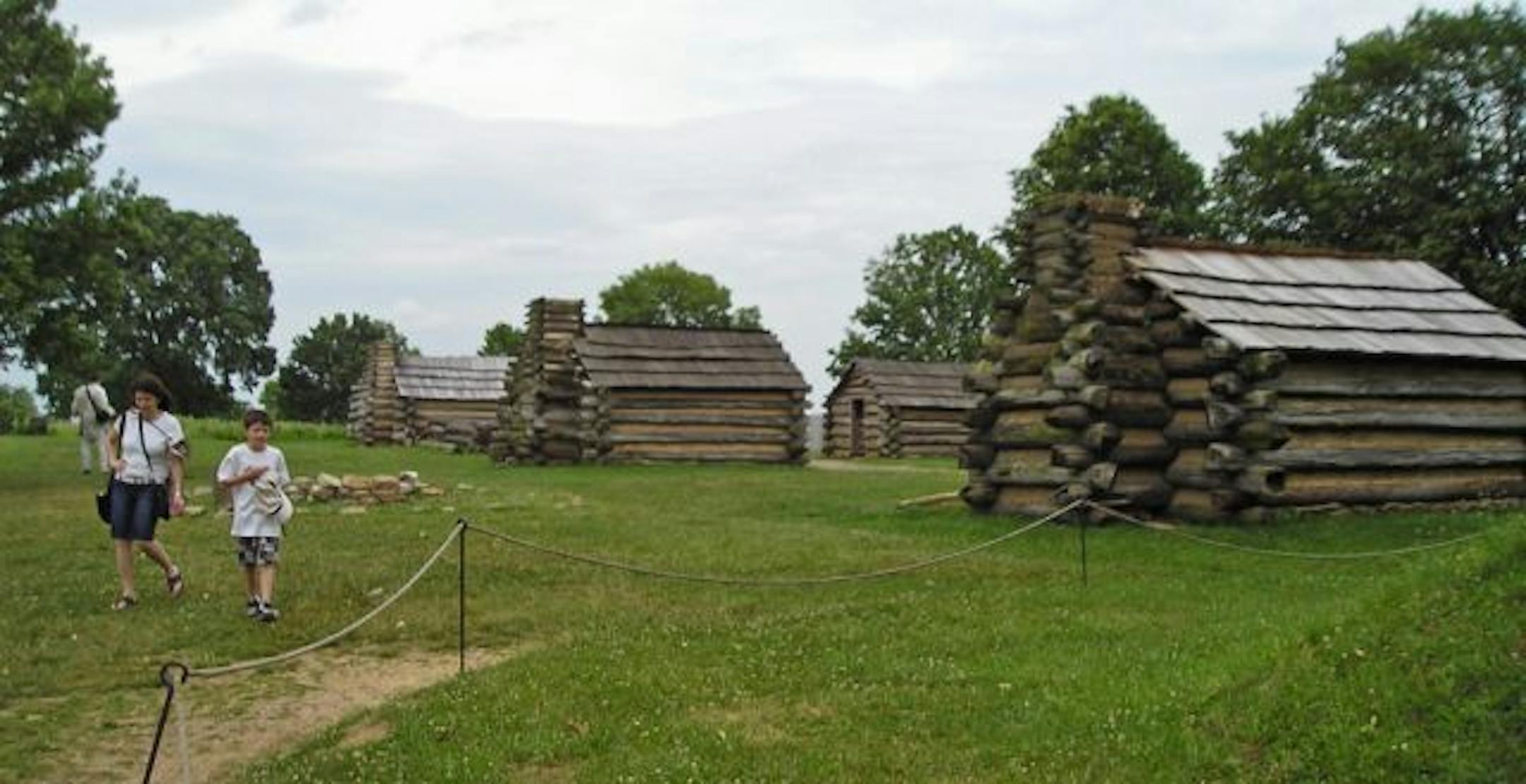
As we explored the park -- 3,600 acres of rolling meadows and woods dotted with monuments, cannons and replicas of log huts -- we walked in the footsteps of Elizabeth Stephens, whose farm was taken over by thousands of soldiers. We saw where 74-year-old Elizabeth Thompson managed commanding Gen. George Washington's household. We talked about Lucy Knox's extreme loss and great love and imagined how Hannah Till yearned for freedom from slavery as she cooked for Washington's entourage. I stepped into replicas of the spartan log huts -- the originals were warm but smoky -- that housed as many as 14,000 soldiers and, presumably, most of the women.
Washington "never really deals well with the women that are with his army, and yet he needs them," said Nancy Loane, a former Valley Forge seasonal ranger and author of "Following the Drum: Women at the Valley Forge Encampment."
The commander feared that female workers would spy and bring disease, debauchery and desertion, Loane wrote, and they sometimes didn't get food rations and weren't issued clothing. Some were wives, sisters or mothers who had joined soldiers in battle or worked as cooks, laundresses or nurses to survive. Some brought young children. Prostitutes also arrived, growing more numerous with time, a Washington aide complained.
On Dec. 19, 1777, when the soldiers marched into Valley Forge, a strategic site between British-occupied Philadelphia and the temporary capital of York, Pa., the first casualty was a woman -- name unknown -- who was crushed by a wagon.
Most of the women's stories were never recorded, but Loane's book brings some to life.