

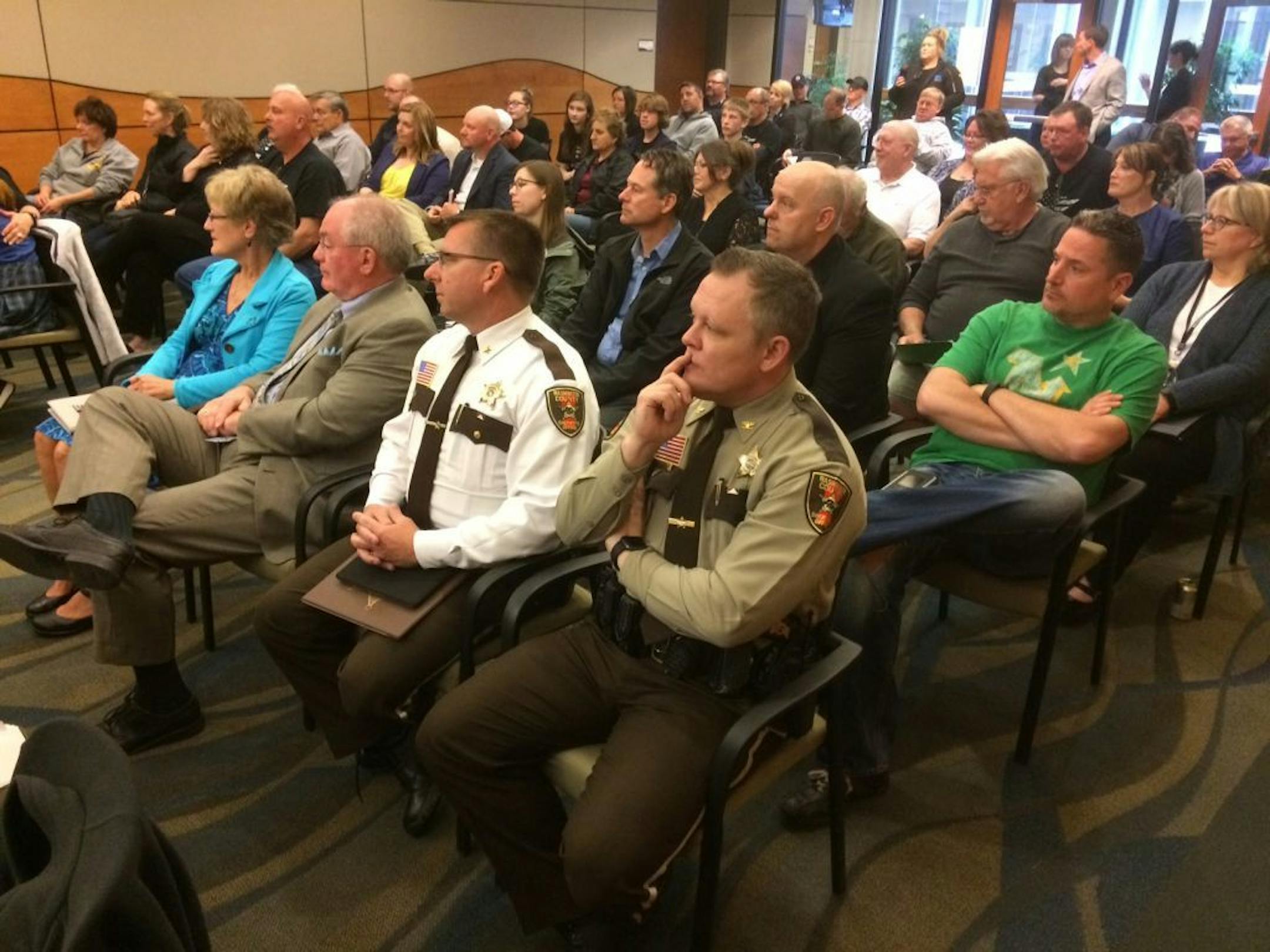
In Morristown, Minn., population 1,000, angry residents want to reverse a decision to close their one-person police department. In Forest Lake, a city 20 times larger, a collective outcry from thousands of residents forced city leaders to reconsider firing police to save money.
"They just feel that indebtedness to these [officers]. These people build relationships," said Fran Miron, the Washington County commissioner who helped broker an 11th-hour labor agreement to keep Forest Lake's police department.
Morristown and Forest Lake are the latest among dozens of Minnesota cities where long-cherished police departments find themselves under the gun. As city leaders struggle to balance budgets and local governments strive to cut back on duplication, the trend toward paying another department to handle law enforcement needs is sweeping the nation.
"Really, this is a question of public safety," Jim Franklin, executive director of the Minnesota Sheriffs' Association, said of the trend away from city police. "You can cut down on duplication and put more [officers] on the road. It doesn't matter, in an emergency, whether you show up in blue or brown or maroon."
Frustrated residents, meanwhile, fight for local control and community pride. In Morristown, where the City Council voted to contract with Rice County, dissenting residents produced a petition with 329 signatures opposing the decision.
"We asked for a special vote and they said it was too expensive," said Morristown resident Justin Duncan.
And in Forest Lake, citizens celebrated when Sheriff Dan Starry withdrew the county contract last week, nudging city leaders toward a new labor agreement with police. The City Council will decide Monday whether to rescind its earlier 3-2 decision to shutter the police department, which was estimated to save Forest Lake $385,000 a year.
"I've lived in this city my entire life and have never seen the community come together like this before," said Mayor Ben Winnick, who had voted to disband the police. The Sheriff's Office, he said, would have offered residents "an increased level of patrol and protection while reducing overall costs … and doing so with most of our current officers remaining here."


