

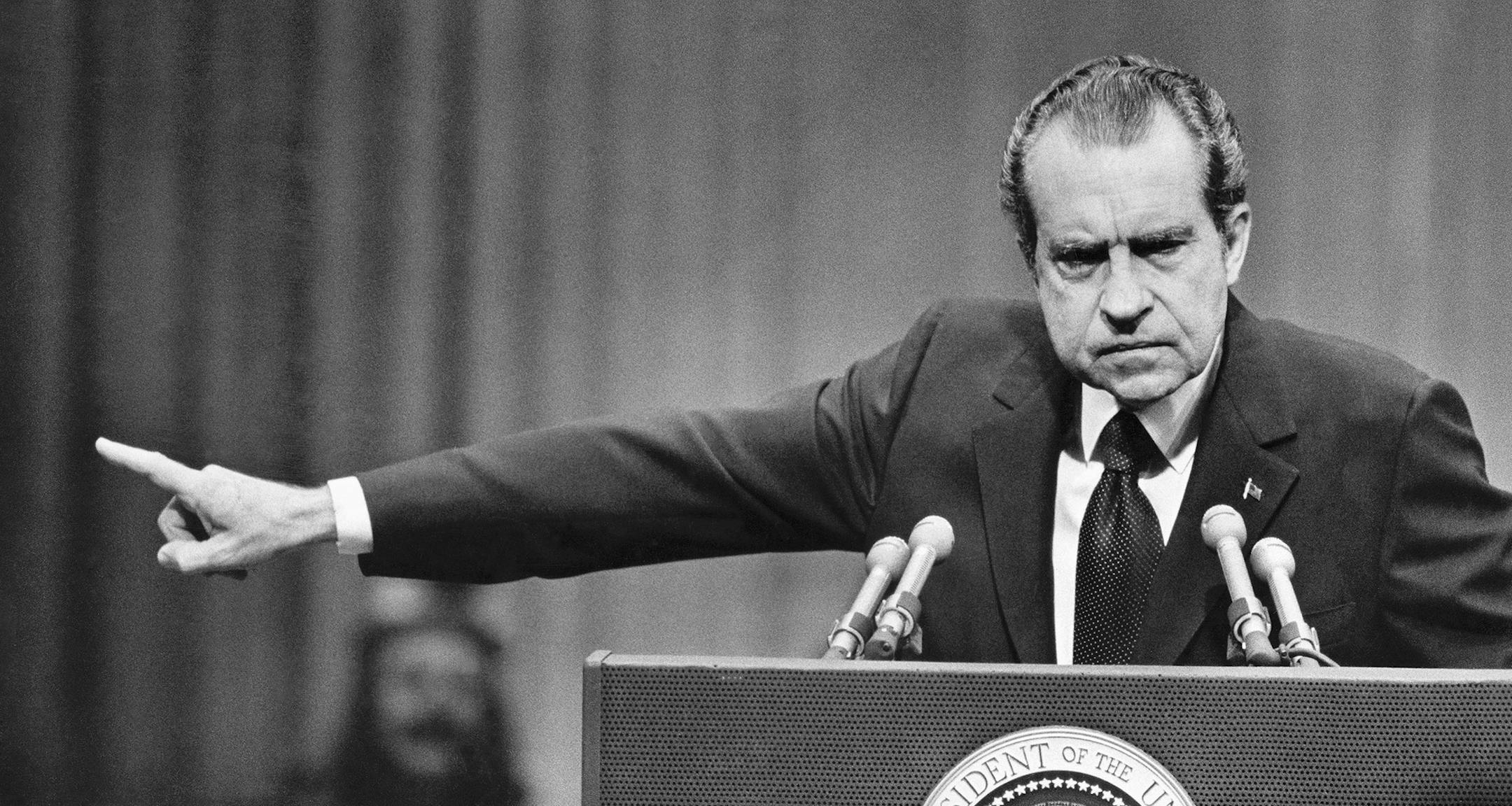
For more than 40 years, virtually every major scandal in American politics has been likened to Watergate. But no presidential deed — not Ronald Reagan's trading of arms for hostages in Iran-contra, not Bill Clinton's coverup of his affair with a young White House aide in the Monica Lewinsky affair — ever rivaled any of Richard Nixon's serial abuses of executive power in their gravity.
Until now.
President Trump's firing of FBI Director James B. Comey — who was overseeing the probe of the Trump campaign's possible collusion with Russia to influence the 2016 election — was technically legal, since the president acted within his official authority. But it plainly violates the democratic norms that have long governed the use of presidential power, and bears Nixonian overtones. With Trump mirroring Nixon's brazen highhandedness, the most pressing question is whether Republicans in Congress will muster the same courage and integrity Republicans did after Watergate.
Comey's unceremonious firing brings to mind the Saturday Night Massacre of October 1973, when Nixon ordered the sacking of Archibald Cox, the special prosecutor who was pursuing Watergate and who was demanding to hear the secret White House recordings that might contain evidence of Nixon's role in the scandal. On that fateful night, the top two Justice Department officials, Attorney General Elliot Richardson and his deputy, William Ruckelshaus, resigned rather than carry out Nixon's orders. Solicitor General Robert Bork finally fired Cox, and days later abolished the special prosecutor's office altogether.
Nixon's actions then were also technically legal. But as everyone could see, they constituted a blatant attempt to snuff out an investigation that was closing in on him. In that sense, the parallels with Trump's firing of Comey seem striking.
In both instances, the sitting president was suspected of having tampered with the machinery of our democratic presidential elections. In Watergate, many feared that Nixon had ordered or covered up his aides' burglary of the opposing party's headquarters; today, circumstantial evidence is mounting that Trump or his aides may have colluded with Russia to hack e-mail accounts to sway public opinion against his opponent, Hillary Clinton.
In both instances, too, postelection investigations had amassed strong evidence of serious wrongdoing. And in both instances, it was vital to guarantee that the president not be permitted to unilaterally end an inquiry into his own misdeeds.
In the parlous days of 1973, it fell to Congress to ensure that the system worked. Likewise, in the days ahead, Congress again will decide whether our nation's democratic norms are upheld or whether, under Trump, America takes a step toward the model of Russia, Turkey or Venezuela — countries where some trappings of democracy still remain but the rule of law and the will of the voters have come to mean little.


