

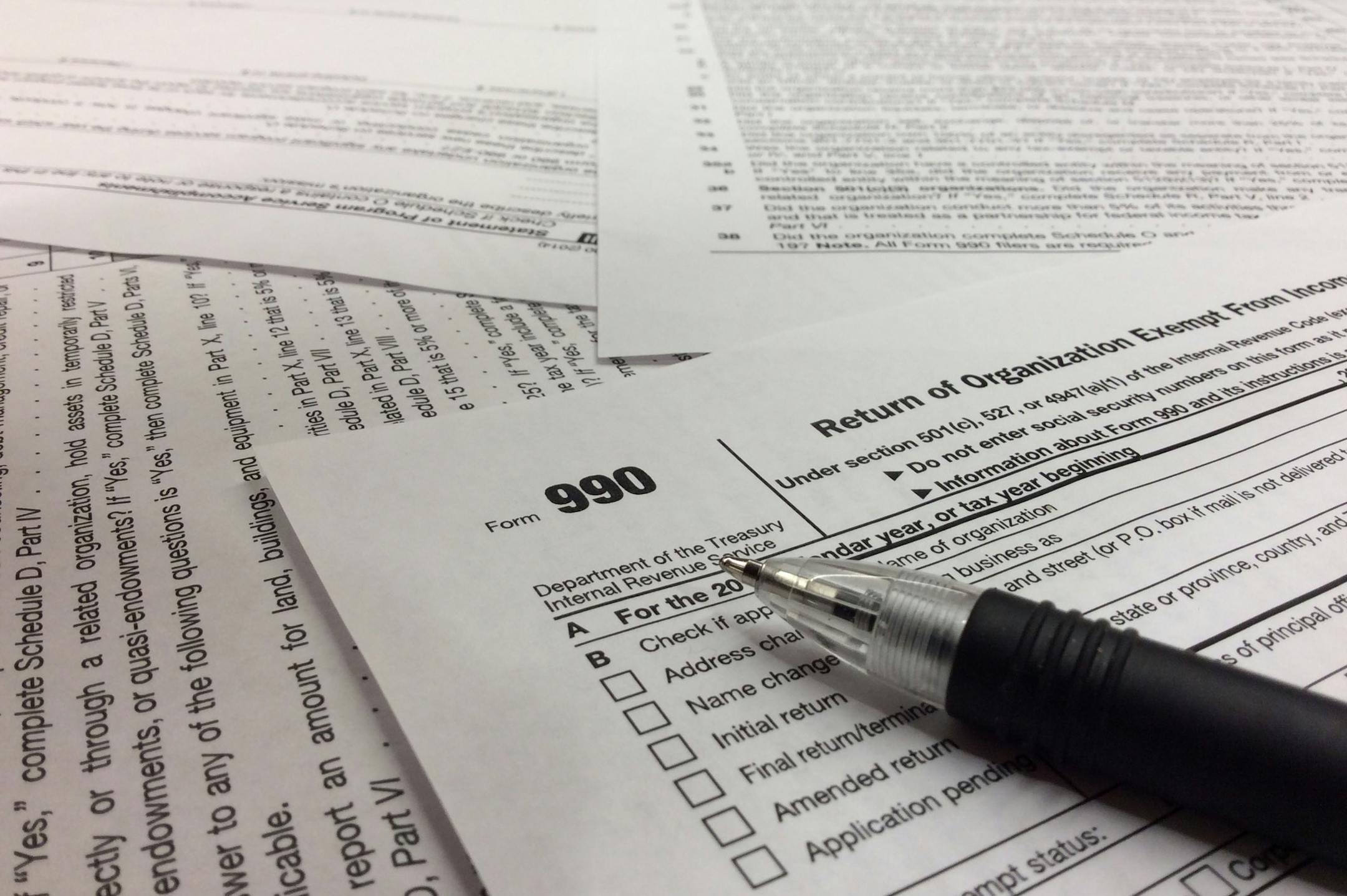
Minnesotans are philanthropists and volunteers — approximately 36 percent of us, according to the Corporation for National & Community Service. That's 10 percentage points higher than the national average. Many local businesspeople give back by serving on a board of a nonprofit organization. But a director of a nonprofit involves many responsibilities. One of which is the assurance that the organization meets its regulatory requirements, including annual filing of Form 990 with the IRS.
Many of us shy away from financial statements, quick to say we aren't numbers people, but it's important that this form isn't taken lightly or quickly completed so it can be checked off the "to do" list. Besides, a significant portion of the return has nothing to do with numbers: Of the first six pages, only two require reporting of financial information.
Although it's commonly referred to as a tax return, the form is technically an informational return. In general, nonprofit organizations don't pay taxes. The 990 demonstrates to the IRS the charitable purpose of the organization and, hence, its tax-free status.
The Form 990 is unique in that the IRS requires nonprofit organizations to make the return publicly available. Other returns, in contrast, may not be disclosed publicly by the IRS. In addition, 990s are easily accessible on the Internet. Guidestar.org, for example, has copies of 990s for thousands of nonprofit organizations available for viewing.
The common image of a tax return is the proverbial shoebox filled with documents and the accountant who cranks out a completed return to be signed and filed. The Form 990 can be prepared by a CPA, but the output will vary dramatically depending on the CPA's familiarity with the organization. It's most important that the organization thoroughly review the return before filing. The people who are most intimately involved with the organization can ensure the most accurate return. A CPA or other professional experienced in nonprofits can help guide an organization through the return, but it is the organization that can best answer the nonfinancial-related questions. This, in my opinion, differentiates the 990 as unique compared to other returns.
Why is this important? Because, as mentioned earlier, this is a public document. It's not just the organization and the IRS looking at the return; it's the organization's funders, the media, the Minnesota attorney general's office, charity watchdog groups and so on. With so many discerning eyes focused on this document, it's imperative the form is completed as meticulously as possible. And certain sections should be scrutinized more than others because they are commonly viewed by the public evaluating a nonprofit organization.
Most people reviewing the 990 look at the mission and the description of the organization's program service accomplishments. The board-approved mission allows the reader to understand the charitable purpose. The program service accomplishments allow the organization to tell its story, provide meaningful statistics, and show potential donors why they should support the organization.
For example, let's say there are two nonprofit organizations whose mission is to end hunger. Nonprofit A's program service accomplishments state, "Operated foodshelf to help feed the less fortunate in our community." Then, you look at Nonprofit B's Form 990 and its program service accomplishments state, "We operated a food shelf in connection with donated space provided by a local community center. We distributed approximately 75,000 pounds of food last year serving over 2,000 households. We operated a mobile foodshelf to distribute food another 500 senior citizens unable to visit the community school. We partnered with the local school district to provide over 25,000 pounds of food to disadvantage students."


