Here's how chef Stewart Woodman dealt with the catastrophic loss of his restaurant, Heidi's Minneapolis, which was destroyed by fire on Feb. 18, 2010: He wrote a cookbook.
"Shefzilla: Conquering Haute Cuisine at Home" (Borealis Books, $27.95) is a collection of 150 concisely written recipes -- many familiar to fans of the restaurant and developed with his spouse and business partner, Heidi Woodman -- as well as two dozen brief first-person essays, all stamped with the same Shefzilla name that Woodman uses for his witty and insightful blog.
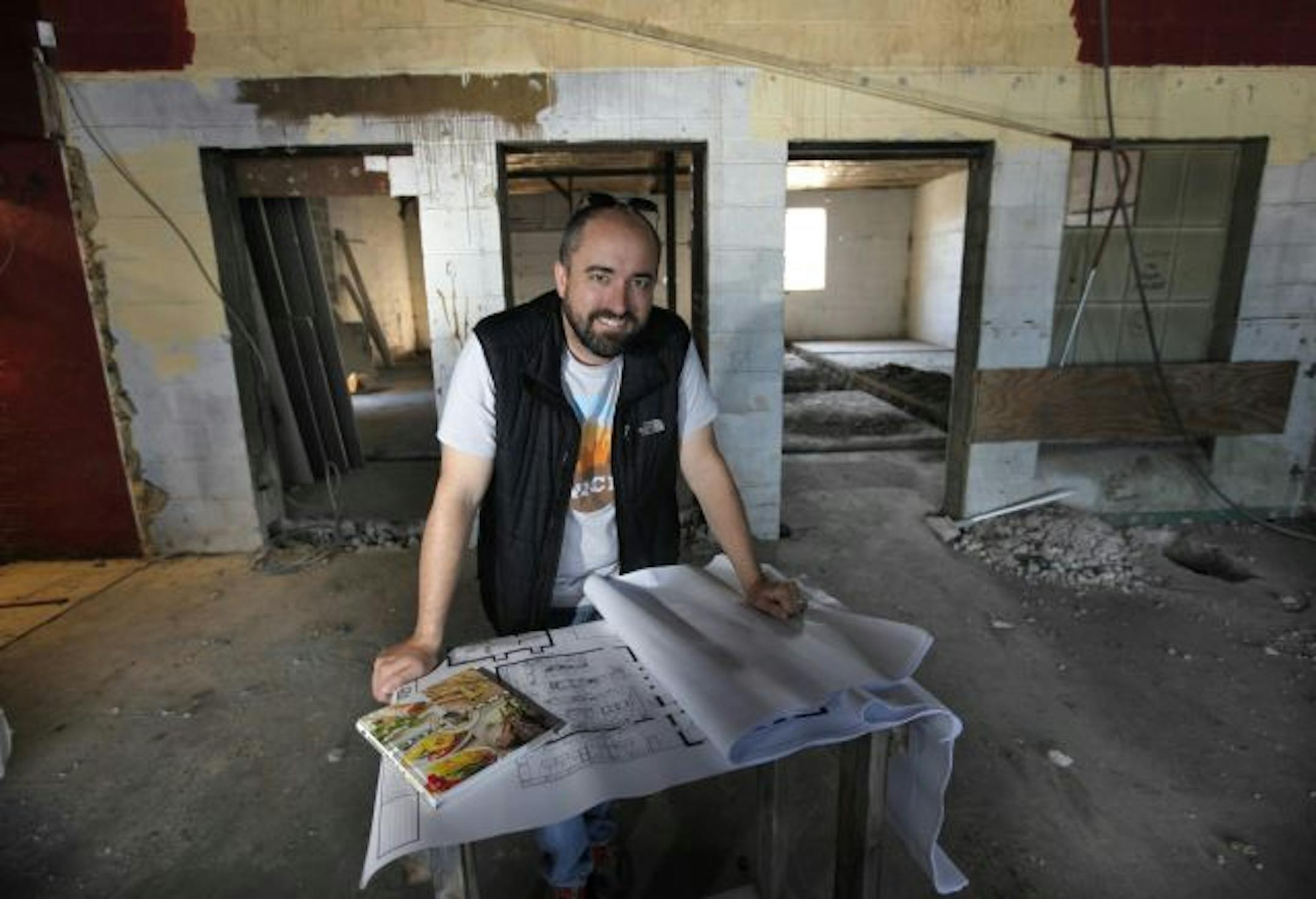
In a recent conversation at the new home of Heidi's, now under construction in the Lyn-Lake neighborhood in Minneapolis, Woodman discussed writing recipes for home cooks, offered tips for buying seafood and recalled the family-affair aspect of the book's development.
Q Did "Shefzilla" come about as a result of the fire?
A We had agreed to do a book, but it hadn't necessarily taken a form. Originally I had submitted an idea that was a little bit more "Kitchen Confidential"-esque, but the writing wasn't very good. The publisher said, "Some of the stuff on your blog is more interesting than this." They suggested writing about the emotional impact of these experiences, as opposed to what the experiences were.
Q A failure of so many chef-written cookbooks is that their restaurant recipes don't translate to home kitchens, but you developed these recipes in what you describe as the "wimpy" kitchen of your south Minneapolis home. Is that the secret to the book's utility?
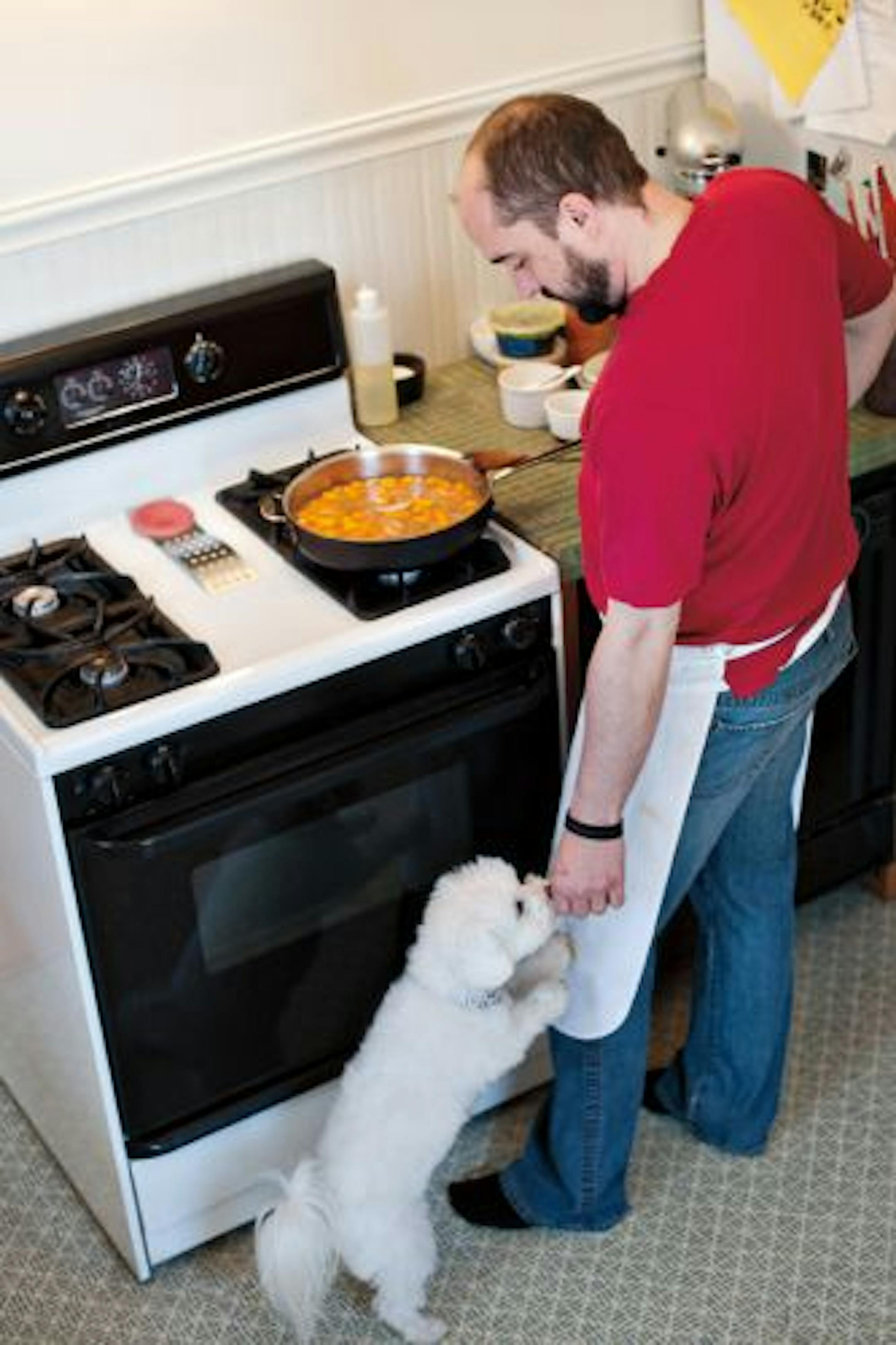
A It used to drive me crazy, cooking in that kitchen, even though I'd only done it, what, two or three dozen times? There's just no space.
We wanted to write a book that wasn't too restaurant-ey. We wanted to do it so that a home cook could really cook from it. We took the recipes and laid them out and said, "Let's break down the work." Heidi has a sense for those kinds of particulars, and she would say, "You need to remake this one," or "You're missing things," or "What you did doesn't make sense." My training is more of a traditional apprentice model -- I went to school, but it was a supplement to the work. But she went to the CIA [Culinary Institute of America], and she has that academic approach.