

Campaigns matter.
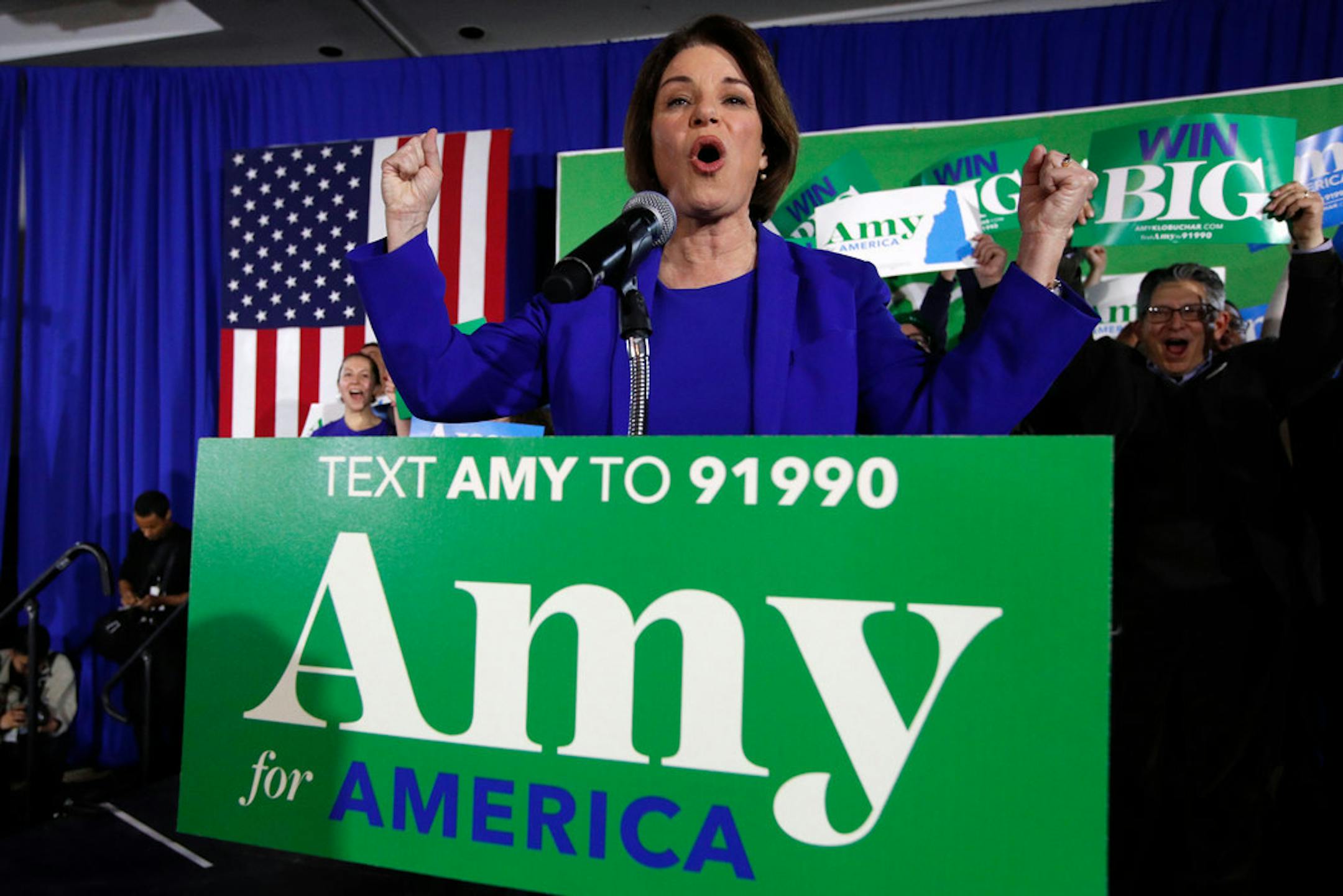
Sure, specific components of them, like pundits and polling, are influential. But nothing has quite the consequence of candidates in diners or debates trying to sway the electorate. Sen. Amy Klobuchar excelled in both venues in recent weeks and was awarded with a breakthrough third-place finish in the New Hampshire primary on Tuesday. She seized her moment, and momentum, by introducing herself to the country in her celebratory speech.
Klobuchar's fundraising has risen, as her poll numbers likely will. But so too will scrutiny of her record, not just in the Senate but as Hennepin County prosecutor, including her office's controversial prosecution of Myon Burrell, who is in prison for the murder of an 11-year-old girl.
And like any candidate emerging as a contender, Klobuchar's character will come into question as well, including media reports about her previous treatment of staff.
The Minnesota senator may also face more fire from the former mayor of South Bend, Ind., Pete Buttigieg, who finished a strong second Tuesday after an apparent narrow first in Iowa's snakebit caucus that may never really reveal a true victor. Together, his dead-heat finishes tell an extraordinary story of a 38-year-old small-city mayor who happens to be openly gay becoming a front-runner for the Democratic nomination.
But the questions, including about electability, will keep coming at Buttigieg, too, especially from a Democratic establishment that had expected the "inevitable" Joe Biden to win the nomination and the presidency. But basing a candidacy on electability requires winning. And Biden has lost — big. Fourth in Iowa and fifth in New Hampshire, where he sealed his underachievement by decamping to South Carolina even before New Hampshire polls closed. Addressing Palmetto State voters, he focused on his African-American and Hispanic support (although no longer a certitude given his shaky, and shaken, campaign). Yet electability also means connecting with everyone, something the campaign has revealed Biden is failing to do.
A looming Mike Bloomberg hopes to swoop in and coalesce centrists, but his first electoral test won't be until Super Tuesday, March 3, when 16 contests (including Minnesota's primary) award a third of all delegates.
The multiplicity of moderates may mean that no one of them can blunt Sen. Bernie Sanders, whose New Hampshire victory and virtual tie in Iowa make him the front-runner.


