
For an example of a real leader, look to New Zealand

After tragedy, the prime minister chose to appeal to what was best in her people, and from that, the nation was drawn together.

July 24, 2019 at 10:48PM
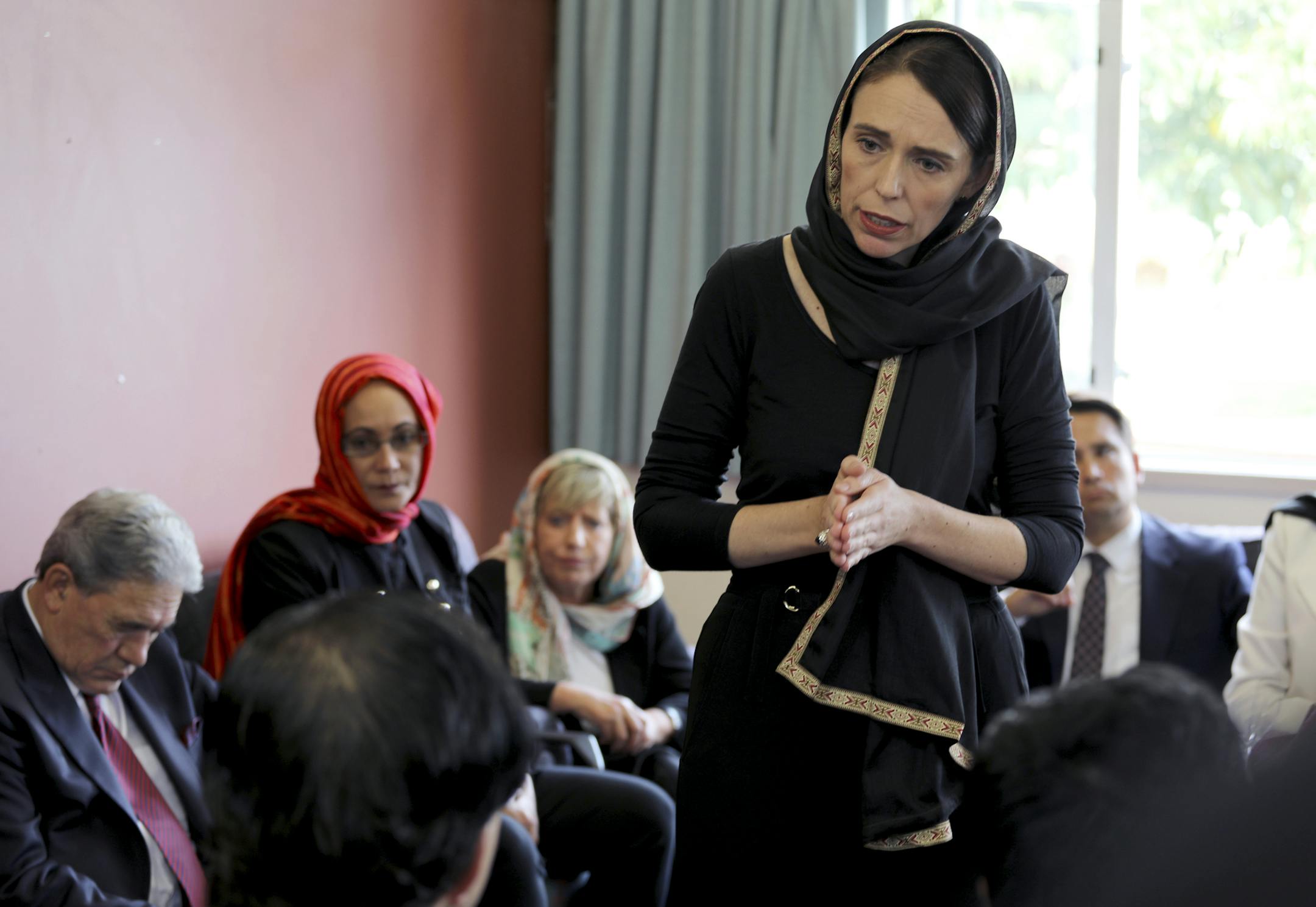
In this photo released by New Zealand Prime Minister's Office, Prime Minister Jacinda Ardern speaks to representatives of the Muslim community, Saturday, March 16, 2019 at the Canterbury Refugee Centre in Christchurch, New Zealand, a day after the mass shootings at two mosques in the city. (New Zealand Prime Minister Office via AP)
Prime Minister Jacinda Ardern speaks to representatives of the Muslim community, Saturday, March 16, 2019 at the Canterbury Refugee Centre in Christchurch, New Zealand, a day after the mass shootings at two mosques in the city. (The Minnesota Star Tribune)

On March 15, 2019, a gunman attacked worshipers gathered for Friday prayer in two mosques in Christchurch, New Zealand. In an act of depraved narcissism, the self-described white supremacist streamed the massacre on Facebook Live. He mounted a strobe light on the barrel of one of his weapons, to blind and disorient his victims while he fired upon them, and accompanied his gunshots with a combination of rock songs and military music played on a portable sound system.

Before he was stopped, he killed 51 people and wounded an additional 49. All of the victims were Muslim, most were immigrants and many were refugees.

In proportion to its size, New Zealand lost more people in that attack than the U.S. did on 9/11.

While the killer was still at large, in the middle of this horrific chaos, Prime Minister Jacinda Ardern took to the airwaves and spoke to her countrymen in an address that displayed an extraordinary level of direct honesty, leadership and compassion. She immediately labeled the act as "terrorism." When Australian Sen. Fraser Anning said "the real cause of bloodshed ... is the immigration program that allowed Muslim fanatics to migrate to New Zealand in the first place," Ardern quickly and accurately dismissed him as "a disgrace."

The next day, dressed in black and wearing a hijab, Ardern met with members of the refugee and Muslim community. She tearfully told them that the entire country was "united in grief." Ardern embraced men and women alike in her arms as they sobbed, and whispered words of condolence. She pledged to cover the funeral costs of the victims and to provide financial assistance to their families.

Of the dead and wounded, she simply said, "They are us." The idea of the Muslims as "others," as people who are separate, and somehow different or less deserving, was demolished with three words. They are us.

She said New Zealand was chosen because it was safe, because it was no place for hatred or racism. "We represent diversity, kindness, compassion; a home for those who share our values, refuge for those who need it."

To the killer, she said, "You may have chosen us — we utterly reject and condemn you."

She refused to speak the name of the gunman, denying him undeserved entrance to fame and notoriety. When specifically asked, she would only say the names of the victims. The national media, as much as was possible for them, followed her lead, and as a consequence a terrorist who craved celebrity was diminished to the status of a man without name or identity.

In substance as well as symbol, Ardern was pitch-perfect. Six days after the shootings, she proposed new legislation effectively banning the circulation and use of most semi-automatic weapons with large capacity magazines. Within a month, it was enacted into law by Parliament.

But an even greater accomplishment is evidenced by this: Biker gangs across New Zealand with names like the Mongrel Mob, the Black Power and King Cobra, vowed to stand guard outside the mosques as Muslims took part in the first Friday prayer following the Christchurch shootings.

Biker gangs, in New Zealand as elsewhere, are populated with hard men. But under the leadership of a Jacinda Ardern, New Zealand's hard men volunteered to put themselves between the gentle people at worship and whoever might threaten them.

Mongrel Mob president Sonny Fatu promised, "We will support and assist our Muslim brothers and sisters for however long they need us."

It is a powerful demonstration of how the voice of a great leader can alter the consciousness of her time and place. Ardern appealed to that which was best in her people: their compassion, their wisdom, their desire to protect. By doing so, she ennobled them and drew them together.

A lesser leader would seek power by appealing to that which is worst in his people, to their fear and bigotry, and leave a nation a fractured and meaner place.

New Zealand remains traumatized. But along with their grief, Ardern's citizens must feel a sense of pride in their nation, and their prime minister. They certainly deserve to.

John Verant is an attorney in Fridley.

about the writer

about the writer

John Verant

More from Commentaries

See More
The family of Harper Moyski, far right, poses with their Christmas tree at the Annunciation tree lot in December 2024.
Provided by Jackie Flavin

She was one of two children killed in the Annunciation shooting in August. In the darkness of this winter, here’s what gives me hope.

card image
card image