

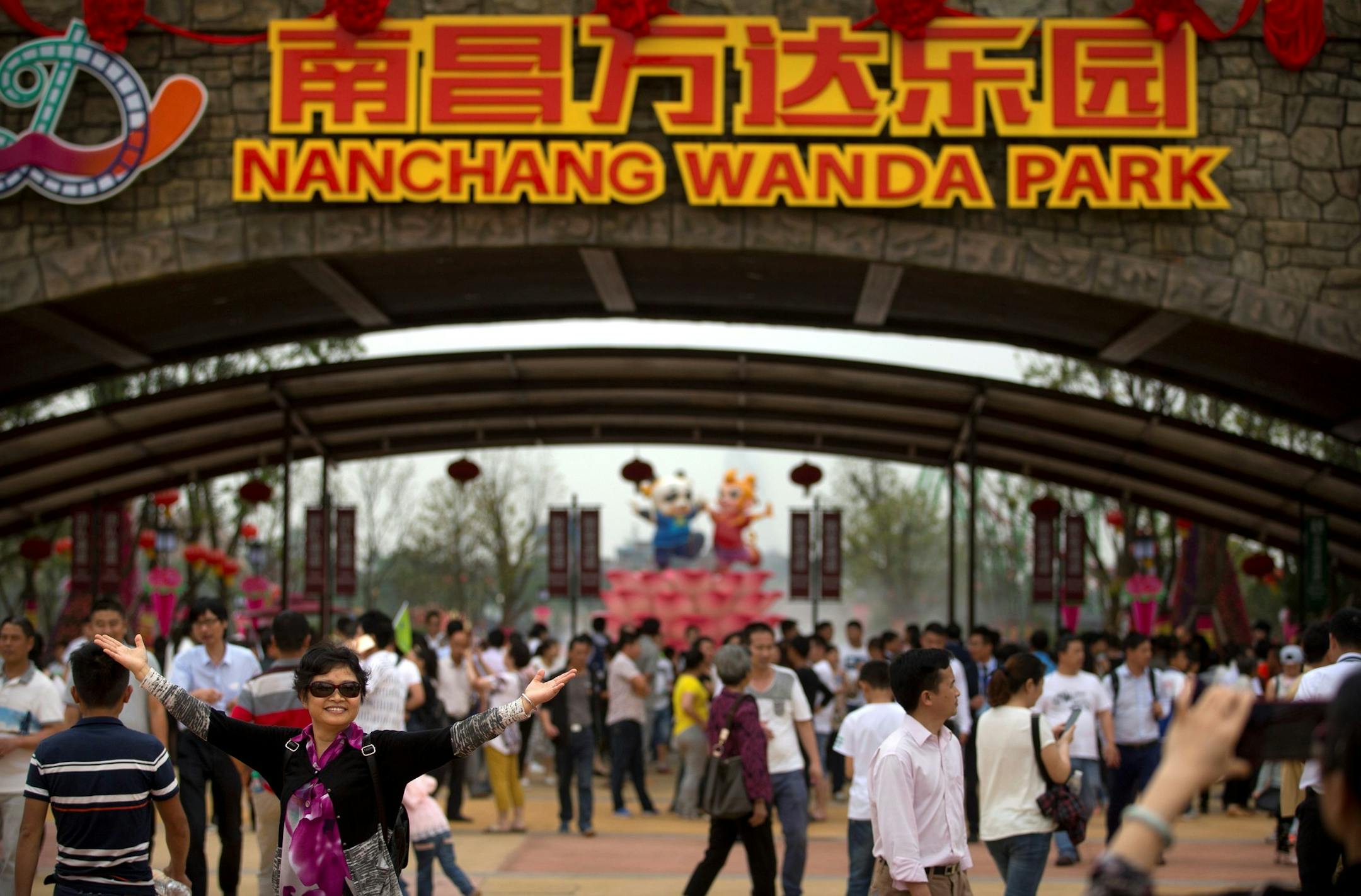
"Coaster through the Clouds" in Nanchang, a city in the southern province of Jiangxi, is China's tallest and fastest roller coaster. It carries terrified customers up to heights of 255 feet and down again at speeds reaching 80 mph. The ride towers above an amusement park built by Dalian Wanda, a Chinese property-and-entertainment conglomerate, which has aspired to outdo Disney's resort in Shanghai.
But this month, the group said it was selling 13 such projects and 77 hotels to rival developers. It would use the proceeds, its owner said, to repay loans.
Last month, China's regulator asked banks to provide more details about their overseas loans to Wanda. Standard & Poor's said it would reassess the group's credit rating, noting that the abrupt sale of assets had raised questions about Wanda's strategy and finances.
Wanda is the most prominent of China's highly leveraged companies, of which there are many. Corporate liabilities, including those of state-owned enterprises, amounted to 166 percent of GDP at the end of 2016, according to a measure by the Bank for International Settlements. Add in rapidly growing household debt and the total was over 210 percent, unusually high for an emerging economy.
Some of the increase in credit may be a welcome result of better access to it. Economists expect credit to grow as a share of GDP as a country develops, but when loan making quickens, opening up a gap between the prior trend and actual levels, they begin to get scared. A credit gap above 10 percent of GDP has presaged financial distress in the past, the BIS said. Last year it reported that China's gap had reached about 30 percent of GDP, the highest in the world. Credit was lost in the clouds.
'Supervisory tightening'
Since then the authorities have shown greater determination to curb financial risks. The People's Bank of China, the country's central bank, allowed the interest rate at which banks lend to each other to rise. And China's financial regulators have carried out "supervisory tightening," said economist Tao Wang of UBS, fleshing out existing rules and enforcing them more tightly.
On July 14 and 15, China's regulators, including the central bank, came together for a five-yearly "financial work conference." They created a new cabinet-level committee to beef up their efforts. Just as importantly, Xi Jinping, China's president, gave a speech at the meeting that was tough enough on the topic of credit-tightening to send stocks tumbling the next day.
On a roller coaster, riders climb upward slowly, their suspense building, then plunge downward quickly, their stomachs lagging a little behind. In its deleveraging efforts, China's government hopes to do the opposite. It has allowed the country's liabilities to mount quickly. Now it wants them to plateau or drop gently (relative to the size of China's economy), leaving stomachs unchurned.


