

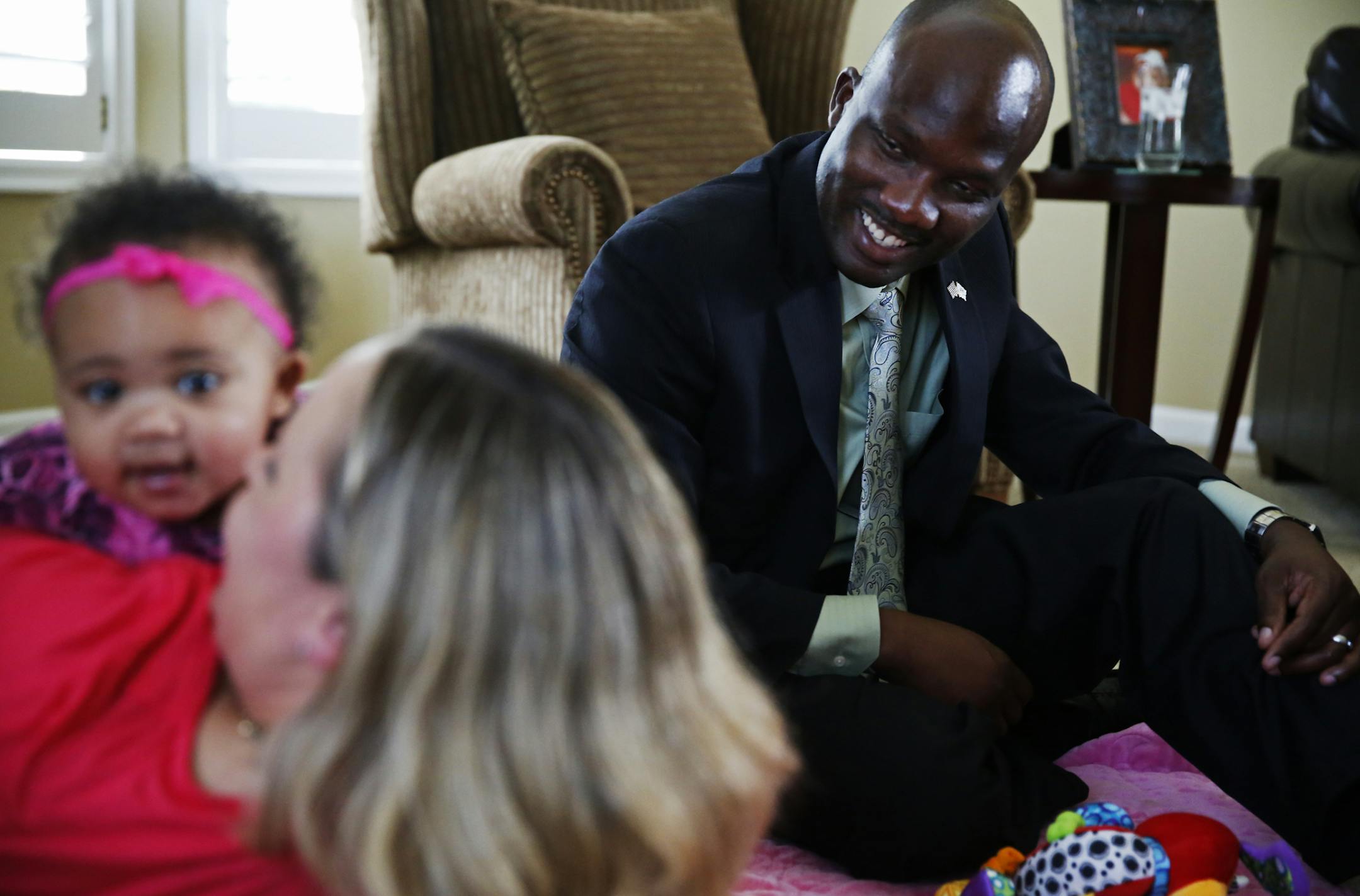
Some days are a battle for Daniel Abdul.
While serving as a U.S. Army flight medic, he saw his dreams of becoming a pilot derailed by a near-fatal car accident. His physical injuries healed, but his anger didn't. It wasn't until he threw a remote control at one of his sisters in a fit of rage that he sought treatment and was diagnosed with post-traumatic stress disorder and severe depression.
But the hardest day came when he tried to tell perplexed family members. "They couldn't connect my behavior to the disease," he said. One relative told him: "You are not crazy, you need to have faith."
Abdul's frustration is not unusual, according to people who have studied mental health in the black community. Only about 30 percent of African-Americans who have been diagnosed with a mental illness seek counseling, according to the U.S. Department of Health and Human Services, and only one in three who need psychiatric care receive it.
Factors such as poverty, neighborhood violence and higher rates of unemployment may place African-Americans at higher risk for mental illness, researchers have found.
Yet the stigma of mental illness and a long history of mistrust for the medical establishment can combine to create a community ethic of resilience, said Samuel Simmons Jr., a Minneapolis consultant.
"We pride ourselves in not having to go see a psychologist," Simmons said. "If I am [considered] the people who are the worst of the worst, the last thing I am going to admit [is] that something is wrong with me."
Today, that may be changing. Just this month President Obama called for a broader conversation about mental illness.


