1:15
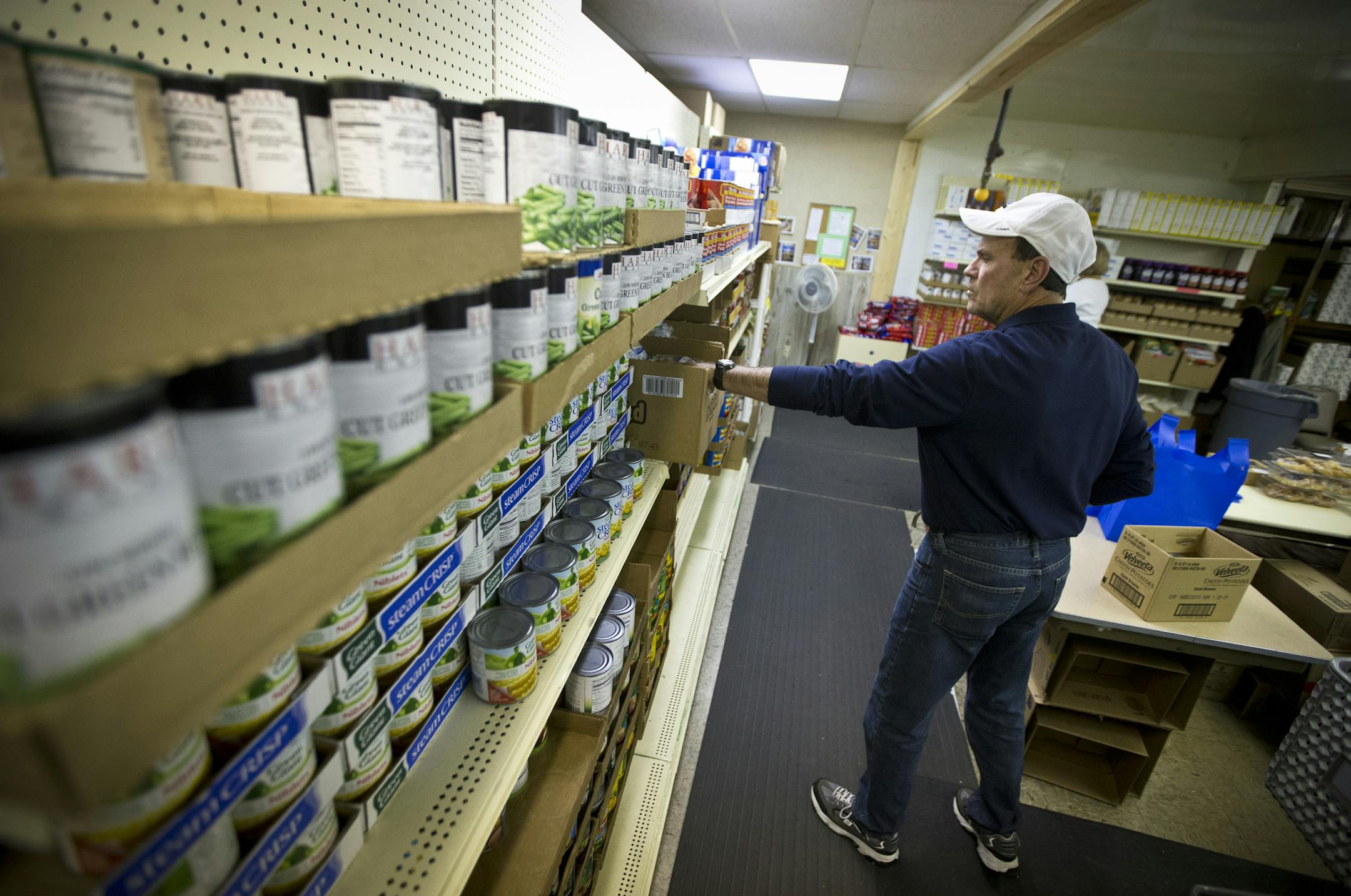
1:15It's the Wednesday dinner rush at the Friends in Need food shelf and a little girl stares wide-eyed at tables piled high with fresh fruits and vegetables.
"Can we have some carrots? I love carrots," she asked a volunteer, who smiled and filled a bag for the family to add to their cart, next to donations of canned goods, cereal, milk, apples and baked goods in St. Paul Park.
More than 554,000 Minnesotans get federal food assistance — one out of every 10 people in the state. A third are children. Another quarter are elderly or disabled adults. Contrary to popular stereotypes, a majority live in families where at least one adult earns a paycheck.
This week, their food budget rests in the hands of Senate and House negotiators, who are about to begin debate on the massive farm bill that will set the budget for the federal Supplemental Nutrition Assistance Program (SNAP), still commonly known to many as food stamps.
Republicans, concerned that the program has become far too expansive and expensive, are pushing for $40 billion in cuts to SNAP, which currently feeds 48 million Americans. Those cuts could push millions of people out of the program, including tens of thousands of Minnesotans.
The Minnesota Department of Human Services estimates that the eligibility changes being considered by Congress would cut 16,700 households — an estimated 32,000 people — from the food stamp program in Minnesota. That includes 17,000 children, 4,500 seniors and 4,000 single adults.
"Primarily, [SNAP is] a program of children and the elderly," said Colleen Moriarty, executive director of the Minnesota nonprofit Hunger Solutions. "So when people talk about these 'lazy people who won't get a job' or the 'underperformers who are dragging down the economy,' that's why it's so wrong and so mean-spirited. That's really not who's on the program."
The amount allocated per meal by the federal program is small — an average of $1.29. By Friday, that will shrink 13.6 percent, when a temporary boost of federal stimulus runs out.