

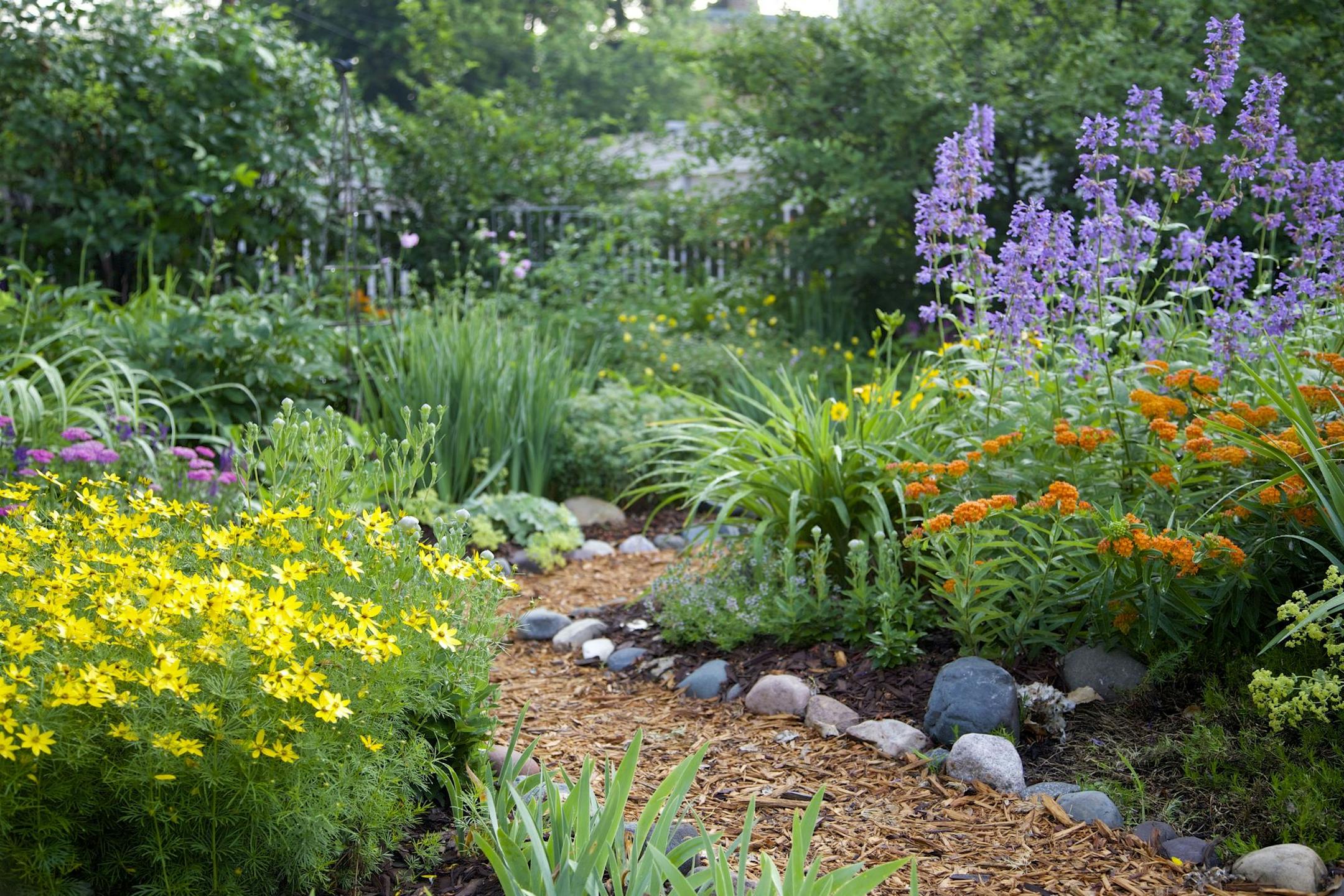
With such a short growing season, Minnesota gardeners may consider it a personal challenge to have something blooming all season long. But for pollinators seeking season-long blooms, it's a matter of survival: Flowers equal food.
Everyone benefits when savvy gardeners master the skill of providing flowers for both beauty and food source from frost to frost.
Bees, butterflies and other pollinators are suffering from a number of issues including pesticides and parasites, but habitat loss is right at the top of the list. Gardeners have the unique opportunity to make up for some of the deficit by creating pollinator-friendly gardens. And unlike writing a check or signing an online petition, this is change you can make and see right under your nose, right in your own backyard (or front yard).
To truly understand the importance of spring-to-fall food sources for pollinators, think of it in human terms: Imagine if your only grocery store shut down randomly for weeks at a time several times a year. That's what it's like when flowers are scarce within a pollinator's limited flight range, sometimes as little as 500 feet.
Pollinators can emerge in spring looking for sustenance, only to find a dearth of blooms. The art of choreographing spring-blooming flowers is often complicated by our fickle weather when winter can hang on well into May. So many northern gardeners sit this one out.
Rethink this temperamental time and consider planting native ephemerals like hepatica, bloodroot and trout lily; they may be short-lived but they are long on charm and just what pollinators need in the moment. And they give hope to gardeners as we squint to see some sort of plant life peeking from the earth.
Late spring is another time when the garden goes into a lull before the easy and plentiful blooms of summer begin. Mind the gap with bleeding hearts, iris, Virginia bluebells, ornamental alliums ('Purple Sensation', which bees adorn like jewelry), coral bells and foamflower. Some of these plants tend to fade away as they go dormant, making way for the next wave of color.
Once summer is underway, take note of which plants in your garden seem especially popular with pollinators. Add more of these. Large swaths of one flower type provide greater visual impact, as well as making foraging easier since pollinators don't have to expend extra energy traveling back and forth.


