

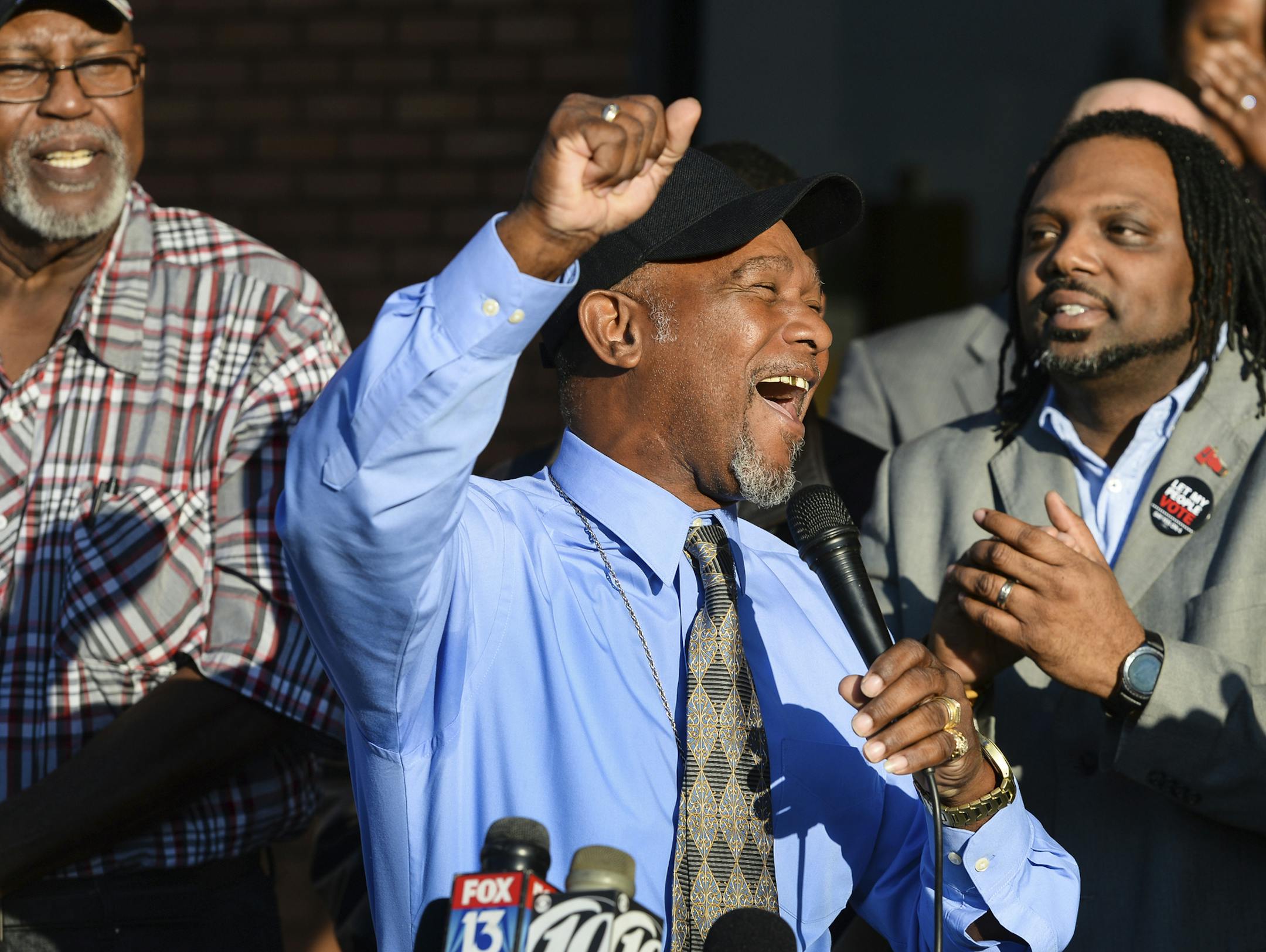
MIAMI – Florida's reputation as America's tightest — and wildest — swing state should stay intact as a battle over felons' voting rights seems destined for the courts. At the least, it's increasingly looking like Florida's 1.4 million disenfranchised ex-convicts won't be the potent voting bloc they might've been.
Seven months ago, almost two-thirds of voters approved Amendment 4, which restores registration rights to many felons. Florida had been one of three states, along with Kentucky and Iowa, where those convicted of a felony were permanently prohibited from registering without going through a lengthy clemency process, and many saw Floridians' vote as bringing the state into the U.S. mainstream. Only those convicted of murder and sexual offenses still are excluded.
However, Florida Gov. Ron DeSantis is expected to sign a bill within days that critics say will blunt much of Amendment 4's effect. The bill passed by the Republican-led Legislature would require felons to pay off restitution, court fees and fines before registering — a move that voting rights advocates say could have a chilling effect. So far, the number of former inmates who have visited a local supervisor of elections office to register has been a modest 2,000, according to one estimate.
"There's just no way to get around the fact that the Legislature did everything it could to undermine Amendment 4," said Micah Kubic, executive director of the ACLU of Florida. "I don't think it's consistent with the will of the voters, and it's not consistent with the text of Amendment 4."
Voting rights and civil liberties advocates mounted a well-funded campaign ahead of last year's midterm elections to pass the voting rights amendment. A group called the Second Chances Florida campaign won over Floridians with stories of how ex-convicts — renamed "returning citizens" — were eager to move beyond their troubled past. Behind the scenes, a political committee called Floridians for a Fair Democracy collected almost $27 million, according to state election records.
Several progressive groups and individuals gave six or seven figures to the cause, including the ACLU, the Washington-based Sixteen Thirty Fund and ice cream maker Ben & Jerry's. It also won the endorsement of some conservative-leaning groups, including the Koch brothers-linked Freedom Partners, while critics gave Amendment 4 only token opposition.
Despite an overwhelming victory at the polls, supporters face major obstacles in carrying out Amendment 4's promise if DeSantis signs the bill. And, while some political scientists thought Democrats would see a boost from having more than 1 million felons eligible to register, that, too, looks questionable.
On a recent Saturday, 20 lawyers and paralegals gathered in the backroom of an Orlando church to learn how to help ex-convicts overcome the obstacles. Leading the session were representatives from the League of Women Voters of Florida and a Latino advocacy group called Latino Justice.

