

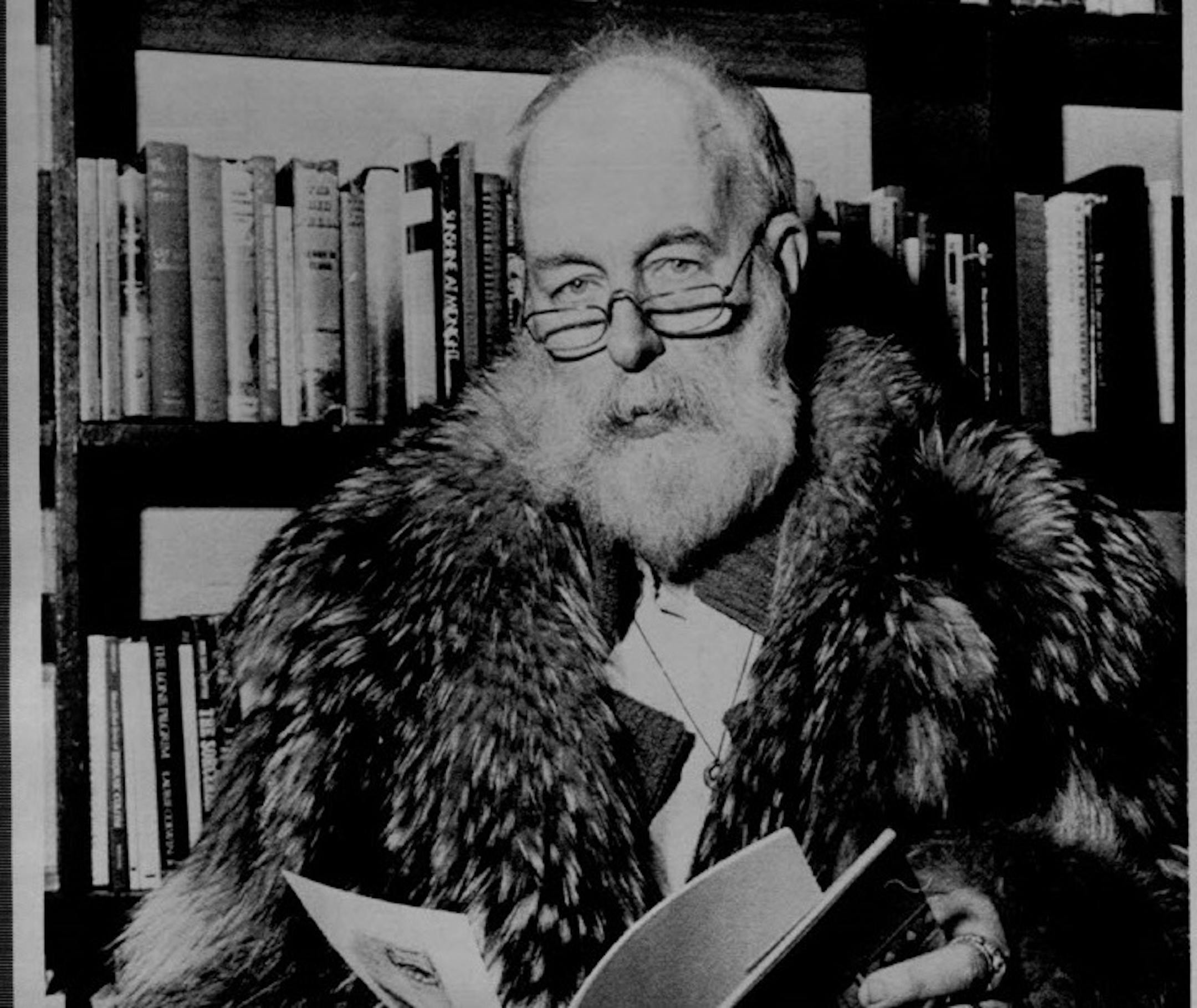
Born to Be Posthumous: The Eccentric Genius and Mysterious Life of Edward Gorey, by Mark Dery. (Little, Brown, $35.)
In this fascinating biography, Mark Dery makes a case for Edward Gorey as a "seminal figure in the postwar revolution in children's literature that reshaped ideas about American children and childhood." A keen cultural critic, Dery brings an analytical eye to the creations of the avant-garde illustrator and writer whose work inspired Victorian melodrama that manifests today in goth fashion, Tim Burton's films and Lemony Snicket's "A Series of Unfortunate Events" books. Dery elucidates how Gorey evolved from his childhood into an Anglophile who embraced the world of Oscar Wilde and the "ennui-stricken social satire of the '20s and '30s," and how this eccentric genius lived his life and marked the world.
The Man in the Glass House: Philip Johnson, Architect of the Modern Century, by Mark Lamster. (Little, Brown, $35.)
In this smart, engaging biography, Mark Lamster depicts contradictory, influential "starchitect" Philip Johnson and his times in their full complexity. Populist and elitist, gossip and intellectual, opportunist and utopian, Johnson was a gay man with a fascist history who was instrumental in shaping the aesthetic of modernism. "Philip Johnson began his career proselytizing the public in the name of modern design," observes Lamster. "He finished it building for Donald Trump."
Why Religion? A Personal Story, by Elaine Pagels. (Ecco, $27.99.)
"Why is religion still around in the twenty-first century?" asks Elaine Pagels, a distinguished scholar of Christianity, MacArthur "genius" grant winner, and author of the National Book Award-winning "The Gnostic Gospels." As a teenager, Pagels embraced Billy Graham's promise that she could be "born again," which opened vast spaces of her imagination to the living dream of salvation. Life interceded, however; her 6-year-old son died of a rare lung disease and, a year later, her husband perished while mountain climbing. In her lucid, inspiring personal testimony, Pagels continues to work through her grief, read ancient gospels and refine her own ideas about religion. She comes to regard suffering as an essential part of human existence, and writes that "sometimes hearts do heal, through what I can only call grace."
City of a Million Dreams: A History of New Orleans at Year 300, by Jason Berry. (University of North Carolina Press, $35.)
Over three centuries, New Orleans has experienced such dramatic identity shifts that, as Jason Berry writes, the port town is "like a great diva changing costumes in a succession of operatic roles." Through fires, slave revolts, corruption, music, epidemics, epic flood and battles over Confederate monuments, Berry captures the dynamism and vitality of this great American city. Berry, a prominent New Orleans journalist and an expert on jazz funerals, has written the definitive story of one of America's most vibrant cities.

