

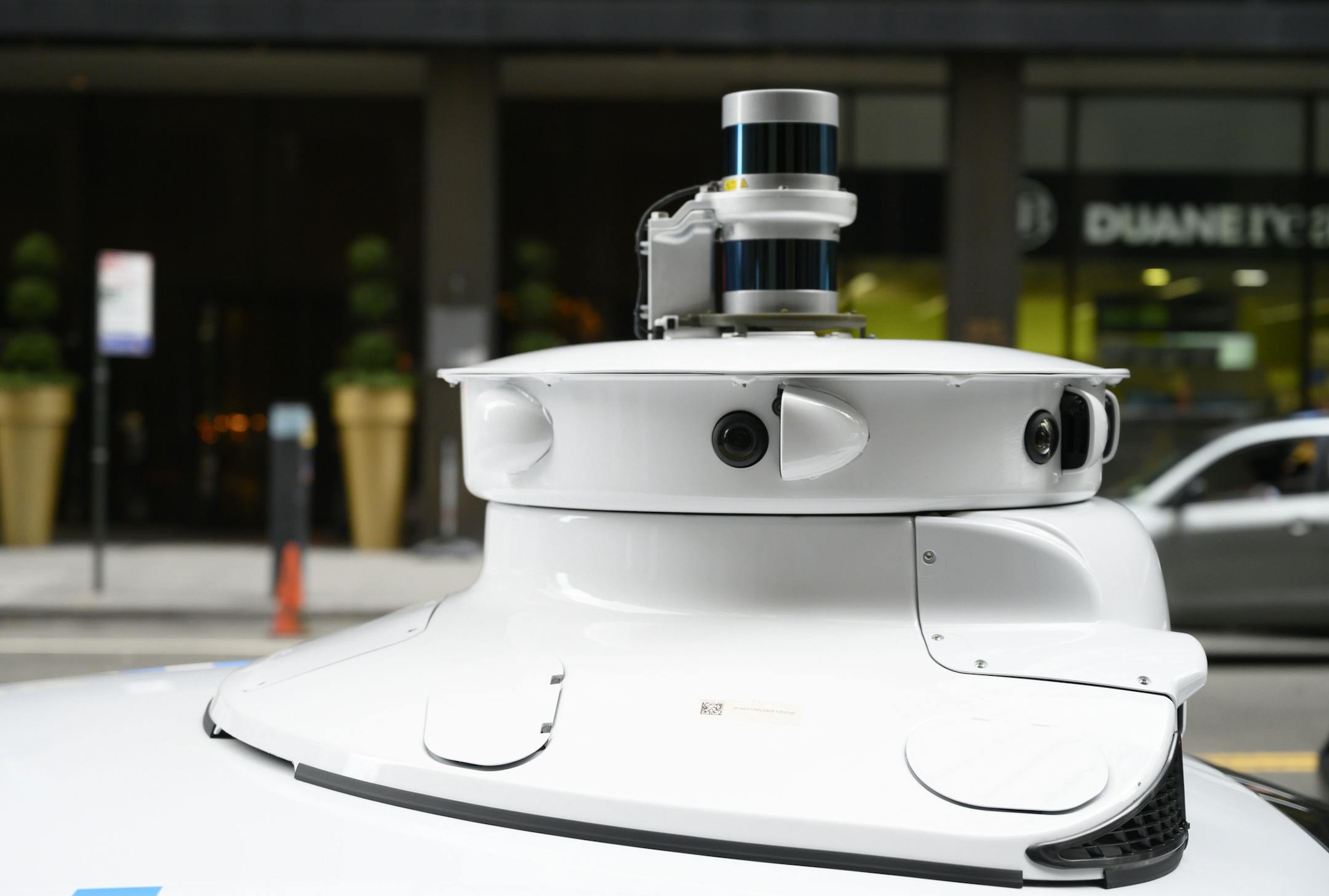
Autonomous vehicles are the future. These completely self-driving cars could change our lives, heralding an era of greater convenience, improved productivity and safer roads. Like any transformative technology, driverless cars are attracting huge investment — from traditional automakers, established tech giants and smaller startups. But all that promise is also fueling a great deal of hype and ungrounded speculation. Here are five persistent myths.
Myth No. 1: Autonomous cars will mean fewer private ones
Recent studies from the University of Michigan and KPMG predict that the arrival of autonomous vehicles (AVs) will reduce private car ownership in the United States by 43% by 2030, and sales in urban markets by 50% by 2035. They hold that families will need fewer cars and that many people will opt for "mobility as a service" — a supposedly cheap and efficient model in which travelers will summon vehicles on demand instead of keeping one (or more) in the garage. Even the usually levelheaded BBC recently declared that "you have (probably) already bought your last car."
But people do not buy automobiles simply to get around; they own cars to get from A to B in a way that's convenient for them. This means a car at your doorstep, available at a time of your choosing (with no charge if you change your mind) and with your belongings exactly as and where you left them. Automobiles signal our values and extend our private space — things a shared service cannot offer.
Nic Lutsey of the International Council on Clean Transportation sums this up perfectly: "In reality, a lot of people will have the same inclinations as they do today, to own a private auto and use it the way they want, without compromises."
Even if the inconvenience can be overcome, a recent study from the Victoria Transport Policy Institute suggests that owning a non-autonomous car will, for many users, continue to be cheaper than buying a self-driving car or hailing a ride, for some time to come. Indeed, car sales in the U.S. are at their highest level in 40 years, and Americans are keeping their cars longer than ever. It is going to take more than a new generation of highly efficient taxis to eliminate private automobile ownership.
Myth No. 2: Self-driving cars will fix downtown congestion
Automakers, forward-thinking politicians and tech leaders like Google co-founder Sergey Brin have long asserted that self-driving cars will make congested streets a bad memory. They say these vehicles will be able to travel in tight groups, known as platoons, which will pack more cars onto the road, save fuel and allow traffic to move in a mathematically optimized fashion. Science magazine recently reported that introducing even just a small number of AVs onto the roads could improve overall traffic flow and reduce trip times.
But without careful management, autonomous vehicles will make traffic worse. City-center parking is expensive, which creates an incentive to keep moving. This means self-driving cars will slowly cruise the streets, by the thousands, as they await their next ride or duty. Research from the World Economic Forum shows that as people choose driverless vehicles over public transport, traffic could increase, and parts of our cities could become more congested, not less.
Myth No. 3: AVs will reduce our environmental impact
People commonly conflate AV technology with electric vehicles. Mary Barra, chief executive of General Motors, may have been guilty of this when she recently pitched her company's mission as: "Zero emissions. Zero crashes. Zero congestion." McKinsey has claimed that self-driving cars could reduce traffic-related carbon dioxide emissions by as much as 60%.


