

ROCHESTER – During the 4-H alpaca competition at the Olmsted County Fair, dairy farmer Tom Hurley fumed about the damage tariffs inflict on the agricultural economy.
"The best thing politicians can do is get the hell out of agriculture," said Hurley, 53, of Grand Meadow. Asked if candidates are listening to the concerns of voters like him, his reply was terse: "No."
Like many farmers in southern Minnesota's First Congressional District, Hurley backed Donald Trump in 2016. The president beat Democrat Hillary Clinton 53 to 38 percent in this district, which had voted twice for Barack Obama.
But now fallout from Trump's hard-line trade policies is testing support for the president and defining the First District race to replace U.S. Rep. Tim Walz, a DFL candidate for governor. Farmers, particularly soybean growers, have been hurt by retaliatory tariffs imposed by China and other countries after they were hit with U.S. levies on imports such as steel and aluminum.
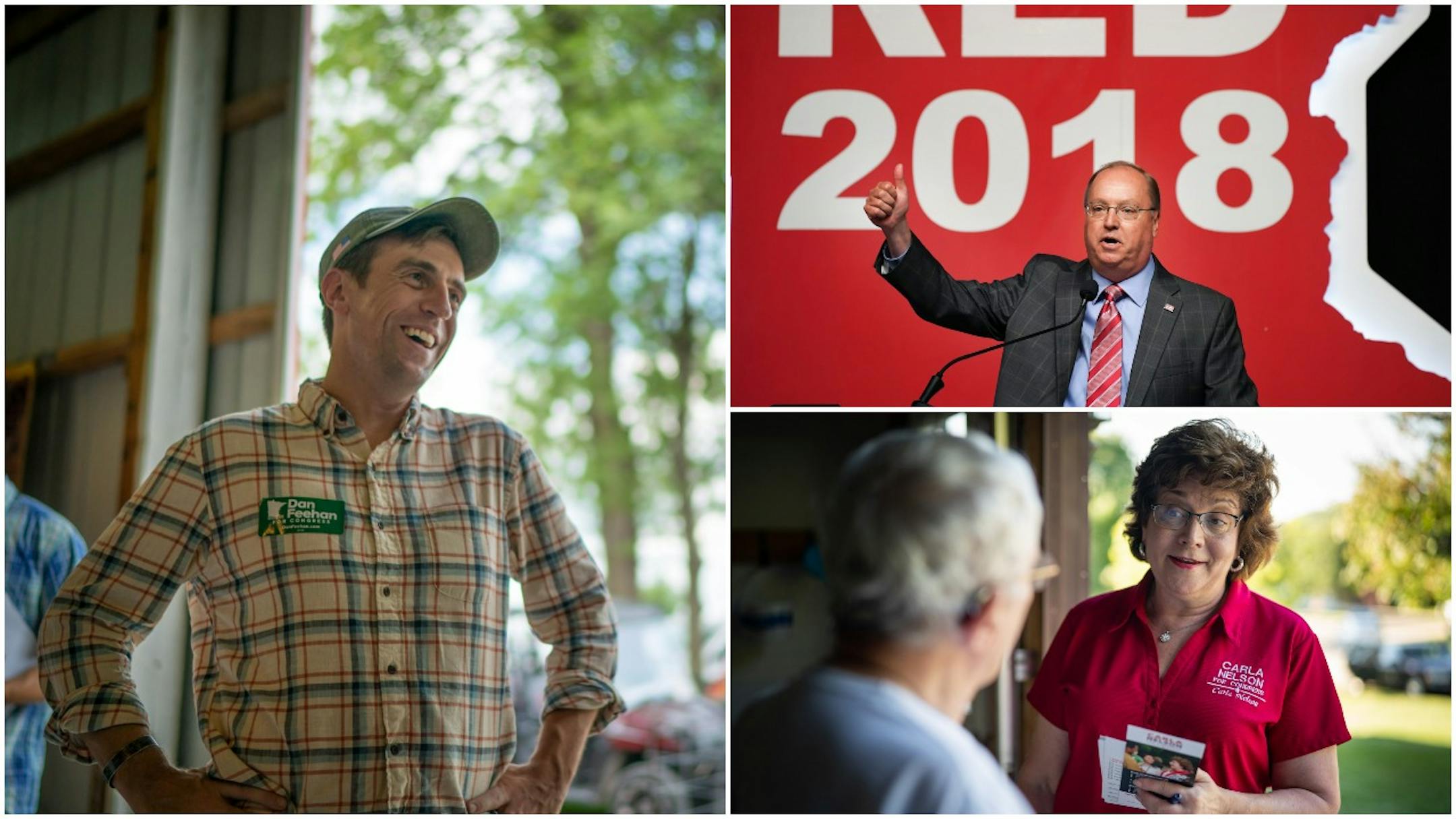
No top-tier candidates in the district — including Republican primary rivals Jim Hagedorn of Blue Earth and state Sen. Carla Nelson of Rochester — unreservedly endorse the tariffs. These misgivings are one way they're trying to demonstrate that they're attuned to rural voters' worries and priorities.
Dan Feehan, the DFL-endorsed candidate, got a lesson in farm woes during a recent visit to John Thormodson's farm outside Madelia.
For two hours, as Feehan asked questions and listened, Thormodson, 51, who grows soybeans and corn, described this year's double-whammy: tariffs and June flooding that left parts of some of his fields still submerged.
Already, Thormodson said, tariffs have sliced $1 a bushel off soybean prices. The $12 billion farm bailout plan Trump proposed, he said, might help — if it arrives by December, when he locks in his 2019 plans.


