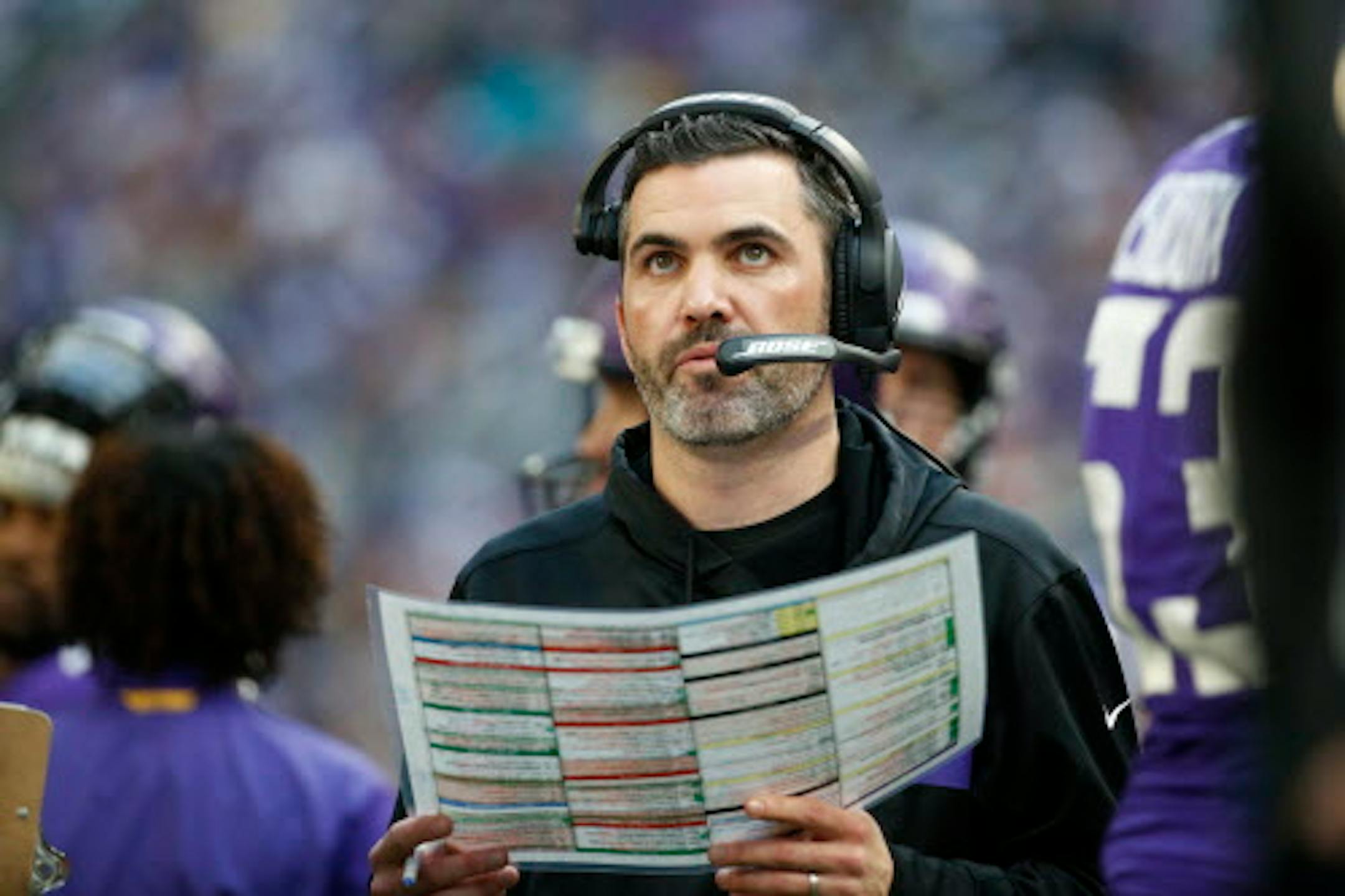
Simplify was the edict circulated around Vikings headquarters leading into interim coordinator Kevin Stefanski's play-calling debut.
It worked against an inferior opponent during Sunday's 41-17 win against the Dolphins.
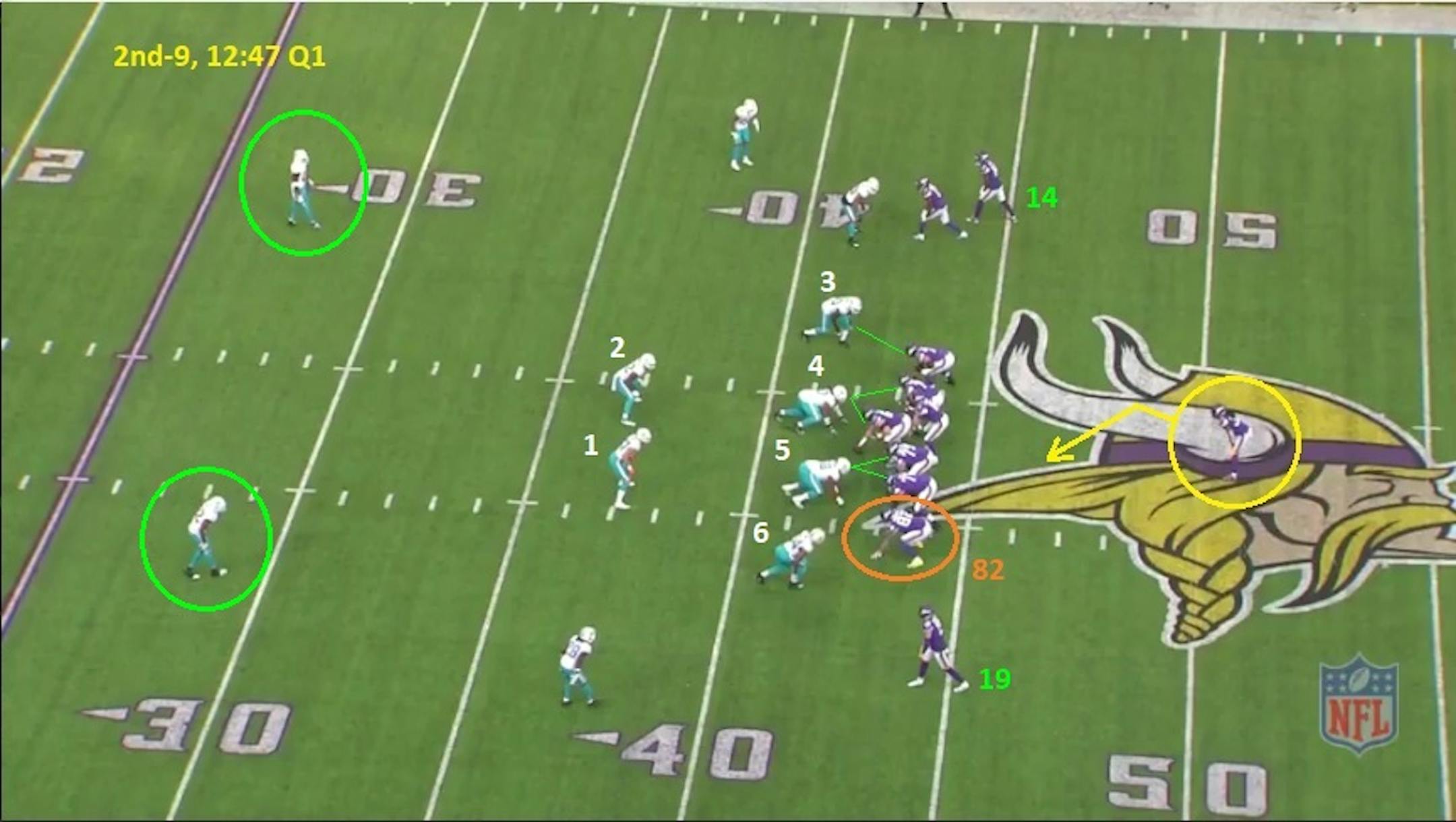
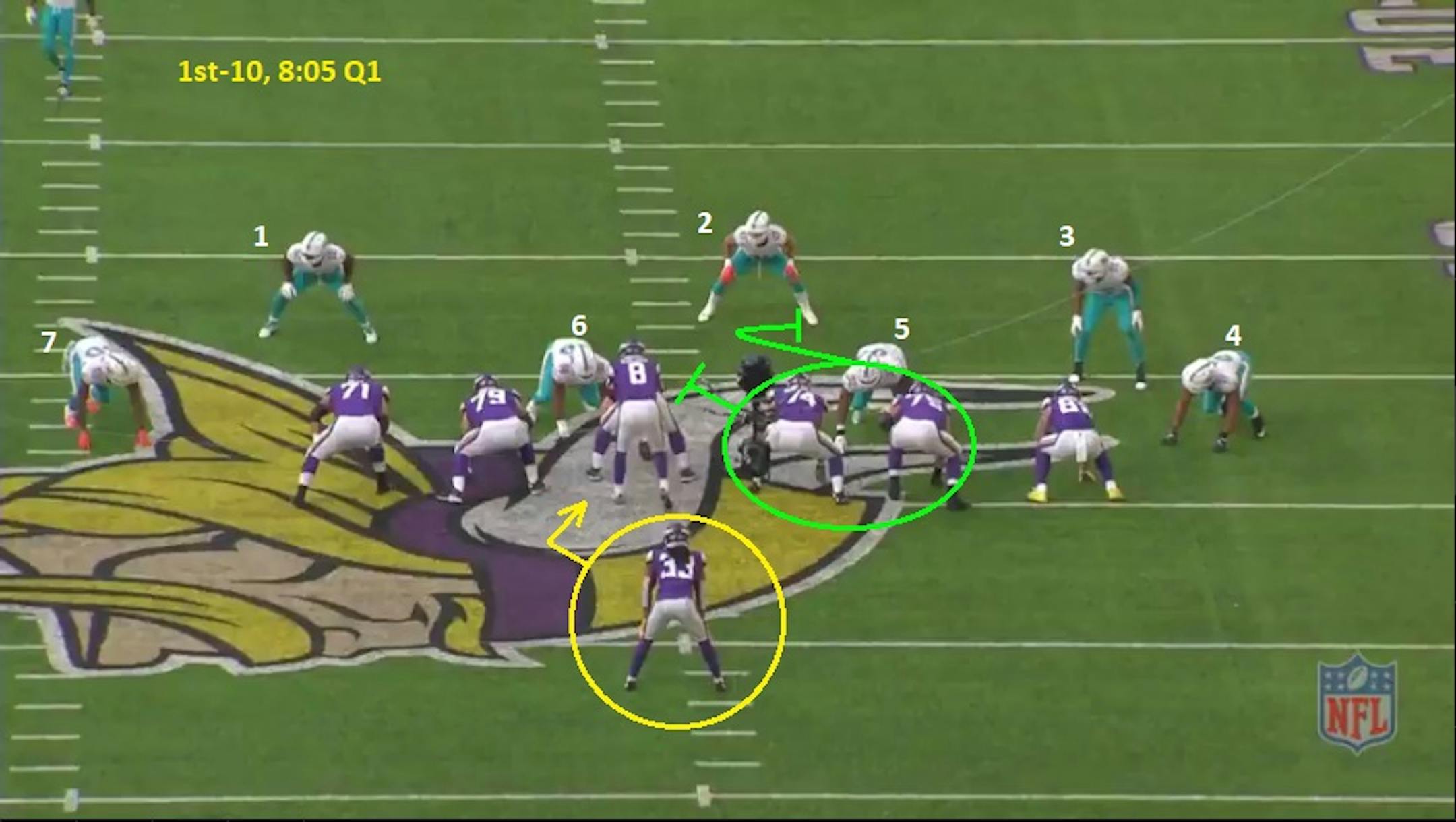
"We ran like one play 10 times but with 10 different variations, so sometimes that's what it is, too," head coach Mike Zimmer said Monday. "You format it differently and you get them in different looks so they can't key on one thing, but you're basically running the same play."
The Vikings' run game, which churned out a season-high 220 yards, was spectacular in its effectiveness and execution, if not design. Inside zone run after inside zone run was followed by an outside zone stretch left and stretch right. The Dolphins' 31st-ranked run defense was just what they needed.
Let's take a look at the relevant takeaways from Sunday's win heading into this weekend's trip to Detroit.
"We're going to have to go out and do it again," Zimmer said. "Detroit will be harder to run against than Miami was."
1. Pressure report: Kirk Cousins entered Week 15 as the NFL's highest-volume passer, who also had the most pressured dropbacks, according to Pro Football Focus. So, it's no coincidence Cousins was pressured on just eight passes by the Dolphins because the Vikings limited him to 25 dropbacks — fewer than all quarterbacks except two (Marcus Mariota, Mike Glennon) last week.
One of the Vikings' biggest adjustments under Stefanski was to get Cousins on the move and away from the pass rush. His first three passes came from play-action (from which he was 6 of 7 for 103 yards). Bootlegs, rollouts and moving pockets meant the Vikings didn't test pass protection much. Even many shotgun snaps (6 of 12 for 90 yards, a touchdown and interception) turned into quick throws like receiver screens or the 20-yard go route to tight end Tyler Conklin. Cousins' 2.45 seconds per throw were faster than his season average of 2.51 seconds.