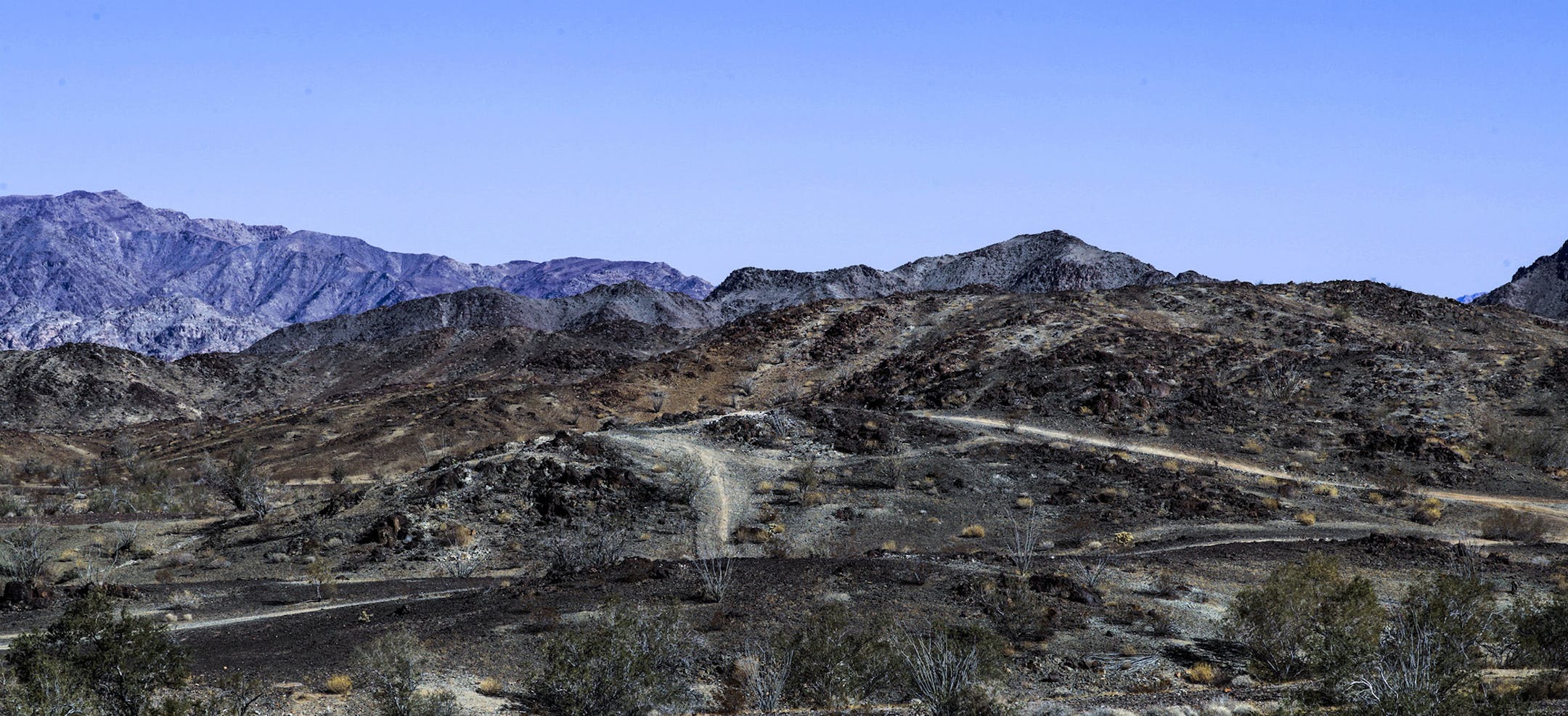
It looks like a barren no man's land, but the vast desert outside Indio, Calif., has many suitors.
Conservationists see it as a scarce habitat for tortoises, pronghorn antelope and an elusive variety of mule deer. Energy companies view it as a prime perch for solar panels and wind turbines. Dirt tracks are testament to its popularity among off-road motor sports enthusiasts.
Obama-era rules ensured that portions of California's sunniest public lands would be reserved for conservation, other parts for large-scale solar, wind and geothermal development and mining, and other sections for recreation. But that delicate peace among competing interests could be upended. President Donald Trump has ordered the U.S. Bureau of Land Management to reopen the study of the Desert Renewable Energy Conservation Plan and consider shrinking the areas it protects and expanding lands available for solar, wind, broadband infrastructure, mining, off-road vehicles and grazing.
Now, stakeholders are once again vying for control of some of the most sensitive and sought-after lands in the state — and the winners could determine whether California's deserts become a hub for energy production at the expense of their unique plants and animals.
Tom Egan, of Defenders of Wildlife, summarized the concerns of conservationists this way: "Reopening the plan … means green energy, mining, corporate investors, grazing and off-roaders win. Conservation loses."
The Obama administration spent eight years and considered more than 14,000 public comments in developing its plan. Trump's move was a surprise to many, and a happy one for green-energy advocates, who contend that concerns about environmental damage are exaggerated and that green energy can help fight global warming. The Obama plan "fell short when it came to renewable energy by designating only a fraction of the area for development and ruling most of the remainder off-limits to renewable in perpetuity," said Shannon Eddy, executive director of the Large-scale Solar Association.
Interior Secretary Ryan Zinke, a Trump appointee, recently said the BLM would ease mining restrictions on 1.3 million acres of desert where it had been more tightly regulated. Now, conservationists worry that industrial mining interests may push for road construction in areas of untrammeled wilderness.
At stake is some of the most vulnerable land in the state, such as the Chuckwalla Bench, an 800,000-acre expanse of cactus gardens and sandy washes fringed with ironwood and palo verde trees and framed by the Chuckwalla and Chocolate mountain ranges.