

Ten years after Elvis strolled into Sun Records in Memphis, the music he helped create — rock 'n' roll — looked like a bloated corpse, its raw energy replaced by vapid dullness.
Elvis had gone Hollywood; Buddy Holly had died, and it was hard to determine which career move was worse. The musical landscape was bleak, peopled by the likes of Frankie Avalon, Bobby Rydell and Pat Boone. The great soul artists enlivened popular music with their transcendent blend of gospel and blues, but when it came to guitar-driven rock 'n' roll, the music was on life support, ready for burial in a pile of heartthrob rubbish.
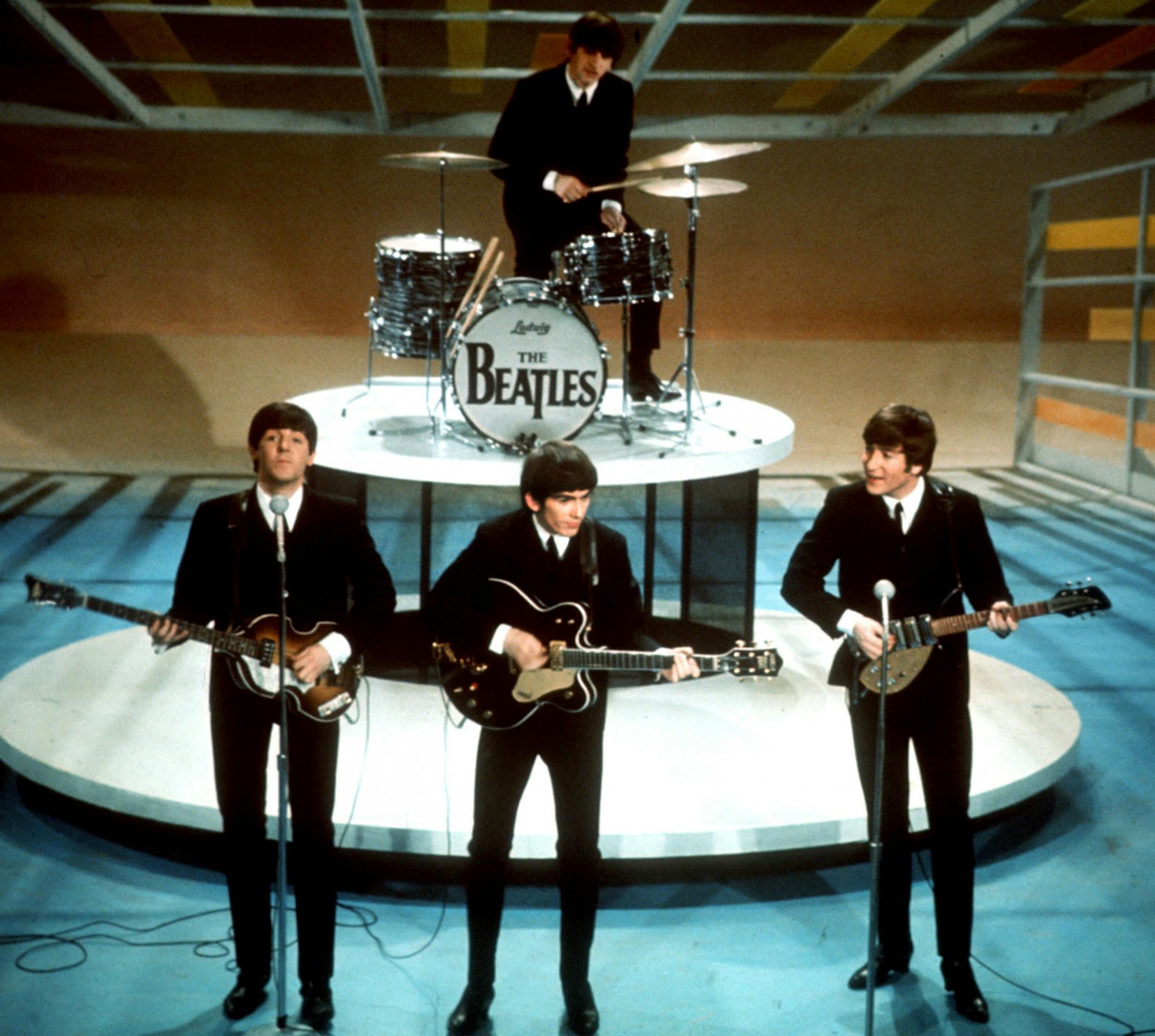
Then, on the night of Feb. 9, 1964, a quartet from Liverpool appeared on "The Ed Sullivan Show."
"Ladies and gentlemen, the Beatles!" With those five words, Sullivan launched the rebirth of the music that had ignited the nation 10 years earlier. And nothing symbolized the revolution more dramatically than the contrast between the host and his guests. There was Sullivan, stiff and stern as an undertaker. And there were the Beatles, vibrant and subversive, their music as daring as their haircuts.
Ah, their music. Sullivan introduced the group, and the world would never be the same. The Beatles performed two sets, beginning with "All My Loving," a joyous celebration of teenage love — a love reciprocated by the studio audience, which was mostly adolescent, mostly female and mostly screaming. The girls were not alone. Picture a giant living room, encompassing every state in the union. More than 73 million Americans tuned into the show — a staggering 38.4 percent of the U.S. population in 1964.
With millions viewing at home, the Beatles created a delicious tension with the count-in to their first song — "One, two, three, four!" And when they reached "four," it started, the mayhem with a melody that captivated the nation and the world.
Holding our hands, the Beatles escorted us into the future, a grand reason to mark the 50th anniversary of their appearance on Sullivan's program. "They provided a variety of songs like no other group at the time — story songs, love songs, lessons in existentialist thought ['Eleanor Rigby'], psychedelic rock, etc.," Mike Kearl, a sociology professor at Trinity University in San Antonio, said. "Theirs were songs one could generally sing along with — from beginning to end. And like Dylan, they had lyrics worth listening to."
"Their music was like this perfect distillation of attempts at high art and innovation into a three-minute pop song," Steve Alejandro, the co-manager of Hogwild Records & Tapes in San Antonio, said. "The band certainly became a measuring stick. Since the Beatles demise, nearly every band has been judged against or compared to the Beatles. Any time a band releases an LP that is a little off their usual musical path, it's compared to 'The White Album.' Think of Fleetwood Mac's 'Tusk' or The Clash's 'Sandinista!' or Radiohead's 'OK Computer.' "


