

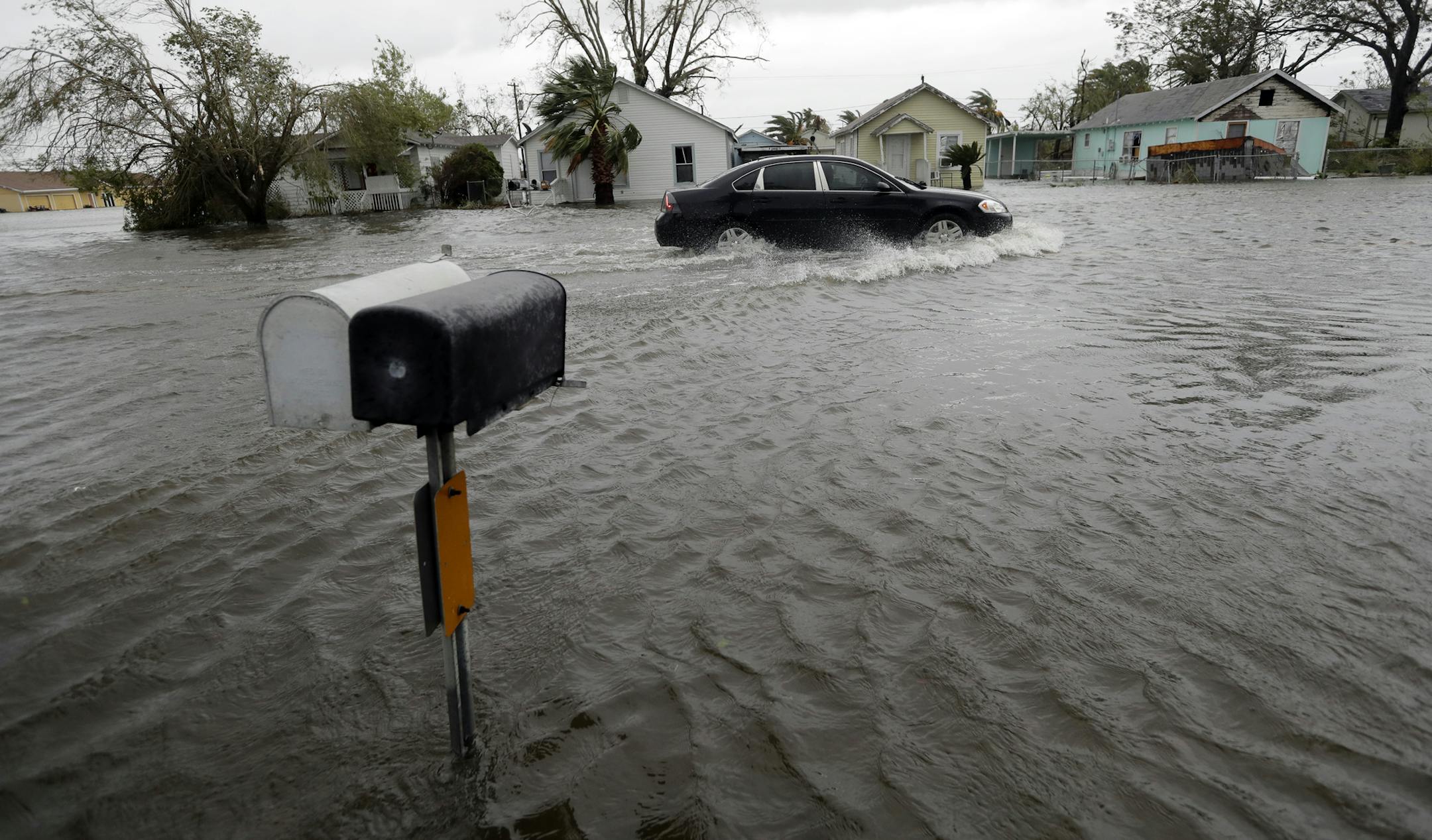
In 1967, Pete Seeger composed a protest song that said: "We're waist deep in the Big Muddy, and the big fool says to push on." It was a poke at President Lyndon Johnson, in an allegory about Vietnam. That war is long past. But Johnson led us into another, more literal Big Muddy that we have yet to escape.
Hurricane season is underway in North America, with the worst storms likely between August and October. Americans who live inland may think they have nothing to worry about, because their homes will not be drowned in saltwater. But they are at high risk anyway.
That's because they will have to shoulder a large share of the cost of helping homeowners who live in the path of tropical storms. The National Flood Insurance Program, created in 1968 under LBJ on the theory that the private insurance market couldn't handle flood damage, presumed that Washington could. Like many of his Great Society initiatives, it has turned out to be an expensive tutorial on the perils of government intervention.
The program is set to expire at the end of July, but Congress will undoubtedly renew it sooner or later. Correcting its perverse incentives, however, may be a bridge too far.
Hurricane Harvey inundated a house in Kingwood, Texas, last year — the 22nd time it has flooded since 1979. You might think that after the first or second disaster, those in charge of the insurance program would have offered to pay for the owner to rebuild — somewhere else.
But the house was allowed to remain in harm's way. As of 2015, the government had paid $2.5 million in claims — "at least eight times what the house is worth," according to the Houston Chronicle.
A house outside of Baton Rouge, La., assessed at $56,000, has soaked up 40 floods and over $428,000 in insurance payouts. One in North Wildwood, N.J., has been rebuilt 32 times.
Nationally, some 30,000 buildings classified as "severe repetitive loss properties" have been covered despite having been swamped an average of five times each. Homes in this category make up about 1 percent of the buildings covered by the flood insurance program — but 30 percent of the claims.


