

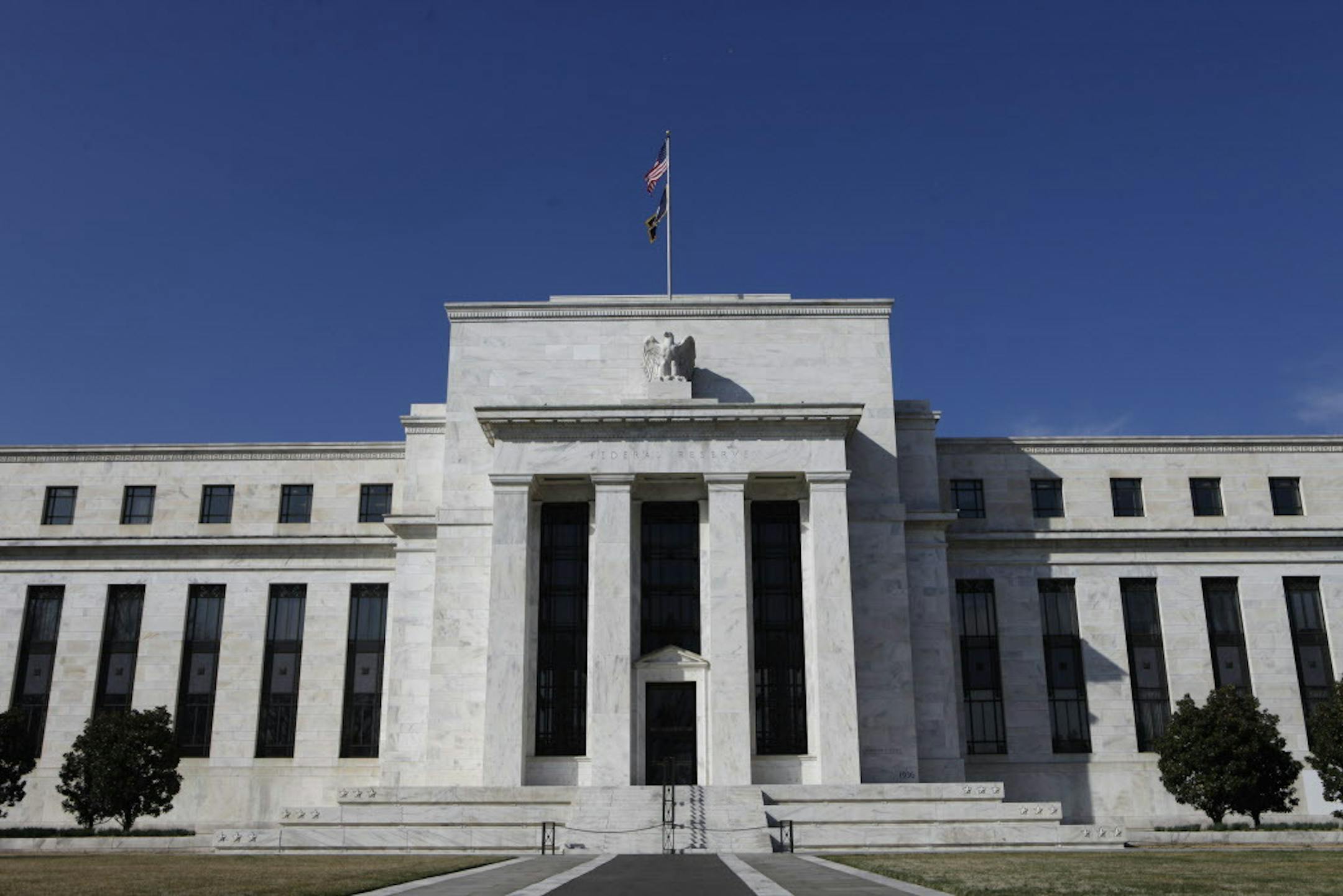
The nation's central bank can't fix income, gender and racial disparities, but those problems matter to its core job of setting interest rates, two Federal Reserve leaders who vote on rates said at a conference that ended Tuesday in Minneapolis.
And at the moment, with unemployment and inflation data sending conflicting signals about how interest rates should move, the jobs data on women and minorities is getting extra scrutiny.
Top-line data indicate the U.S. is at full employment, but data that looks at subsets of the population suggest that may necessarily not be the case, Lael Brainard, a Federal Reserve governor, and Neel Kashkari, president of the Minneapolis Federal Reserve Bank, said in separate remarks at the conference. Both are voting members of the rate-setting Open Market Committee.
"While the policy tools available to the Federal Reserve are not well suited to addressing the barriers that contribute to persistent disparities in the labor market outcomes of different groups, understanding these barriers and efforts to address them is vital in assessing maximum employment," Brainard said.
She said the Minneapolis Fed's new Opportunity and Inclusive Growth Institute could produce insights "on how far the overall economy is from full employment."
Kashkari, who in March was the only member of the 10-person committee to vote against a rate increase, said that he was certain that data at the time showed there was still slack, or room to fill more jobs, in the U.S. "Whether there is still slack in the labor market is now less clear than it was in March," he said.
"We have to be closer, we know that," he added. "We are closer, but we don't know how far the shore is."
Kashkari said he will wait to see more data before deciding how to vote at the rate committee's next meeting in mid-June.
![Neel Kashkari spoke to the Economic Club of Minnesota on Monday, May 9, 2016, delivering his first speech on monetary policy. His message: Stop obsessing over interest rates. They arenít the most important thing affecting the economy. ] Adam Belz - Star Tribune Minneapolis, MN 5/9/2016](https://arc.stimg.co/startribunemedia/TCRV3VZ46A6ML35N47CFIKS6CM.jpg?&w=1080)


