
FBI can't unlock San Bernardino killers' phone data

Encrypted data on the cellphone could shed light on their contacts.

Tribune News Service
February 10, 2016 at 2:04AM
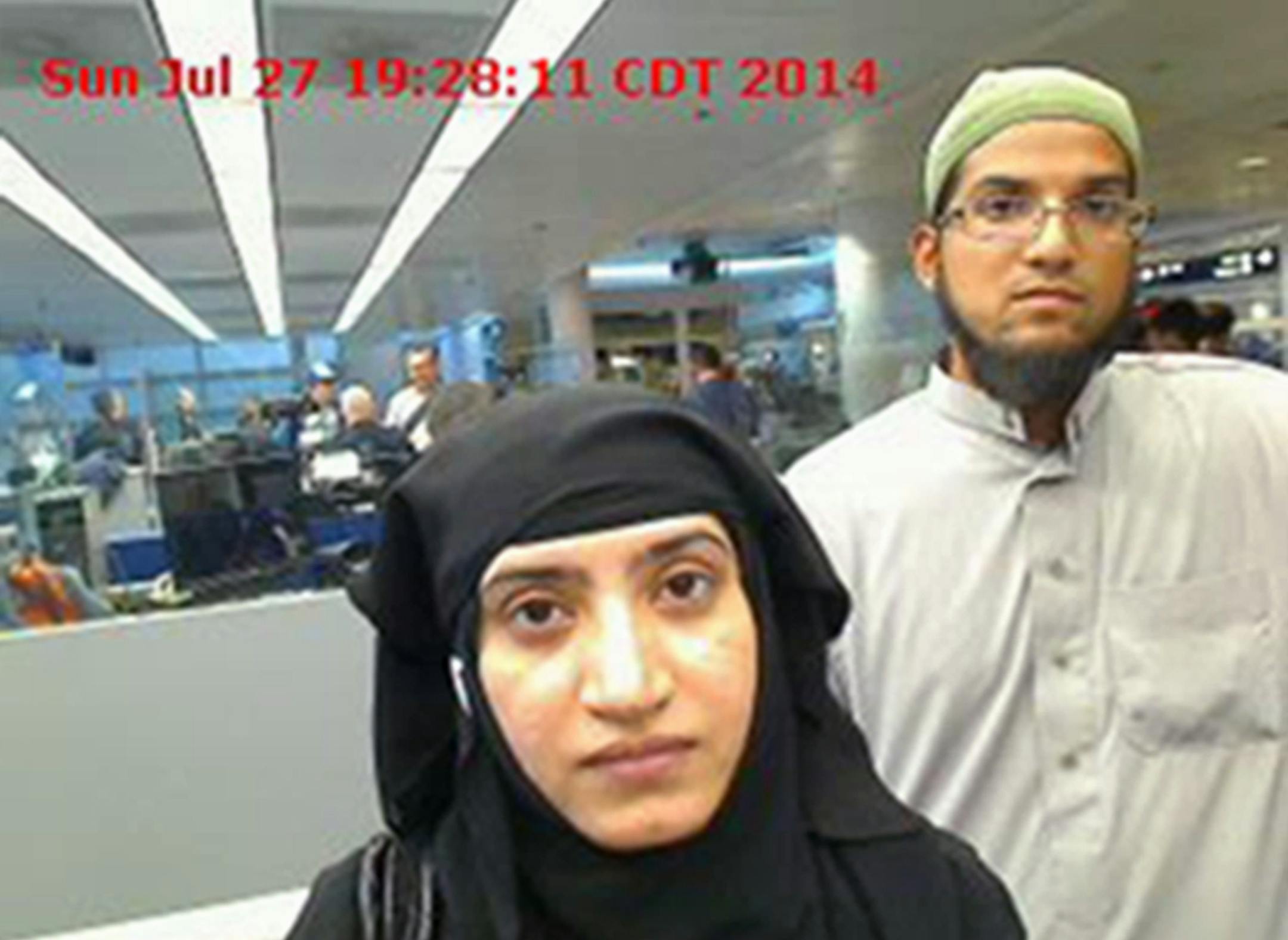
This July 27, 2014 photo provided by U.S. Customs and Border Protection shows Tashfeen Malik, left, and Syed Farook, as they passed through O'Hare International Airport in Chicago. The husband and wife died on Dec. 2, 2015, in a gun battle with authorities several hours after their assault on a gathering of Farook's colleagues in San Bernardino, Calif. (U.S. Customs and Border Protection via AP)
This July 27, 2014 photo provided by U.S. Customs and Border Protection shows Tashfeen Malik, left, and Syed Farook, as they passed through O'Hare International Airport in Chicago. (The Minnesota Star Tribune)

WASHINGTON – FBI technicians have been unable to unlock encrypted data on a cellphone that belonged to the terrorist couple who killed 14 people in San Bernardino on Dec. 2, the FBI director said Tuesday.

The failure, the second such case in recent months, has left investigators in the dark about at least some of the married couple's communications before they were killed in a shootout with police.

"We still have one of those killers' phones that we haven't been able to open," FBI Director James B. Comey told the Senate Intelligence Committee. "It has been two months now and we are still working on it."

FBI investigators have struggled to retrace the movements and plans of Syed Rizwan Farook and his wife, Tashfeen Malik, before and after they attacked a holiday party at the Inland Regional Center.

The encrypted data could shed light on why Farook left a bag with several homemade pipe bombs in the conference room, whether they considered additional attacks, or whether the couple were in communication with anyone about their plans before the attack.

So far, the FBI has said that it has found no evidence indicating the couple had received any outside direction or support. Farook, a county health inspector, had become self-radicalized via the Internet and he and his wife pledged allegiance to ISIL on the day of the mass shooting.

Comey did not describe the phone's model or say if it belonged to Farook or Malik.

Several cellphone models, including Apple's iPhone 6 and Samsung's Galaxy S6, use advanced encryption algorithms that scramble all the data on the device when a pin code is set.

Encrypted cellphones and text messaging apps have made it harder for investigators and intelligence services to track suspected plots in real time, or trace locations and connections once they acquire a suspect's device, Comey said.

In December, Comey said that one of two gunmen who sought to attack a prophet Mohammed cartoon contest in Garland, Texas, last May 3 had exchanged 109 electronic messages with "an overseas terrorist" that morning.

"We have no idea what he said, because those messages were encrypted," he told the Senate Judiciary Committee at the time.

Both gunmen were killed by police. ISIL claimed responsibility for the plot.

Law enforcement officials have warned for more than a year about their inability to access data on encrypted phones, even after a cellphone company or carrier is served with a warrant.

Companies insist they don't keep a separate, "back door" key to unscramble the device's memory because that would weaken security and privacy.

"I don't want a back door. … I would like people to comply with court orders, and that is the conversation I am trying to have," Comey said Tuesday.

about the writer

about the writer

Brian Bennett

More from No Section

See More
FILE -- A rent deposit slot at an apartment complex in Tucker, Ga., on July 21, 2020. As an eviction crisis has seemed increasingly likely this summer, everyone in the housing market has made the same plea to Washington: Send money — lots of it — that would keep renters in their homes and landlords afloat. (Melissa Golden/The New York Times) ORG XMIT: XNYT58
Melissa Golden/The New York Times

It’s too soon to tell how much the immigration crackdown is to blame.