

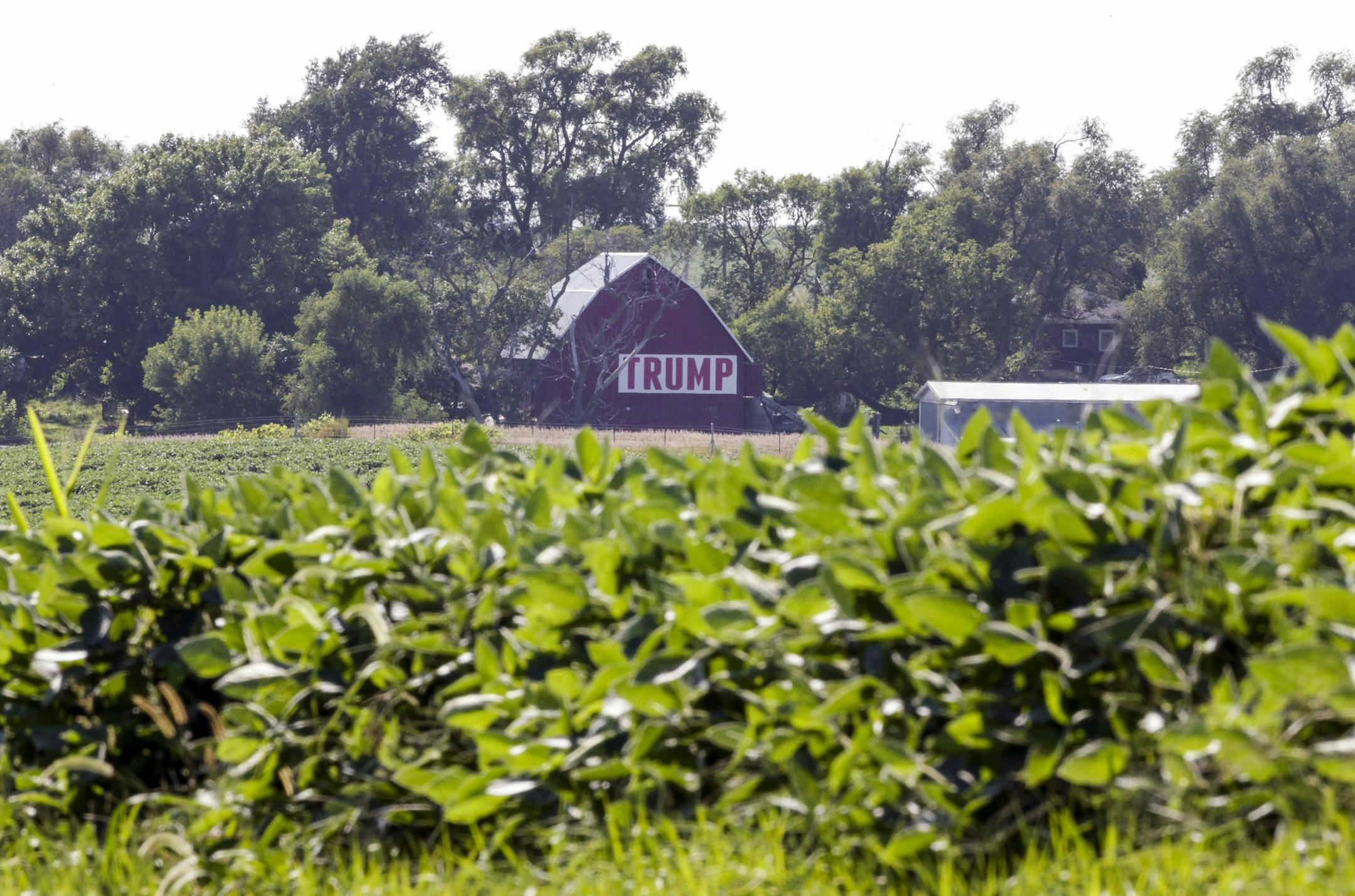
The love affair between President Donald Trump and rural America has always made sense to me.
When I covered the 2016 presidential campaign, Trump often went to remote farm communities where Democrats, and even other Republican candidates, never bothered.
The image of a New York billionaire holding a rally down the street from an Alabama Dollar General might have seemed hilarious to some reporters, but to the farmers and their families at those rallies, a rich, television celebrity coming to their hometown made them feel important and even hopeful that someone like him would value a place like theirs. The details of his policies weren't important at those rallies. It was about the way he made them feel.
But that feeling is being tested in ways even American farmers never imagined, despite the fact that Trump, as a candidate, told them exactly what he would do as president when he was elected.
"You know, China?" he asked a rally in Clear Lakes, Iowa, in 2016. "What they're doing to us in trade is unbelievable. They're killing us. It's one of the great thefts in the history of the world."
Even in a state like Iowa, where farmers rely heavily on Chinese markets to buy their crops, the crowd nodded and cheered as Trump promised to make China play by the same rules as America. "Everybody has great confidence in me, with China, with all these places. And don't worry about it. We'll take great care of the situation."
But since 2016, some of those same farmers have been doing almost nothing but worry. Delivering on his promise to be tough on China, Trump imposed a 25% duty on $50 billion worth of Chinese goods in July 2018, and later, another 10% tariff on $200 billion more of Chinese products.
China responded in kind with tariffs on peanuts, cotton, sorghum, pecans and a host of other agricultural products. American commodity prices collapsed as demand fell from the country that many American farmers counted as their single largest buyer.


