

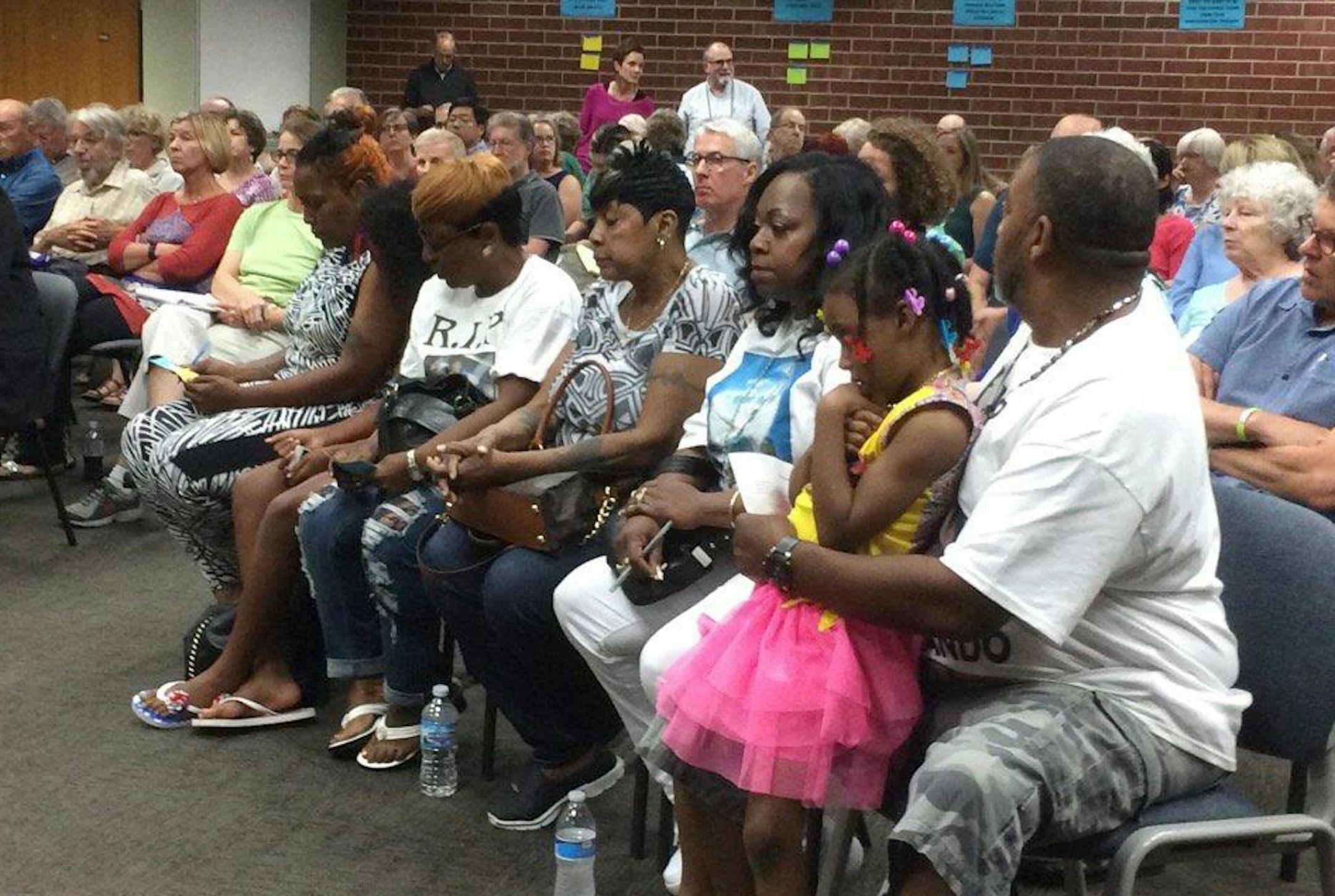
Residents of Falcon Heights, the tiny town in the heart of the Twin Cities metro that has become one of the flashpoints for police-race relations in America, packed its City Hall Wednesday night to demand answers, and immediate change to local policing, after Philando Castile was killed in their backyard.
Emotions were raw from the diverse crowd, which was not content with hearing the city's elected officials promise action before calling for faith in the investigative process. City staff had replaced its regularly scheduled City Council meeting with a listening session devoted to Castile's death at the hands of police.
About 150 people packed the chambers, and more spilled outside. Among those present were members of Castile's family, including his mother, Valerie, his uncle, Clarence, and a handful of cousins.
The 32-year-old Robbinsdale resident was shot to death by St. Anthony police officer Jeronimo Yanez during a July 6 traffic stop. The shooting's aftermath was videotaped by Castile's girlfriend.
The shooting occurred in Falcon Heights, which is in the second year of a five-year contract for police service from St. Anthony.
Echoing calls from Black Lives Matter St. Paul, some residents loudly demanded that the city cut ties with St. Anthony police because of the shooting and concerns about racial profiling — which they say is especially rampant on the stretch of Larpenteur Avenue where Castile was stopped.
Several black citizens said they personally avoid that road, widely regarded as a speed trap, for fear of being pulled over for a minor infraction. White residents said they were aware of that complaint, but never experienced it themselves.
Kay Andrews told the council that her black grandsons have been stopped by police many times there for petty offenses. "Any of them could have been the victim of this killing," she said. "When they try to tell white people what it's like, they say, 'You must have been doing something wrong.' "


