

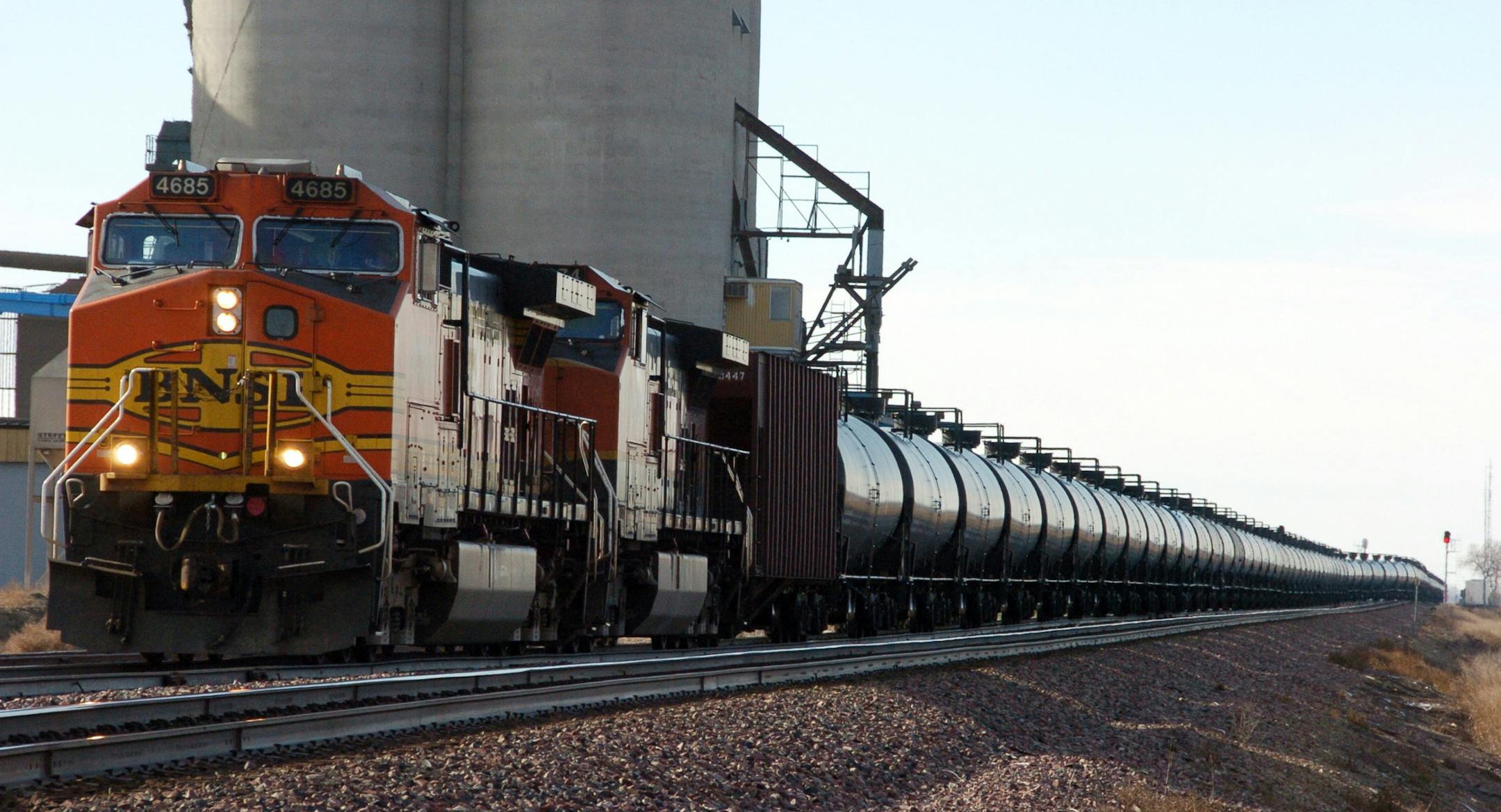
WASHINGTON - Tens of thousands of older tanker cars used to haul North Dakota crude oil and Midwestern ethanol run a one-in-four risk of leaking if they derail, railroad officials told the National Transportation Safety Board (NTSB) Tuesday.
The failure rate, estimated by the Rail Supply Institute and the American Association of Railroads, illustrates a growing concern for safety that has accompanied skyrocketing shipments of crude oil across the country.
Crude oil shipments originating in the United States have grown from about 6,000 carloads in 2005 to roughly 400,000 in 2013 as the United States has tapped domestic petroleum sources. At the same time, the government has yet to issue new standards for safer tanker construction.
About six North Dakota oil trains per day travel across Minnesota and through the Twin Cities, many of them 100 cars long. Each tank car holds 25,000 to 30,000 gallons of crude oil. Ethanol trains, which pose a similar hazard, move on Union Pacific tracks through the state.
But recent fiery crashes have convinced some policymakers that the threat of derailments like the one that happened in December in North Dakota put the public at unacceptable risk.
"A spate of recent accidents in the United States and Canada [demonstrate] that far too often, safety has been compromised," NTSB chairwoman Deborah Hersman said.
While the rail industry says it moves 99.9 percent of its crude oil shipments incident-free, industry data show that 46,400 rail cars have been damaged in 29,000 accidents since 1970.
The older, general-use tanker cars hauling oil and ethanol meet current government safety standards, but government videos on the first day of a two-day forum about safety in crude oil and ethanol transport showed an older car rupturing during a puncture test, spraying its contents over the test site.


