

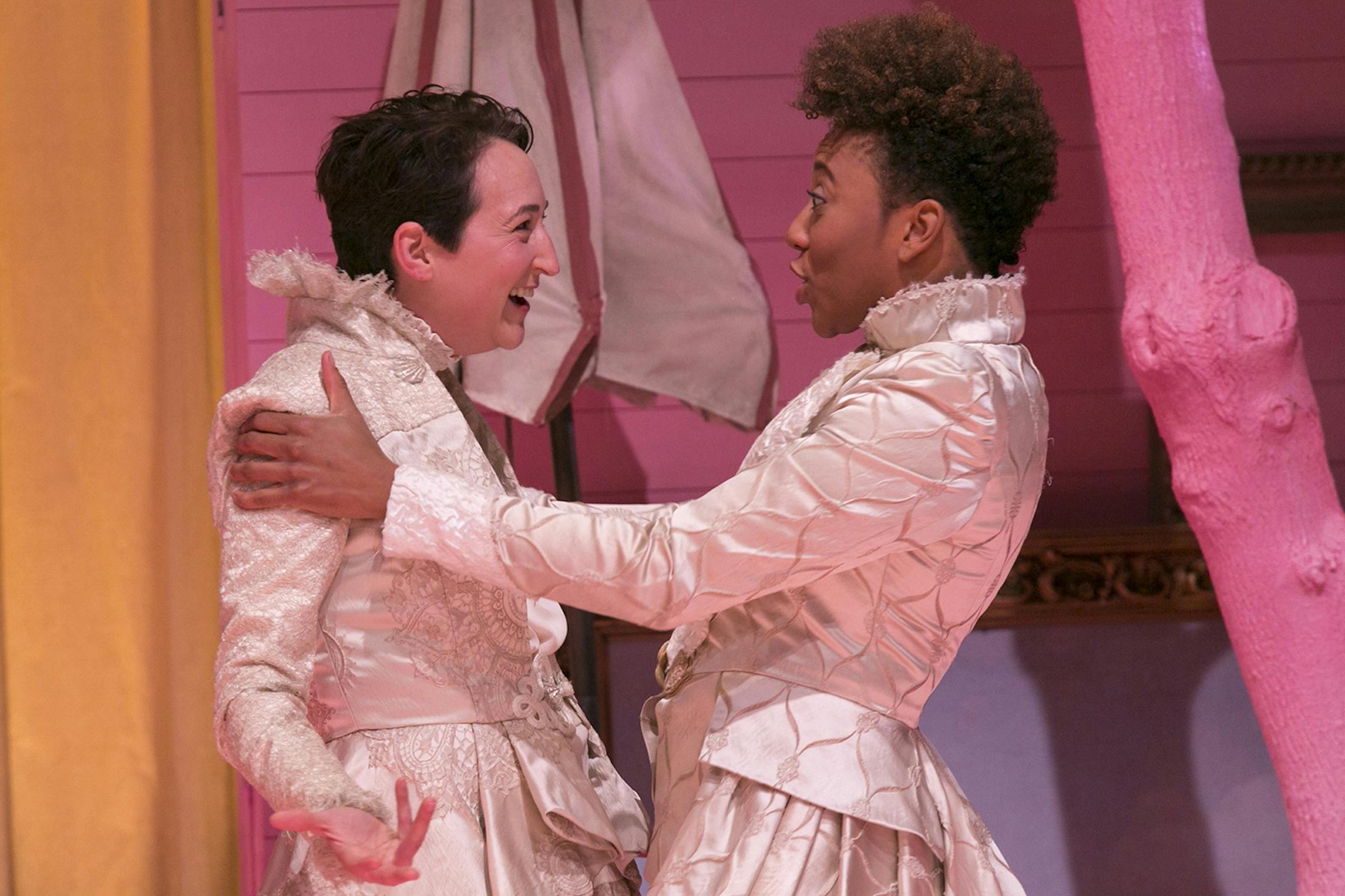
Around the time the nation elected its first black president nine years ago, Park Square Theatre founder Richard Cook looked at the demographic trends and had a light-bulb moment.
"I'm a 20th-century artist and I want Park Square to be a 21st-century theater," he said to himself, "which means the work on our stage should be as rich and diverse as our culture is becoming."
So the St. Paul theater, which had mostly presented mainstream fare to a base of ardent but aging supporters, set out to change its programming and the actors it hires. As a result, the company's audience is gradually diversifying and getting younger.
A similar story is playing out at theaters across the Twin Cities and around the nation.
What used to be called "colorblind" or "gender-blind" casting — now branded with the awkward label "nontraditional" — has become standard practice even at mainstream stages such as the Guthrie Theater. "Hamilton," Lin-Manuel Miranda's blockbuster musical in which actors of color play America's founding fathers, cemented a revolution to the field.
Nor is the issue limited to the stage. Hollywood for years has struggled with issues of "whitewashing," using white actors to play people of color. When actors of color are cast in formerly white roles, there's intense social media chatter, as happened when Michael B. Jordan played the Human Torch in 2015's "Fantastic Four" and transgender actress Laverne Cox portrayed Dr. Frank-N-Furter in the 2016 TV remake of "The Rocky Horror Picture Show."
However, where some view an opportunity for inclusivity, others see a misguided attempt to rewrite history. Witness the recent hubbub over the casting of a black actor in an Oregon staging of Edward Albee's "Who's Afraid of Virginia Woolf?" The Albee estate scotched that production, saying it violated the late playwright's intent.
There is some irony in the fact that the faces we see on stage — whether people of color or white, male or female, gay or straight, cis or transgender — matter so much. In ancient Greece, the birthplace of Western theater, performers wore masks to blot out the individual and put the focus on their characters.


