

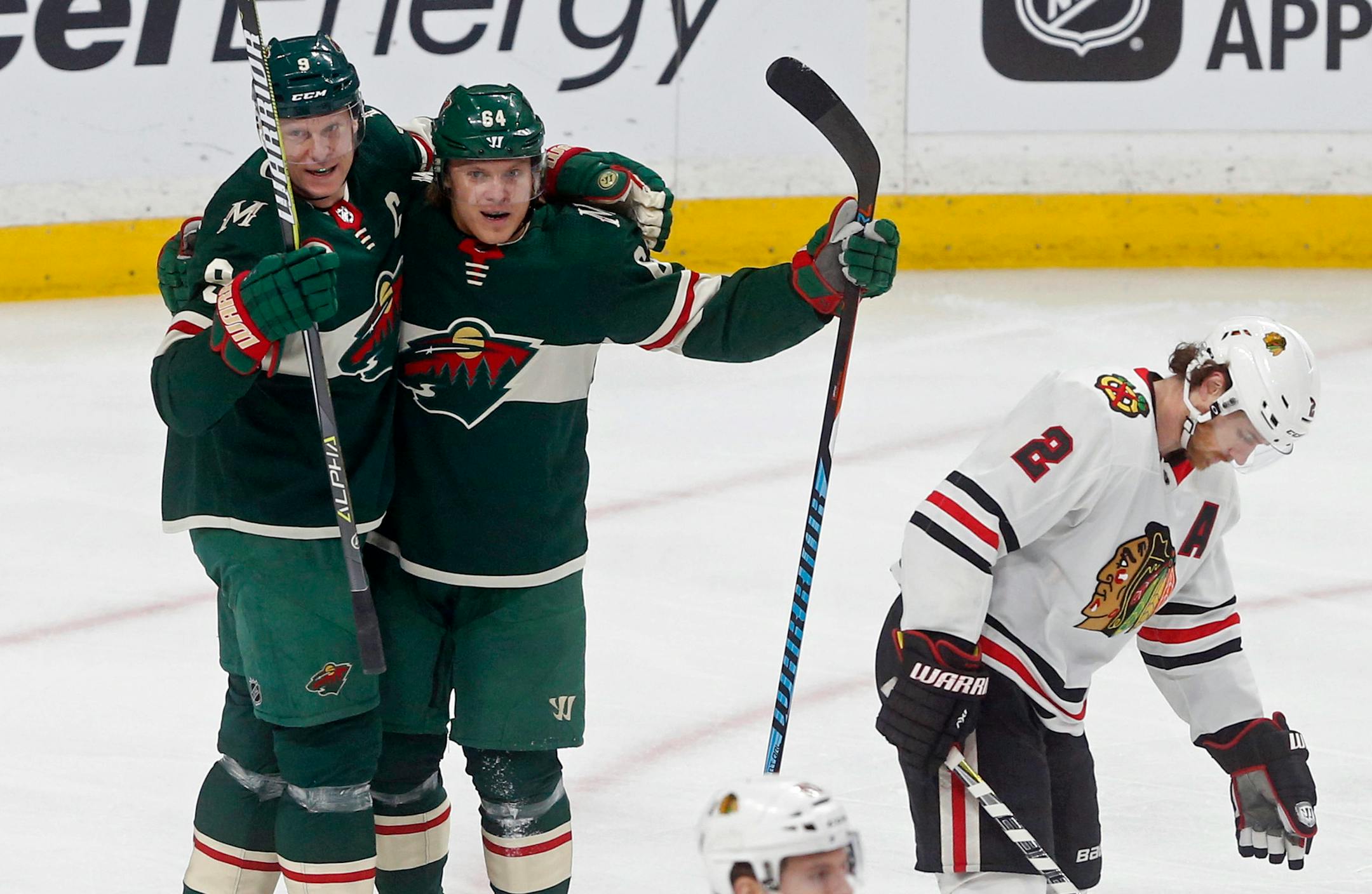
After pausing to ponder the question, Wild winger Zach Parise was dumbfounded, as was coach Bruce Boudreau.
"I can't tell you why," Parise said.
"I don't have an answer," Boudreau said.
The pair were stumped when asked why they thought teams in the NHL this season were converting power plays at their highest rate since 1989-90.
"I probably would've thought the opposite with all the shot blocking that goes on and video [game planning] and stuff," Parise said.
One reason for the league's overall increase in scoring this season has been the proficiency of power plays. Entering Sunday, teams were converting at a 19.9 percent rate, which is up from 19.1 a season ago and represents a 2 percent jump from the 2013-14 season.
The league is flirting with the 20 percent mark for the first time since 1989-90 (20.8). That was the last of 13 consecutive seasons in which the success rate was above 20 percent. Then it gradually began to dip, with the nadir coming at 15.1 percent in 1997-98, the lowest power-play percentage ever, according to Hockey Reference, which tracks power-play percentage as far back as 1963. The Wild is ninth this season in power-play percentage (21.4 percent) and 16th in kill percentage (80.6).
Some might cite the league instituting an automatic offensive zone faceoff at the start of a power play as a reason for the increase, but that rule change came in 2008.


