

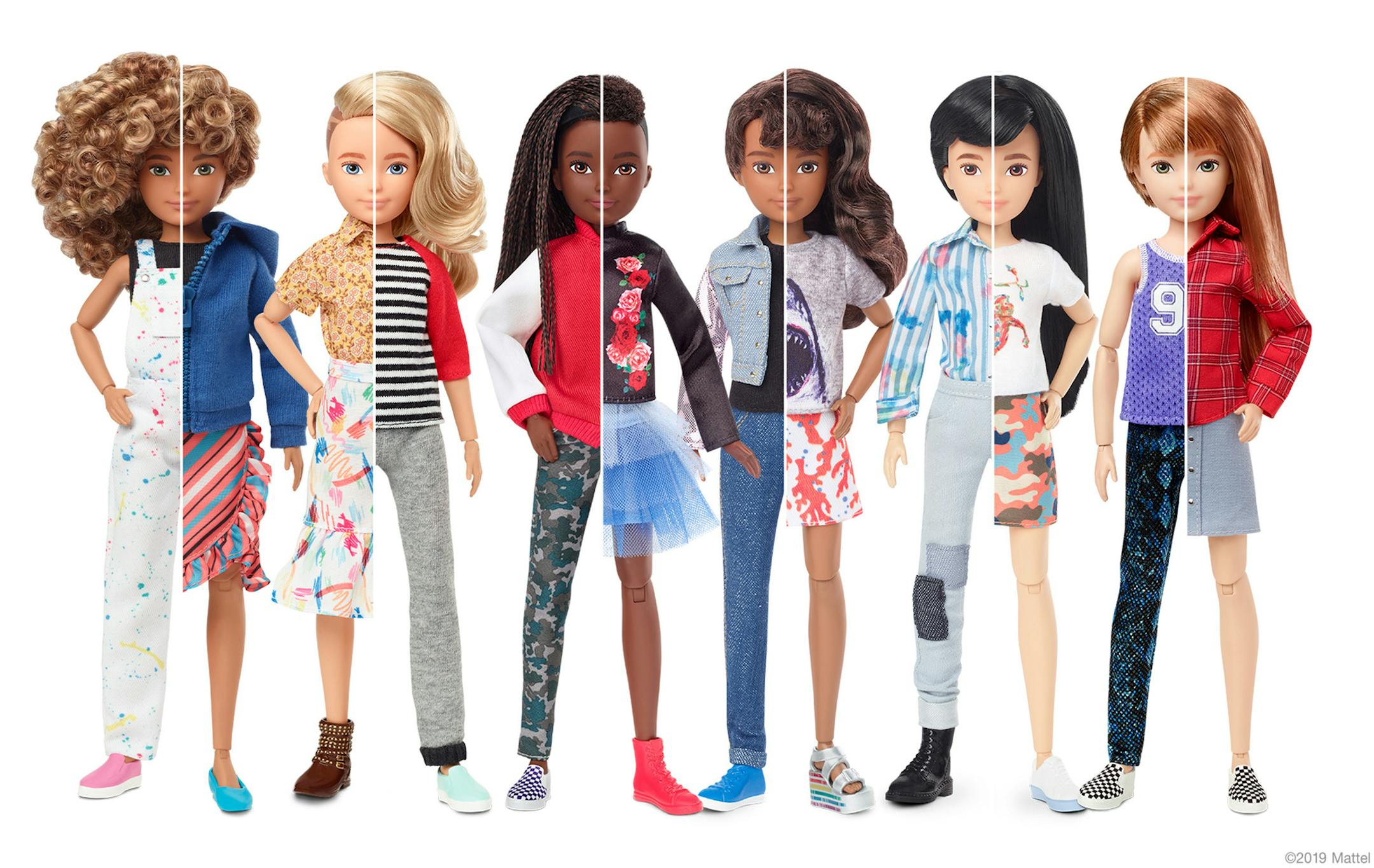
With its new line of genderless Creatable World dolls, Mattel is embracing and mass-marketing a new world in which identity can exist outside of pre-existing gender norms. But will children, and more importantly parents, follow suit?
Experts weigh in on how parents should encourage children to explore and play and whether this new direction in toys could spell a bigger shift in acceptance.
Since its release on Sept. 25, the Creatable World line has been the center of conversation from consumers and experts alike, who both praise and malign the toy's gender inclusivity. But according to experts, the most important thing parents should do is let their kids play as kids.
Stefani Goerlich, a sex therapist and guest lecturer on minority sexual communities at Northwestern University, noted the existing benefits of playing with dolls as well as the possibilities for including gender fluid toys — toys that don't ascribe to a fixed gender — in play.
"One of the benefits of imaginative play is that it lets kids experiment with different kinds of world-building. For the first time, trans identities and gender variance can be included in the imaginative worlds that all kids build through play," Goerlich said.
Other experts note that while a step in the right direction, the dolls likely won't lead to a significant shift in perceptions worldwide about the role of gender.
Dawnn Karen, a professor at the Fashion Institute of Technology and pioneer of the fashion psychology field, an academic discipline that examines how fashion choices like color, shape, and style impact human behavior, said that digitally and online, the world is becoming more gender-inclusive, but in the real world, it may take some time for gendered thinking to be phased out.
"It's going to take more time to move that dial. But I think digitally we've moved it."

