

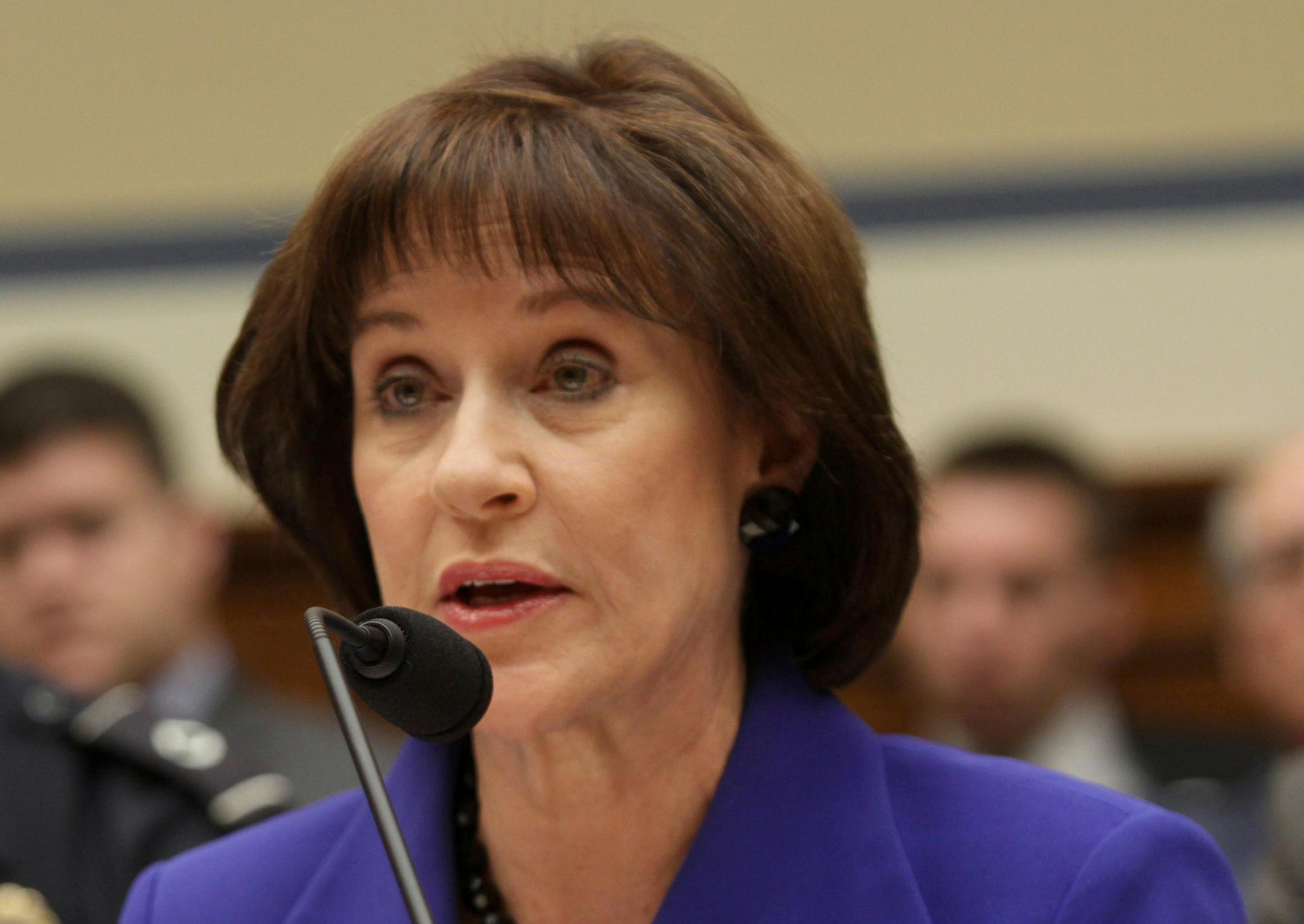
Lois Lerner may have lost a lot of emails. But she didn't lose all her emails; the House Ways and Means Committee is grinding through them, and the ones it has released do not shine a flattering light on Lerner's judgment: She sought an audit over a speaking invitation to Republican Sen. Charles Grassley of Iowa that also offered to pay for his wife to accompany him.
Another Internal Revenue Service official put the kibosh on this, pointing out that there was nothing to audit, unless Grassley accepted the offer and then failed to declare the trip as income to his wife. So you can look at this in two ways: one, that nothing happened, which showed that the internal controls were working, or two, that this shows that Lerner was an ideologue who didn't understand her job or the limits on her power.
Both points of view seem valid. The rest of the IRS didn't go for it. But you still have to ask what Lerner was thinking. It is not illegal for nonprofits to offer to bring your spouse along for the ride. This might be a matter for the Senate's ethics committee, but it wasn't a matter for the IRS.
That's a legitimate area of concern for a couple of reasons. This exchange suggests that Lois Lerner not only didn't have a good, basic grasp of the tax law she was supposed to be administering, but also viewed her job as an extension of her work at the Federal Election Commission.
That's not what the IRS is for. The IRS is not given power over nonprofit status in order to root out electoral corruption or the appearance of it. It is given power over nonprofit status in order to make sure that the Treasury gets all the revenue to which it's entitled.
Tax power is incredibly wide-ranging. Left unchecked, it can be used to infringe basically on any other right. (As I have previously suggested, imagine a special 100 percent tax on income earned by broadcasters named after foxes, or newspapers who receive investments from Mexican billionaires.) That's why we are careful about how the taxing power is used - only to collect duly enacted taxes, not to do end-runs around the Constitution. Obviously, these definitions get bent a bit in the hurly-burly of the real world - see, for instance, the Supreme Court's decision to uphold the Obamacare mandate. Yet just because they get knocked around a bit doesn't mean they ought to be smashed to smithereens.
The IRS, which administers our taxing power, operates (or should operate) under similar constraints. It has been given incredibly broad powers to collect taxes. The very broadness of those powers is why they should never become instruments for enforcement of policies that other government bodies are supposed to set and administer. That a high-level IRS official seems to have fundamentally misunderstood her agency's role is deeply worrying.
Moreover, Lerner's overbroad instincts also seemed to kick into high gear when Republican politicians were involved. Of course, such reports might well be survivor bias - Republicans are complaining about Lerner, while Democrats who also had run-ins with her may be keeping quiet for fear of fueling the fire. At this point, however, the fire is burning merrily on its own. If Democrats who encountered Lerner's overzealous use of her powers are out there, they'd do well to come forward and tell their stories to reassure Americans that even if her actions were overbroad, they weren't broadly partisan.


