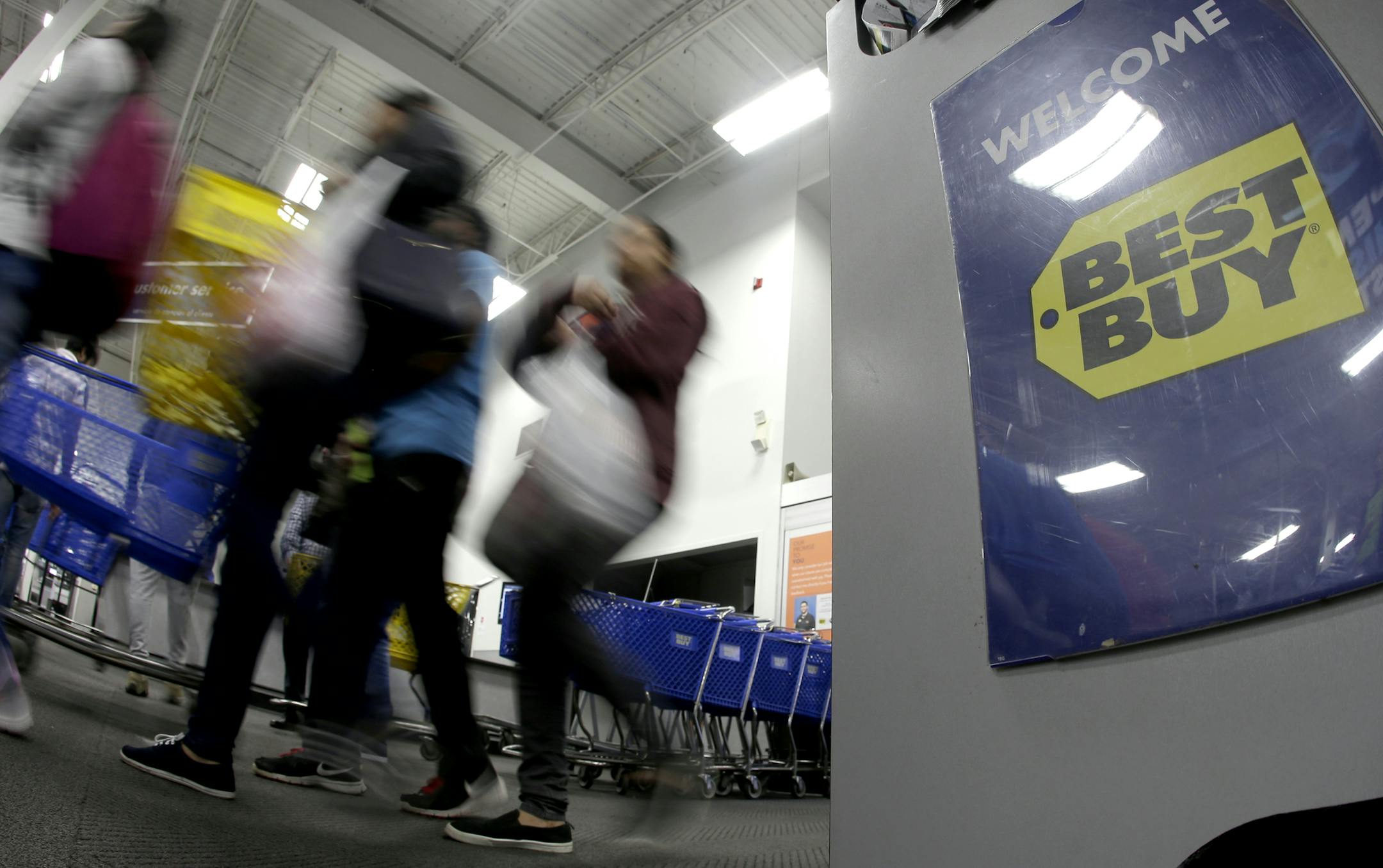
Best Buy Co., Inc. reported strong first-quarter earnings Thursday, a sign that consumers are still turning to the Richfield-based retailer and that the current level of tariffs on Chinese-made goods haven't eaten into profits.
Yet a potential new wave of tariffs threatened by the Trump administration is casting a long shadow over the U.S. economy, with consumer electronics particularly vulnerable.
Best Buy left its full-year forecast unchanged, but uncertainty about price increases and the road ahead pushed down the retailer's stock price despite better-than-expected results. Shares ended the day down nearly 5%, at $65.82.
"We think it's premature to speculate on further tariffs as it's unclear whether they will be implemented, what products would ultimately be included, at what rate and when," Best Buy Chief Executive Hubert Joly said during a call with investors.
But, he underscored, unequivocally: "The impact of tariffs at 25% will result in price increases and will be felt by U.S. consumers."
Best Buy reported that it earned 98 cents per share for the three months ended May 4, which was 11 cents higher than analysts were expecting. Adjusted for one-time events, Best Buy earned $1.02 per share, 15 cents higher than expected.
Sales across domestic and international operations were flat, at $9.1 billion, while comparable sales among stores open at least a year rose 1.1%, at the high end of its guidance.
The previous round of tariffs put a 10% hit on Chinese-made steel and aluminum. For Best Buy, the nation's largest consumer electronics chain, that mostly affected washing machines and some accessories. The company, along with most other retailers, passed it along to consumers in higher prices.