

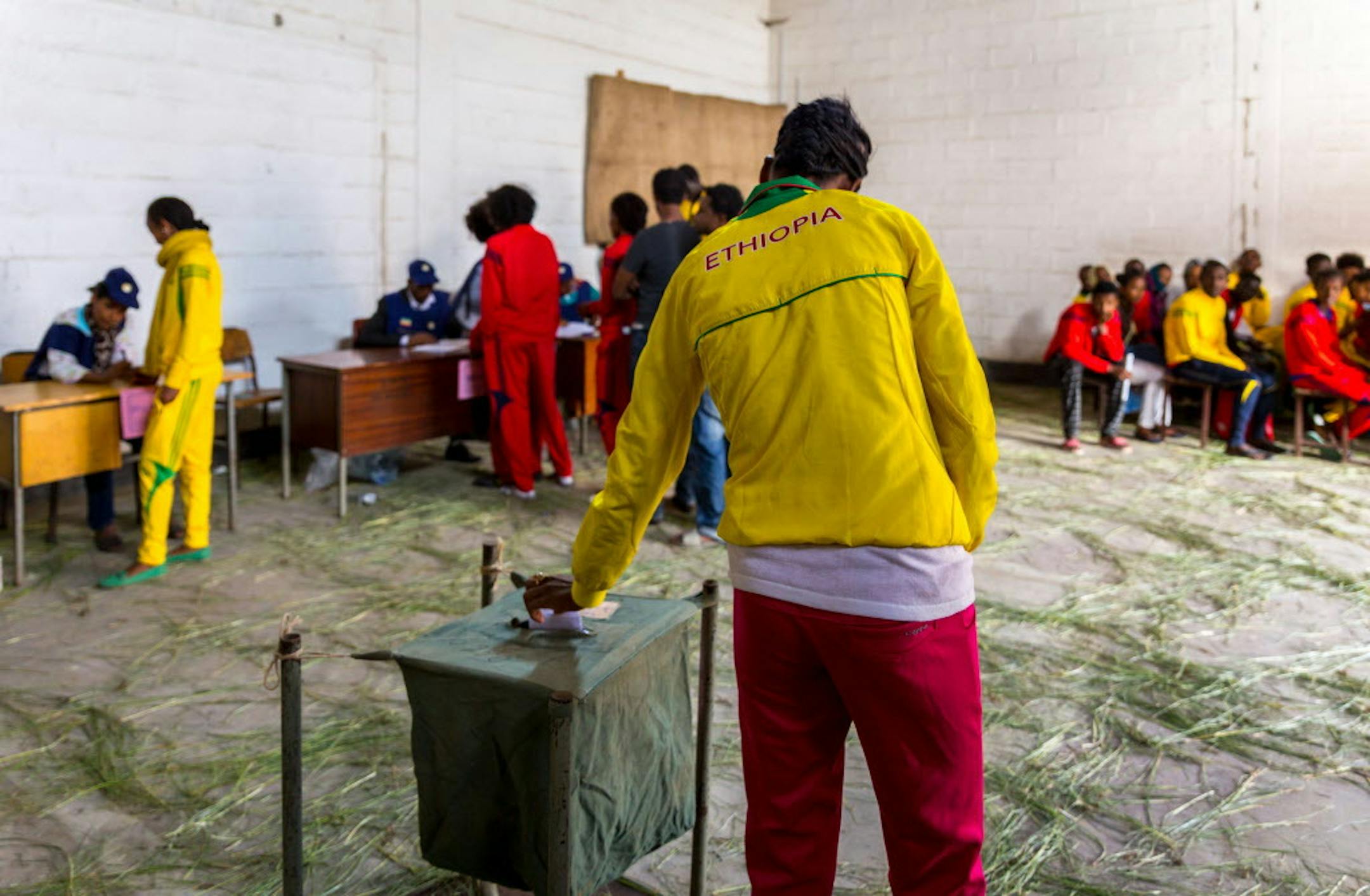
Nowhere in Africa is modern China more of a lodestar than in Ethiopia, which on May 24 held an uneventful election with a predetermined outcome: another term in office for the long-standing ruling party.
Africa's second-most-populous country and fastest-growing big economy has close intellectual links with China's Communists and often sends officials to their party school in Beijing. There, Ethiopians imbibe the gospel of industrialization overseen by a strong state that exerts tight control over an ethnically diverse population with a history of strife.
But all is not well in the relationship.
When a new Chinese ambassador arrived in Addis Ababa in February, he presented an unexpectedly awkward message to his hosts. La Yifan told the ruling elite — behind firmly closed doors — that it must discard the isolationism of the past and open up an economy in which the flow of money and information is still restricted. Banking and telecoms are almost antediluvian.
Investors are frustrated. Trade lags expectations. After years of praising the government, the Chinese are now singing from the same hymn sheet as Ethiopia's Western critics.
The problem is a lack of courage. Many in the Ethiopian government, ruling party and security apparatus acknowledge that only further reforms can sustain the goals of economic growth and political stability. But they are slow to enact them.
The government's main priority is industrialization. But endless red tape and restrictions on finance deter investors. Officials point to Huajian, a Chinese shoemaker that has gone from employing 600 locals to 3,500 in a few years. But Ethiopia needs a hundred Huajians. Without faster growth of industry, the country will struggle to absorb labor it hopes to free up from modernizing subsistence farms that provide a living to 80 percent of its people.
The government is trying to help industry by building roads, railways, power stations and dams — following the Chinese playbook. These efforts have kept the official GDP growth rate above 10 percent, although outside experts reckon a more realistic tally is 7 to 8 percent. Inflation has dropped to single digits. But no progress has been made toward joining the World Trade Organization in the past three years. And prospects for attracting desperately needed foreign equity capital remain dim.


