

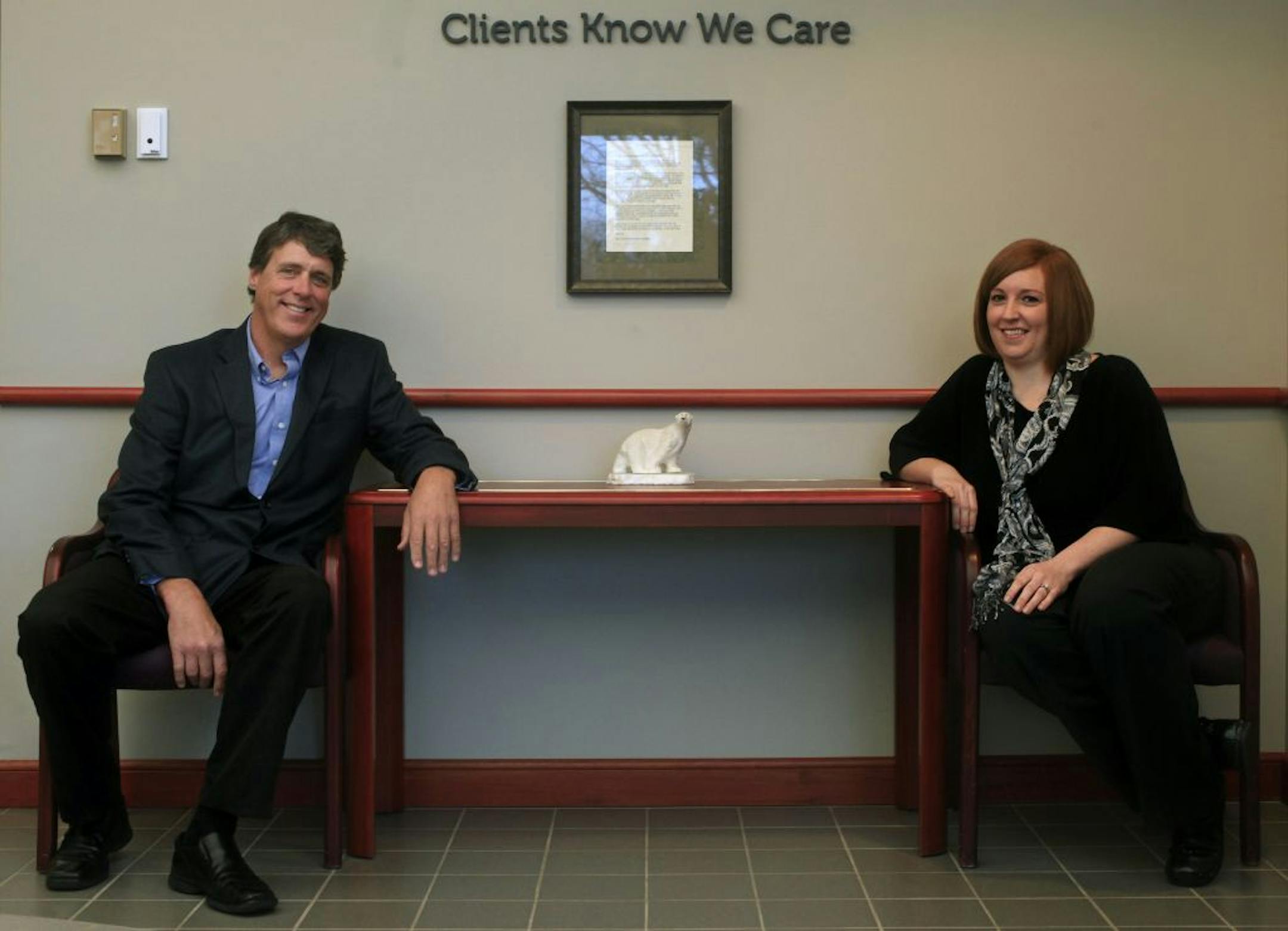
Jim Redpath and Sarah Gengenbach are two of about 80 employee-owners of HLB Tautges Redpath, a 40-year-old, 115-employee White Bear Lake accounting firm that has long consulted with it clients about employee stock ownership plans (ESOPs) and succession planning.
The firm was converted to an ESOP a decade ago, as a means to ensure a fair value for people leaving the company and an ownership future for younger employees.
QWhy did your firm become an ESOP?
JRThe main reason was succession planning. We had a bunch of young partners. We [older partners] were all going to retire at about the same time. A few players in industry were rolling up [acquiring] firms, but that didn't feel right to us, to sell to a bigger company.
Whenever we look at succession, we want to know how we can keep this [business] around for our clients and our employees. I was sitting in Vegas at a conference with a potential buyer ... and I told my partner, I felt like I was in a meeting with a bunch of accountants ... boring. No fun. I said, "Why don't we do this to ourselves?"
QYou consult in this area and you lobbied 15 years ago successfully for a federal law change that would allow so-called S-corporations -- small businesses owned by individuals -- to convert to ESOPs, correct?
JRThe legislation was signed by President Clinton in 1998. We had a client who was an S-corp who believed in employee ownership. It was working and I thought, "This is better. You don't have to worry about buying out partners and our employees could benefit." Once you're here a year, you participate. Nobody buys in. You are allocated shares. The longer you are here the more you share. When you retire ... you get paid out the full amount of your stock. Some plans do it over five years. Several employees have retired or moved on and got paid out in cash since we started.
QThere are pitfalls, right? In other words, whether the partners self-finance the sale of the company over time to the ESOP, or whether you finance it through a lender, you want to be a growing business that's generating sufficient cash to pay down the debt with room to spare.


