

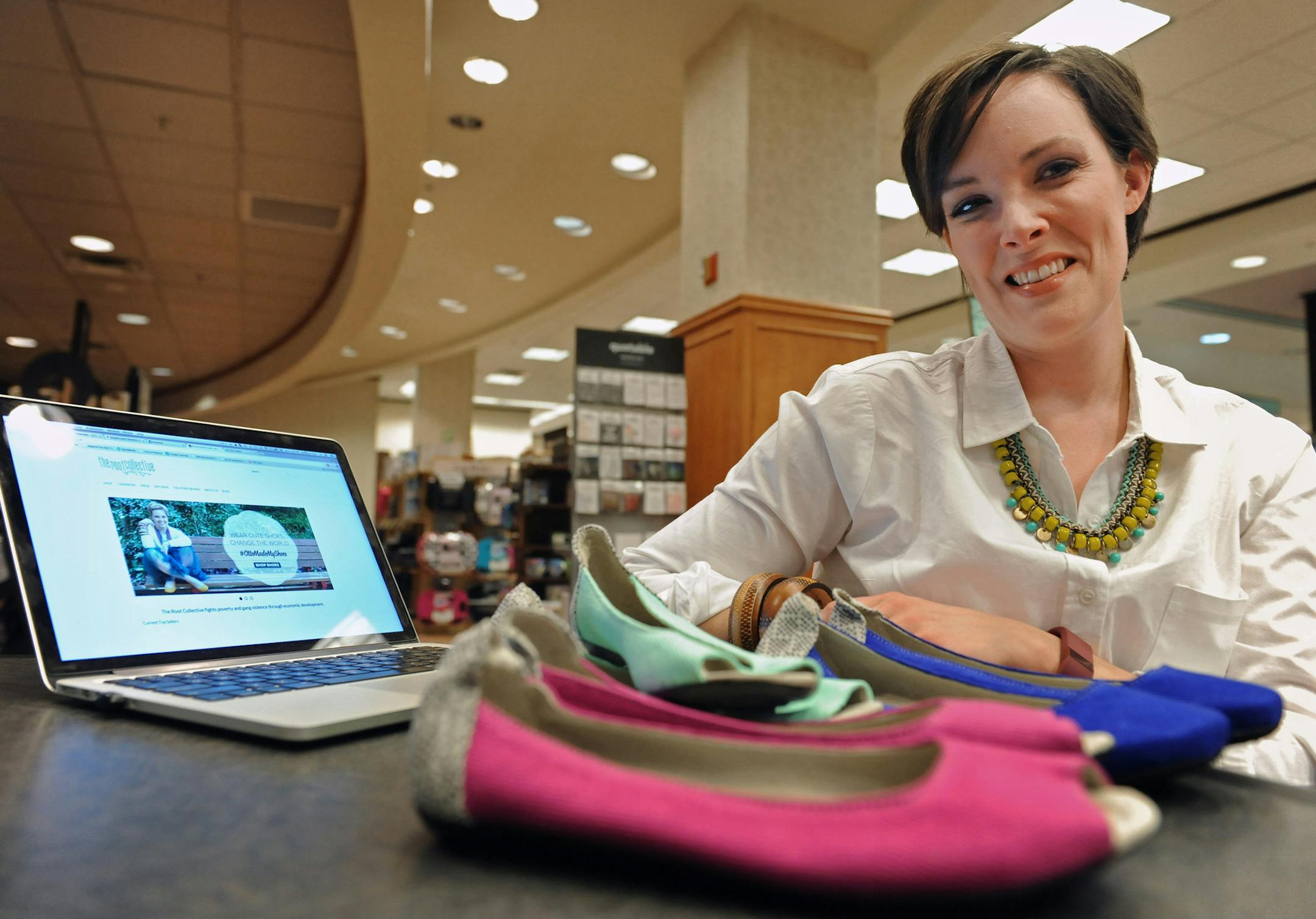
A trip years ago to visit a friend and aid worker in a Guatemala City slum proved life altering for Maryland resident Bethany Tran.
In La Limonada, one of Guatemala's poorest and most violent neighborhoods, Tran saw houses stacked one on another, hungry children roaming the streets, gangs that spread fear through the community. But she felt a connection to the people.
"I just fell in love with the community, and came home just destroyed," said Tran, 32. "It's difficult to comprehend until you've seen it."
She eventually became convinced she needed to shift into work that would boost the fortunes of the poor residents she'd met. She teamed up with a cobbler from La Limonada, and created the Root Collective, an online shoe boutique.
Tran hopes the nearly two-year-old enterprise will help expand the businesses of the Guatemalan weavers and shoemakers who make the ballet flats she now sells at a rate of about 200 pairs a month. The shoes, crafted in the shoemaker's workshop using fabric made by a women-owned weaving collective, sell for $79 and $83.
The start-up, which also has been selling a limited selection of handbags, scarves and jewelry made by Central American artisans, is part of the growing "ethical fashion" movement, which aims to promote sustainable practices and reduce poverty and environmental damage in the fashion industry. The business had sales of about $45,000 in its first year and only recently turned a profit, said Tran, founder and designer-in-chief.
"We are walking the vision of changed communities through job opportunities, and walking it in super cute shoes," Tran said in a Root Collective tweet last month introducing its spring collection.
Tran's business launch comes at a time when consumers have become increasingly concerned about the use of environmentally sound practices to grow and make products, as well as about the conditions of workers who make those products.


