

President Donald Trump's attacks on the news media have been mostly rhetorical. Some mainstream news organizations (not Fox, of course) have been labeled with the Stalin-era "enemies of the people" epithet, and accurate, albeit unflattering, stories are often rejected as "fake news."
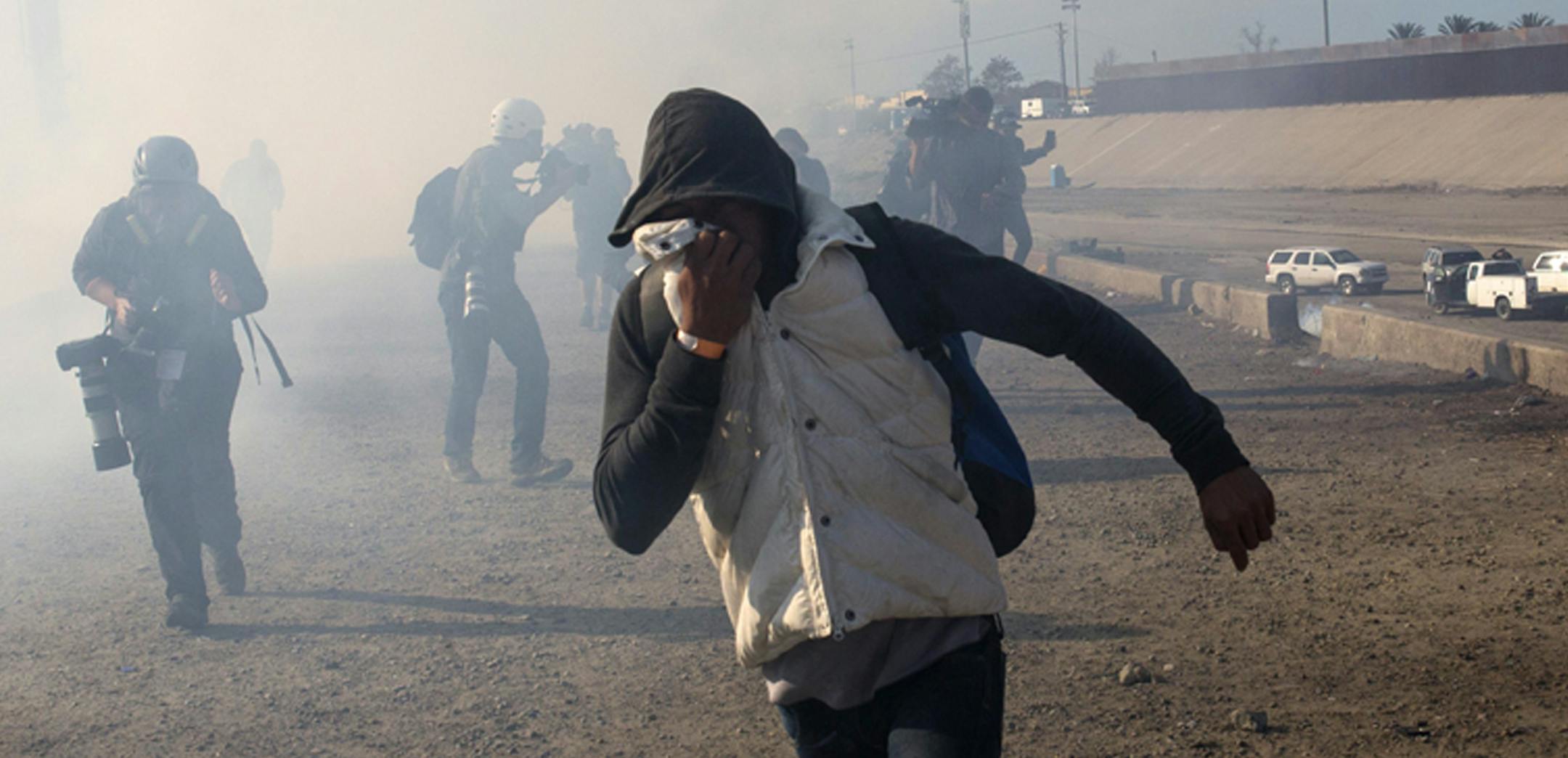
But this relentless assault has taken a more dangerous turn with the news that the U.S. government has developed a secret database of journalists, as well as activists, tied to the largely Central American caravans traveling through Mexico. In several instances journalists were stopped for secondary screenings at the U.S.-Mexico border and, in some cases, there were alerts placed on their passports.
NBC's San Diego affiliate was among the first to report the disturbing news, and subsequent reporting by media freedom organizations has detailed the pattern of harassment.
The Committee to Protect Journalists (CPJ) spoke with at least eight journalists who went through such screenings. All were asked about their reporting in Mexico, and at least six were asked to review caravan photos or provide other information. Freelance photojournalist Mark Abramson told the organization that U.S. border agents searched his notebooks, which of course could have contained names of sources who were promised protection. He also was required to leave his bag and phone behind while questioned.
"I'm not an informant. My job is to inform the public," Abramson told CPJ, summing up a journalism ethos that keeps this country informed and free.
"This logic of using journalists as a tool for intelligence gathering is something that we see internationally, and it's incredibly threatening," Alexandra Ellerbeck, CPJ's North American program coordinator, told an editorial writer. "It's often used to justify additional scrutiny of journalists, harassment, and in some cases imprisonment."
Daphne Pellegrino, advocacy director for the North American bureau of Reporters Without Borders, called the treatment "unacceptable."
"It is something we see in more repressive, authoritarian countries," Pellegrino told an editorial writer. "It is also setting a really bad example coming from a country that has the First Amendment and has press freedom enshrined in its Constitution."


