

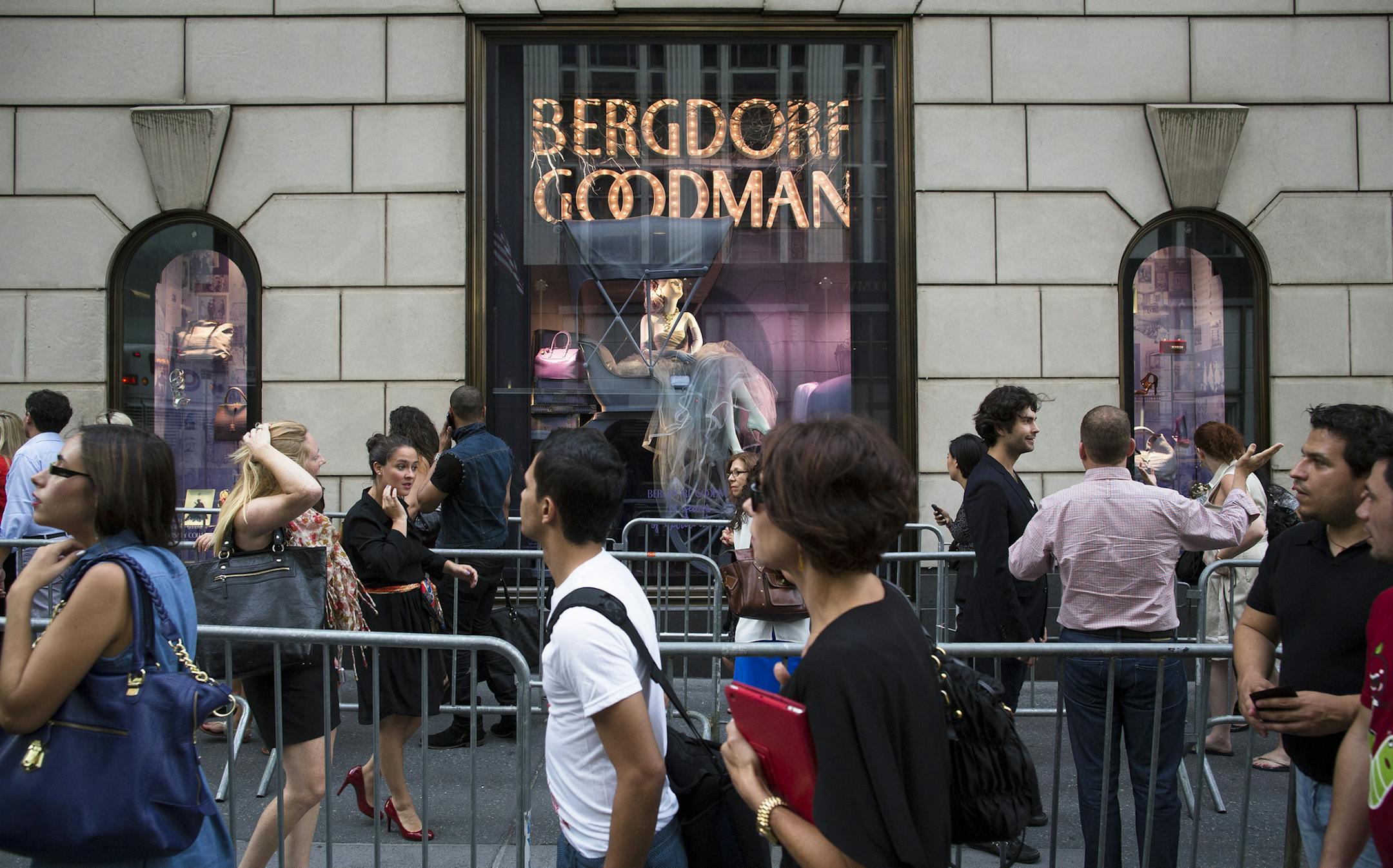
Landlords on Manhattan's Fifth Avenue are sitting on a record amount of open space as retailers balk at committing to expensive new leases in one of the world's most prestigious shopping districts.
The availability rate on the famed strip, home to Saks Fifth Avenue and Tiffany & Co.'s flagship store, jumped to 15.9 percent in the third quarter, up from about 10 percent a year earlier, according to Cushman & Wakefield Inc. The rate has climbed steadily this year, surpassing the prior peak of 11.3 percent, set in the fourth quarter of 2014.
The rise of empty storefronts isn't limited to Fifth Avenue. It's part of a Manhattan-wide space glut as retailers — buffeted by e-commerce, tepid demand for luxury goods and a strong dollar that has eroded tourist spending — push back against rents that have soared to records. Leasing costs have increased in tandem with property values in the past five years, outpacing gains in merchandise sales and making it impossible for retailers to run profitable stores at many locations, according to Richard Hodos, a vice chairman at brokerage CBRE Group Inc.
"Property trades are being based on achieving ever-higher rents, and nobody ever really looks at what retailers can afford to pay," Hodos said. "In some cases, rents need to come down 30 percent or more for rents to be at levels where retailers are able to make sense of them again."
Retailers are being squeezed across the U.S. In 2016, malls and other types of shopping venues have been hit by 280 major-brand store closures, totaling 12.8 million square feet, data from Reis Inc. show. Another real estate research firm, Green Street Advisors, estimates that several hundred malls around the country will cease operations over the next decade.
On the stretch of Fifth Avenue from 49th to 60th streets, which commands the world's highest rents, landlords are asking an average of $3,213 a square foot, up from $2,075 a square foot in 2011, Cushman data show. In the tourist-heavy Times Square area, rents stand at $2,104 a square foot after tripling over a four-year period.
The brokerage's retail availability rate takes into account vacancies as well as stores occupied by merchants that plan to leave when their leases expire. Retailers that signed leases at high prices in the past several years and are seeking a tenant to sublease their space are also included, according to Steven Soutendijk, an executive director at Cushman.
"Tenants that signed at the absolute top of the market are looking to mitigate their exposure," he said.


