

FORT WORTH, Texas – Eleven-year-old Sophia Smith ponders some questions largely left up to urban planners, sustainability experts and city leaders: Where do communities put all the trash?
As Sophia seeks answers, she worries about space being used up to create more and more landfills.
"We could hurt the environment," Sophia said. "There could be so much trash piling up everywhere. We would need more and more space. We would have to keep making bigger and bigger spaces for all the trash and we would have less places to live."
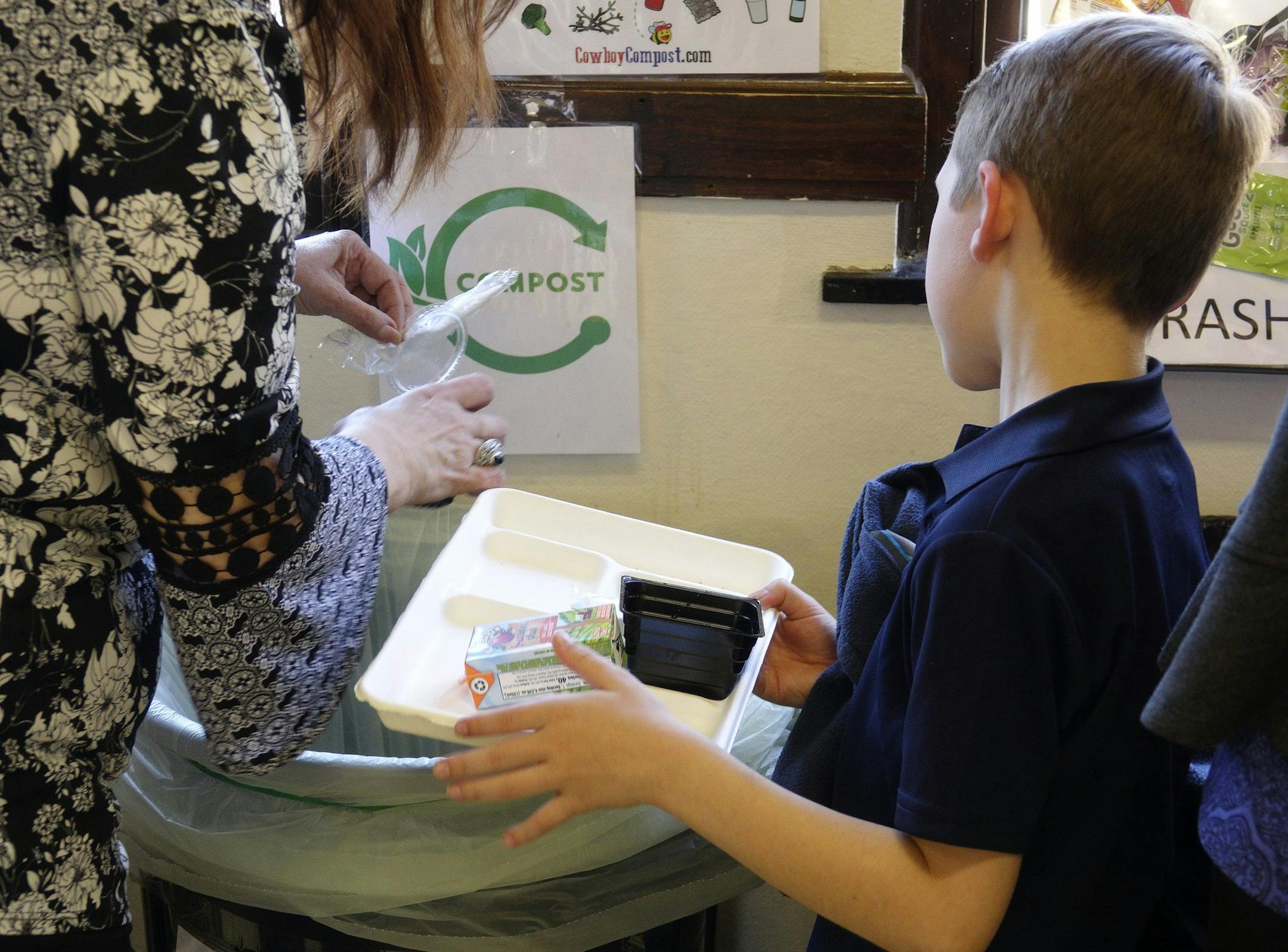
Sophia's questions are part of a larger sustainability experiment taking place at North Hi Mount Elementary in Fort Worth, Texas, where Texas Christian University students are working with elementary students to make less trash in the school cafeteria.
Sophia is among several North Hi Mount students who are learning to share unused food and sort out items that can be recycled and composted to reduce the amount of trash made in their cafeteria. This effort, called the Share Table Project, is a collaboration between TCU, Fort Worth school district, Cowboy Compost and the Food Recovery Working Group, a branch of the Tarrant County Food Policy Council.
The focus is to eliminate food waste in Tarrant County through educational programs that teach sustainable habits while also helping reduce food insecurity. The food that students don't eat — apples, chips and unopened milk bottles that usually end up in the trash — are now set on a table for others to take.
Gina Hill, an associate professor in nutritional sciences at TCU who helped create the Share Table program, said children can pick up items from the table to eat later or take home.
Under the pilot program, when students finish eating, they form a line near the Share Table and drop off their unopened food items. They also pour out any remaining liquids from containers. There are bins for trash, recyclables and compost.


