

In the run-up to this year's presidential election, you may recall that four years ago the candidate who received the most votes from its citizens was not elected to this country's highest office. For many, this was an undemocratic sucker punch that fanned the flames of division and summoned calls to incinerate the Electoral College.
But before we succumb to the urge to dismantle one of the cornerstones of our Constitution, it may be useful to witness the discussions that formed its creation. So hop on board our time-traveling DeLorean as we streak back to Philadelphia, circa May 1787, to check out the Constitutional Convention.
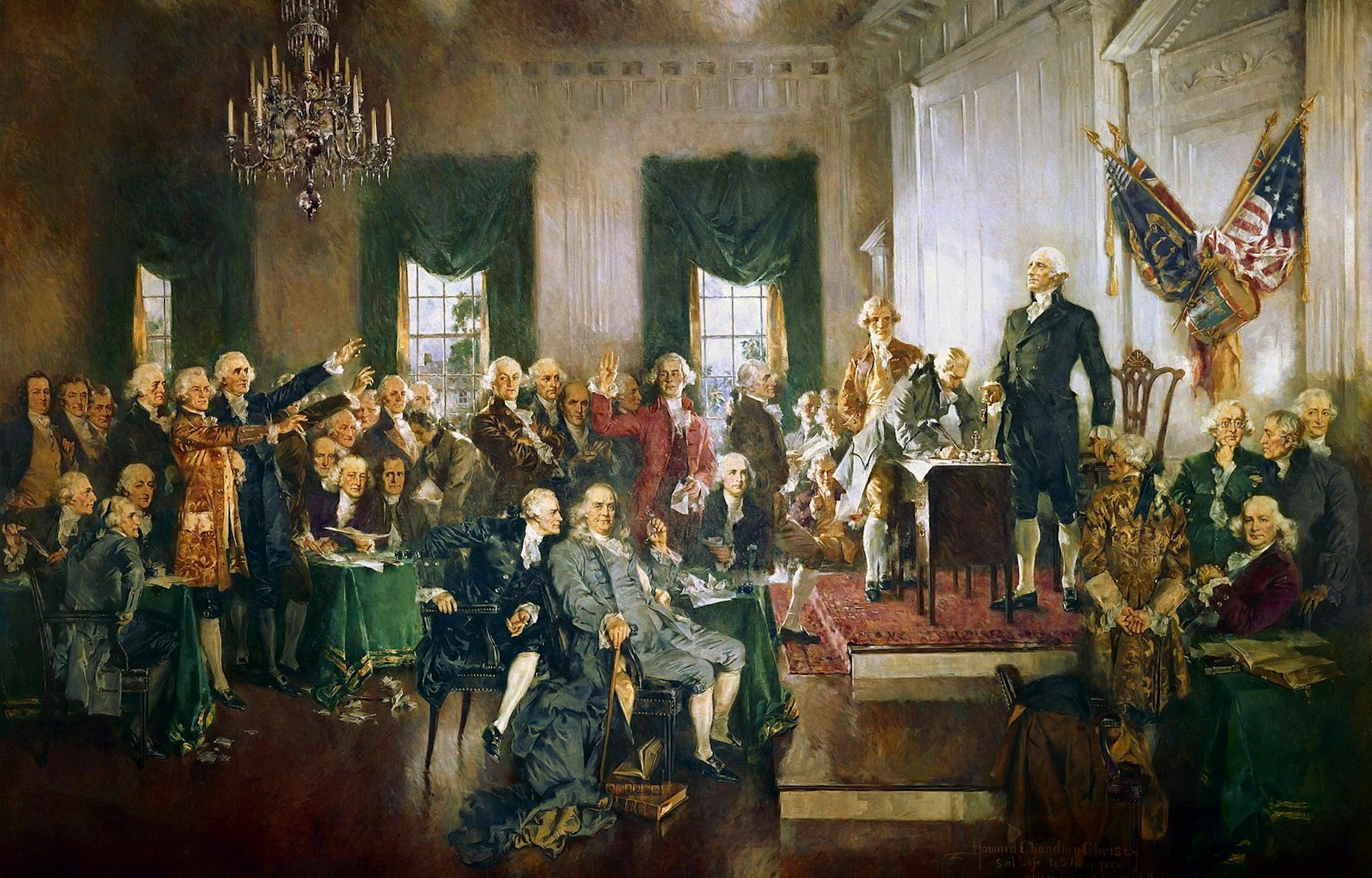
As you enter the Pennsylvania State House (now known as Independence Hall), you quickly notice two things: One, you are severely underdressed, and two, the room is insufferably hot.
The east room of the State House is crammed with 55 men, ranging in age from 26 to 81. Clearly men of status, they sport finely embroidered jackets and waistcoats, linen shirts with ruffles at the neck and sleeves, and tightly fitted satin knee breeches and silk stockings. These are the delegates selected by their respective states to rewrite the Articles of the Confederation.
Hopefully you packed a lunch — and brought something cold to drink. Because despite the stifling heat of what many will later recall as the hottest summer in 40 years, the windows of the State House stay closed, to maintain secrecy and to prevent swarms of flies from the nearby docks inundating the room.
Thomas Jefferson, serving as ambassador to France and not in the room, refers to the assemblage "as a gathering of demi-gods." Some you may recognize, since you carry their pictures around in your pocket (Washington and Hamilton, and maybe Franklin on a good day). But most are lesser-known Founding Fathers such as Roger Sherman from Connecticut, and Elbridge Gerry from Massachusetts.
As you quietly take your seat, Sherman rises, tall and gangly, to address the thorny issue of how the chief executive should be selected. Jefferson once stated that "Sherman never said a foolish thing in his life."
"The people," Sherman declares loudly, "should have as little to do as may be possible with the formation of the government. They want information and are constantly liable to be misled."


