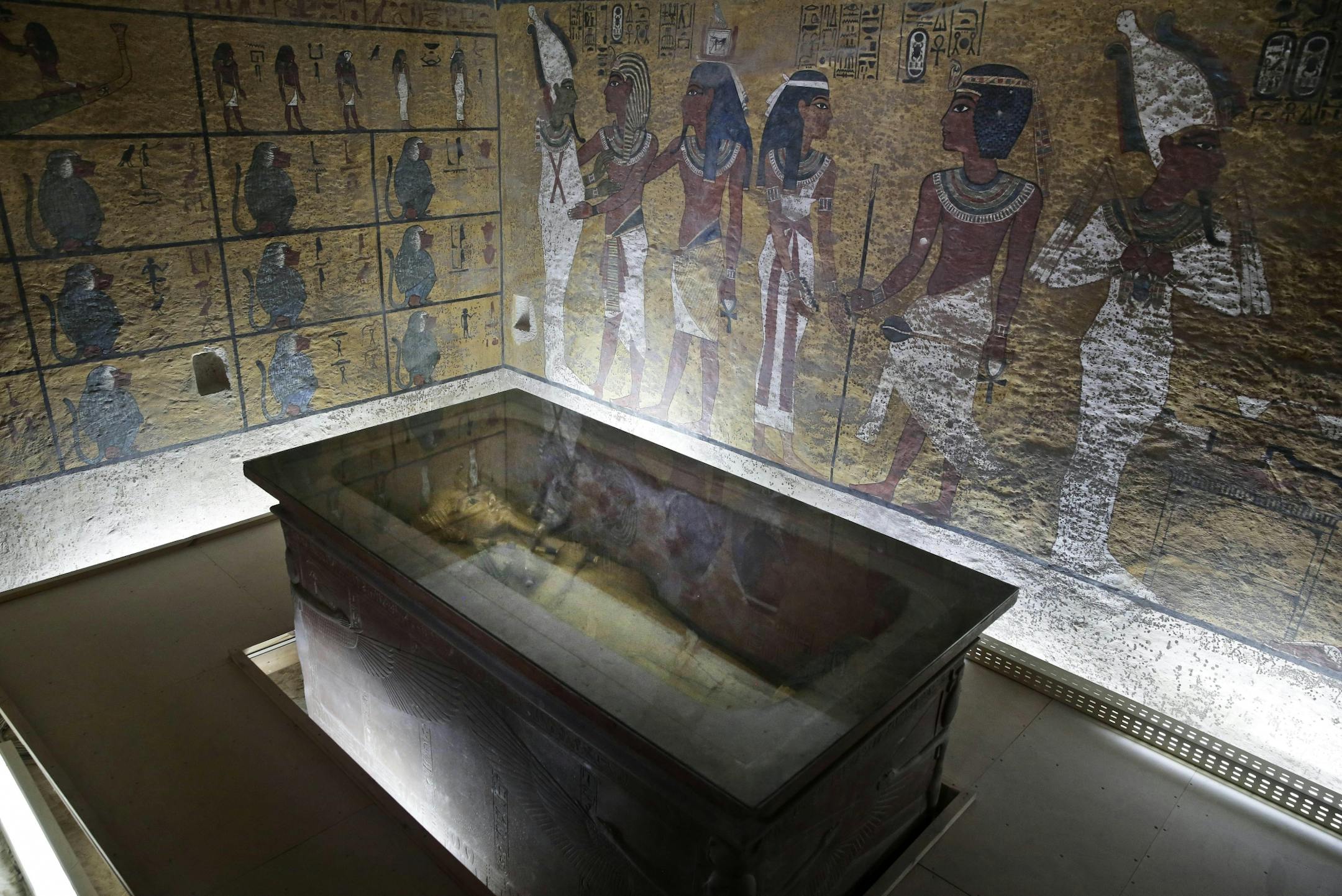
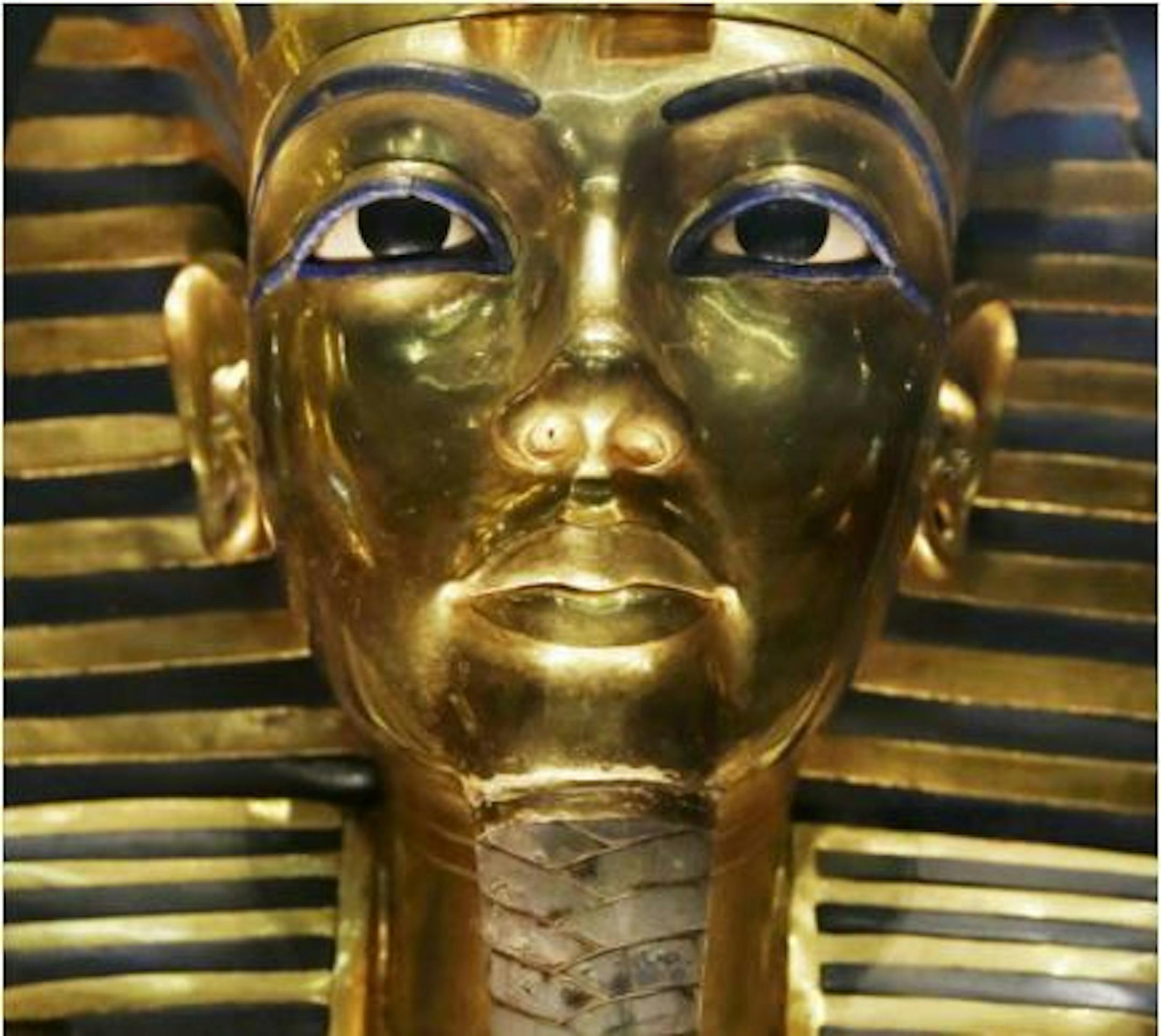
CAIRO — Radar scans of King Tutankhamun's burial chamber have revealed two hidden rooms, a tantalizing discovery that could resolve a mystery as old as the pyramids: What was the fate of Egypt's beautiful Queen Nefertiti?
At a packed Cairo news conference Thursday to announce the find in King Tut's tomb in Luxor, Antiquities Minister Mamdouh el-Damaty declined to comment on whether any royal treasure or more mummies might be inside the rooms.
But he said the unexplored chambers could hold some kind of organic or metal objects.
Most experts say that while the scans might reveal another tomb behind the false walls, it's unlikely to be crammed with solid gold and a royal mummy like Nefertiti, whose 3,300-year-old bust on display in Berlin is one of the most famous symbols of ancient Egypt and classical beauty.
"Quite often, people have done these sorts of scans, and when actually investigated, things have turned out to be nothing like predicted," said Aidan Dodson, an archaeologist at the University of Bristol in England. "If they are chambers, most likely they'd be filled with more funeral objects of Tutankhamun, possibly including some gilded statuettes of gods, or perhaps even the mummy of a young child who predeceased Tut."
Still, the discovery has ignited massive interest, and el-Damaty cast the discovery as potentially huge. He said the radar scans of the chamber, taken last year and analyzed in Japan, will be repeated at the end of the month.
"It means a rediscovery of Tutankhamun ... for Egypt it is a very big discovery, it could be the discovery of the century," el-Damaty said. "It is very important for Egyptian history and for all the world."
The discovery could also renew excitement in Egypt's antiquities and help reinvigorate its flagging tourism industry, which has been hit hard in recent years by political violence, an insurgency in the northern Sinai Peninsula, and persistent attacks since the military's 2013 overthrow of an elected but divisive Islamist president.