

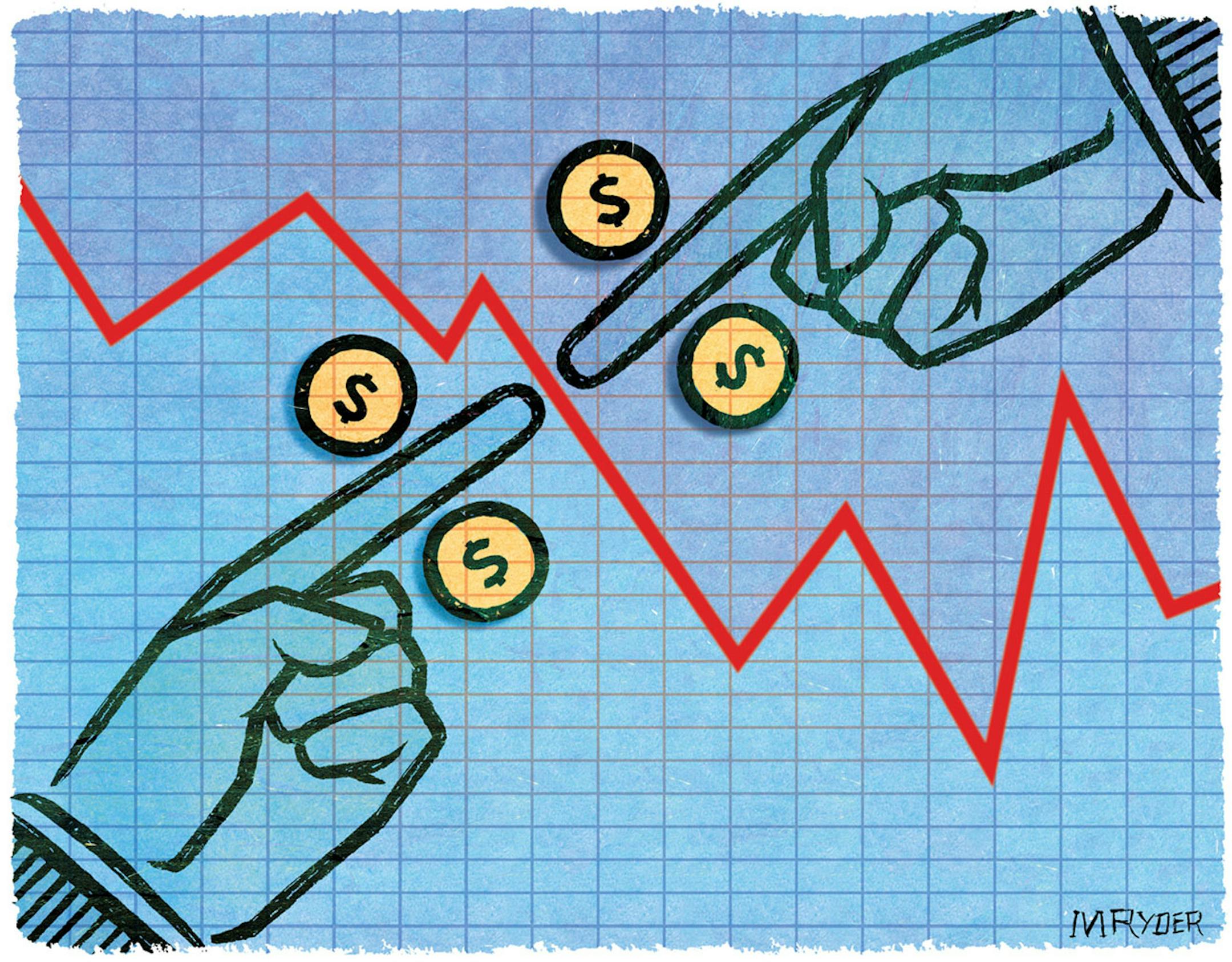
Will 2013 be 1937? This is the question many analysts posed as the stock market dropped after the election. On Nov. 16, they noted that industrial production, a crucial figure, dropped as well.
In this case, "1937" means a market drop similar to the one after the re-election of another Democratic president, Franklin D. Roosevelt, in 1936. The drop wasn't immediate in that case; it came in the first full year after the election. Industrial production plummeted by 34.5 percent. The Dow Jones average dropped by half by 1938.
It's hard to imagine stock indexes dropping by half today, or unemployment rising past 15 percent, as they did in the "depression within the Depression." But the parallels are visible enough to be worth tracing. They have to do with the danger of big government, and can be captured in a few categories:
1. Pre-election spree that sets records. In the old days, federal spending amounted to about 19 percent or 19.5 percent of gross domestic product. That ratio was so reliable that economists took it as a given, the American normal, from which divergence was unnatural and temporary. By the old 19 percent rule, federal spending would have dropped back once the worst of the 2008 economic crisis passed.
That didn't happen. Instead the federal government continued to spend. Most important, even in 2012, when the crisis was long past, the government went on a spree, spending the equivalent of 24.3 percent of the economy.
In 1936, a similar barrier was breached. Up until 1936, federal spending flowed at smaller levels than the spending by states and towns combined, with wartime being the exception. Roosevelt slowly ratcheted up the outlays, and in 1936, Washington spent more than the states and towns. This shift was dizzying for a country based on the principle of federalism, of strong states.
2. Bath of cold water afterward. After this year's election, President Obama made it clear that budgeting was his priority: "I'm ready and willing to make big commitments to make sure that we're locking in the kind of deficit reductions that stabilize our deficit, start bringing it down, start bringing down our debt."
Roosevelt too opened his second term on a sober budget-cutting note. The president, wrote journalist Anne O'Hare McCormick in 1937, was like "the Dutch householder who carefully totes up his accounts every month and who is really annoyed now that he is bent on balancing the budget, that Congress can't stop spending."


