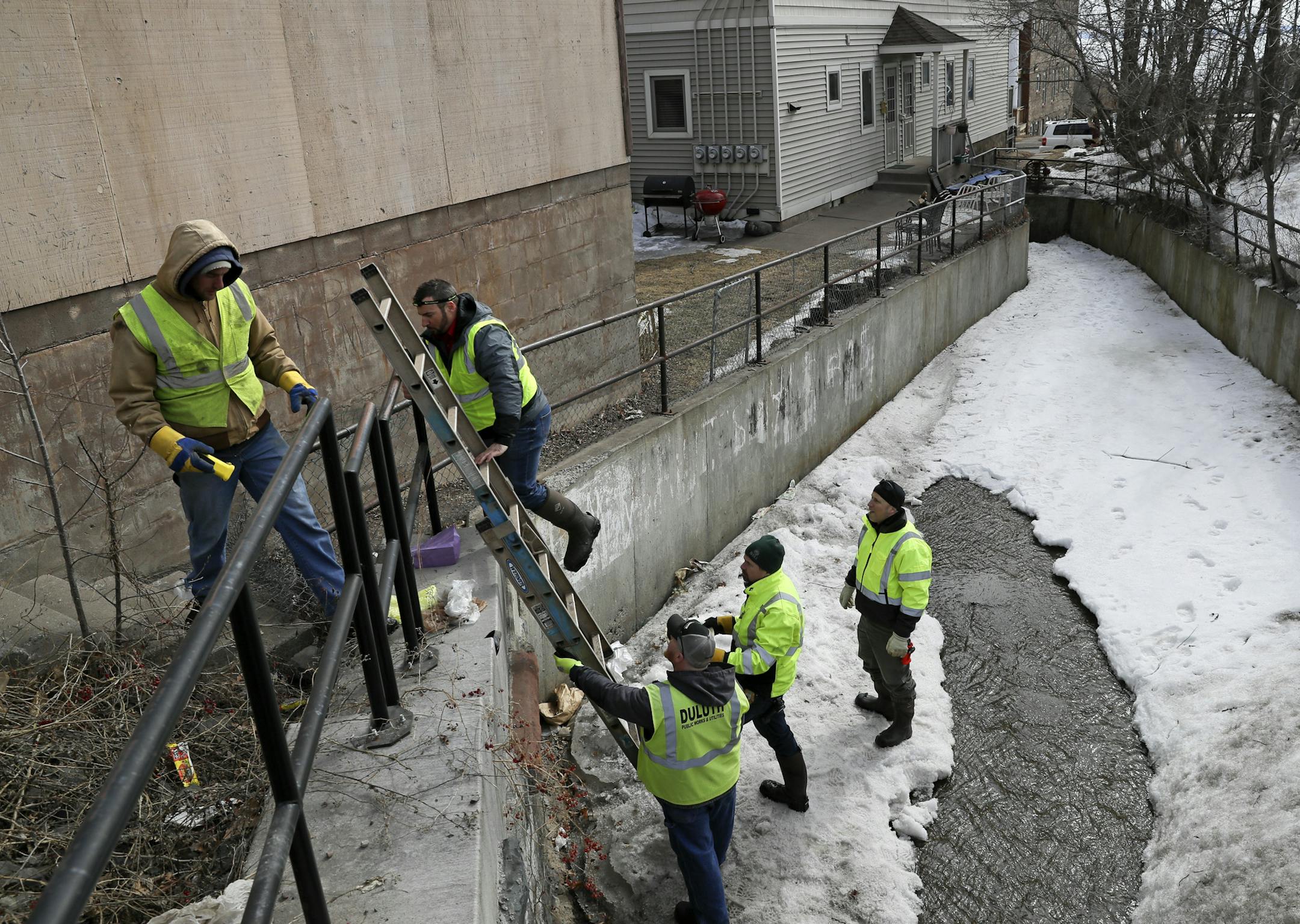
DULUTH - When she bought her first home here nine years ago, Susan Williams thought the small creek emerging from the ground in her backyard was beautiful. It trickles from a concrete outlet into a natural ravine down her East Hillside neighborhood toward Lake Superior.
But Williams was surprised to learn years later that the waterway, named Greys Creek, actually flows right under her house — and that she is responsible for maintaining her section of the nearly century-old, 3 ½-foot concrete pipe surrounding it.
"I try not to focus on what happens in the future," Williams said with a shrug. "We just keep paying for the house and hopefully I'm dead by the time it caves in."
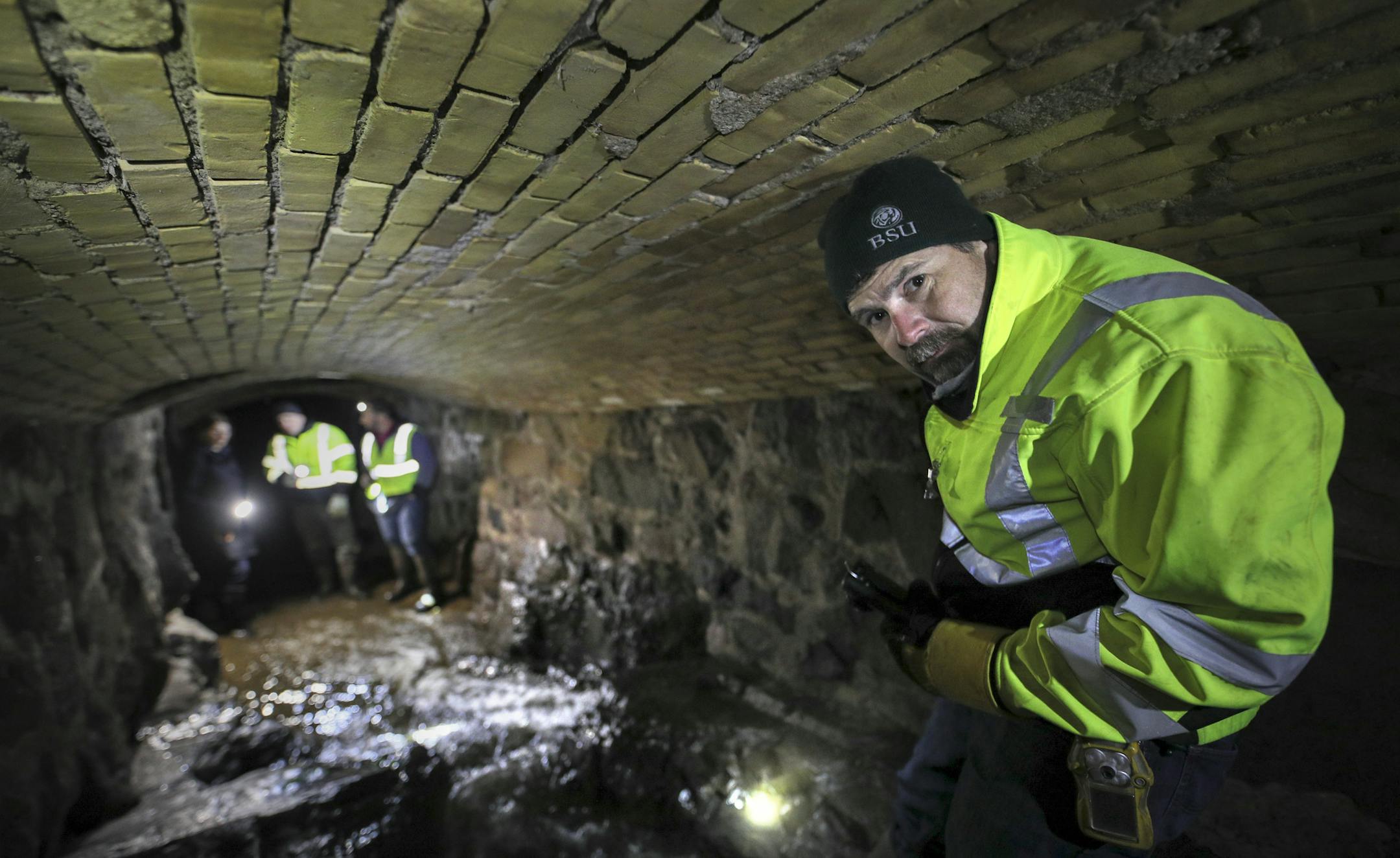
Greys Creek is one of 44 named streams trickling and sometimes gushing their way down Duluth's steep hill toward the great lake. Early developers who valued land in the heart of the city simply built tunnels over parts of the streams, covering them up so they could erect buildings over them.
"It was all about usable space and property a long time ago," explained Todd Carlson, program coordinator in the city's engineering department.
But age and greater water flow caused by climate change and development up the hill have increasingly turned the tunnels into a maintenance worry for city utilities staff. If the wrong section fails during a storm, it can back up streams and cause flooding or undermine roads and create sinkholes. It's a prominent issue during spring snow melt and heavy summer rains.
"A 100-year life span for any piece of infrastructure is pretty long," said Chris Kleist, utility operations supervisor with the city. "Any pipe in the ground is going to fail, it's just a matter of time."
Secret streams
With so much water running down Duluth's nonabsorbent bedrock-and-clay hill, it was easier for early developers to cover up some streams than to try to bridge them all, engineers explained.