

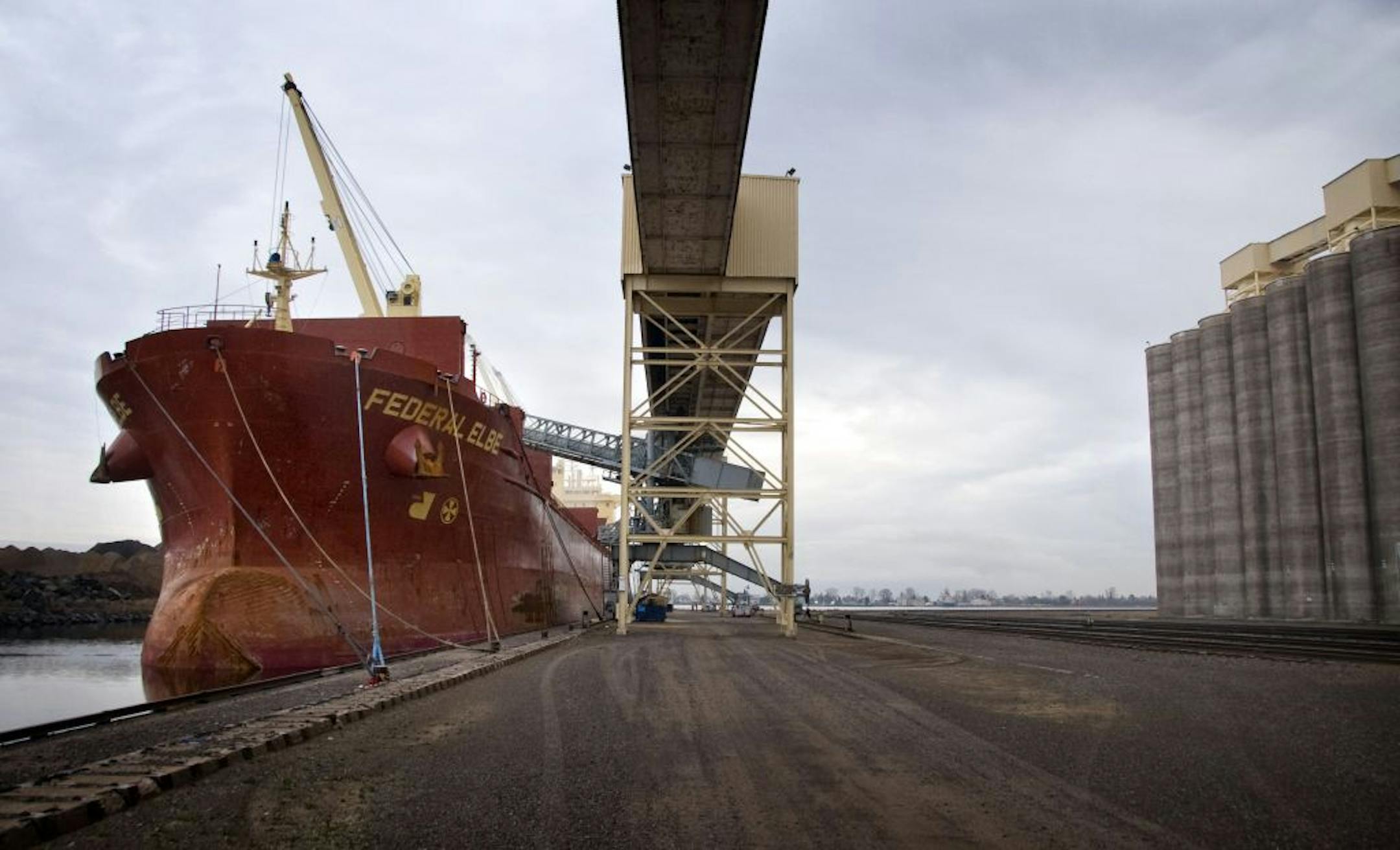
The port of Duluth-Superior's performance this year has been a tale of a ship half-full and a ship half-empty.
The port's important grain trade seems likely to hit a historic low this year, the confluence of several agricultural economic trends. But coal exports have been a bright spot, ore shipments have been strong and overall tonnage is up about 1 percent over a year ago.
The Twin Ports of Duluth and Superior don't handle the sexy stuff at stake in the just-settled East Coast port dispute -- containers full of everything from Italian shoes to Irish whiskey. But Duluth-Superior is by far the biggest U.S. port on the Great Lakes, hosting around 900 ships this year.
Indeed, it's a bigger port than such prime U.S. seaports as Seattle, Oakland and Charleston, S.C. -- at least when cargo is measured in tons, not container volume.
Big container ports are the glamour kings of the world's maritime business. There, giant freighters load and unload metal boxes full of "general cargo" -- the stuff needed to stock the world's retail outlets and keep its assembly lines humming.
The container trade bypassed the Great Lakes a long time ago, a product of unfavorable economics and the St. Lawrence Seaway's shallow shipping lanes. But the Joe Lunchbucket bulk cargo trade hangs on.
Through November, the Twin Ports handled 32.5 million tons, according to the Duluth Seaway Port Authority. Grain made up only about 1 million tons of that, but it is one of the port's most economically valuable cargoes. And grain shipments were down 28 percent from a year ago.
"This is probably the low, and I've been here 40 years," said Chuck Hilleren, owner of Guthrie Hubner Inc., a Duluth-based vessel agency that handles shipowners' interests when their ships are in port.


