

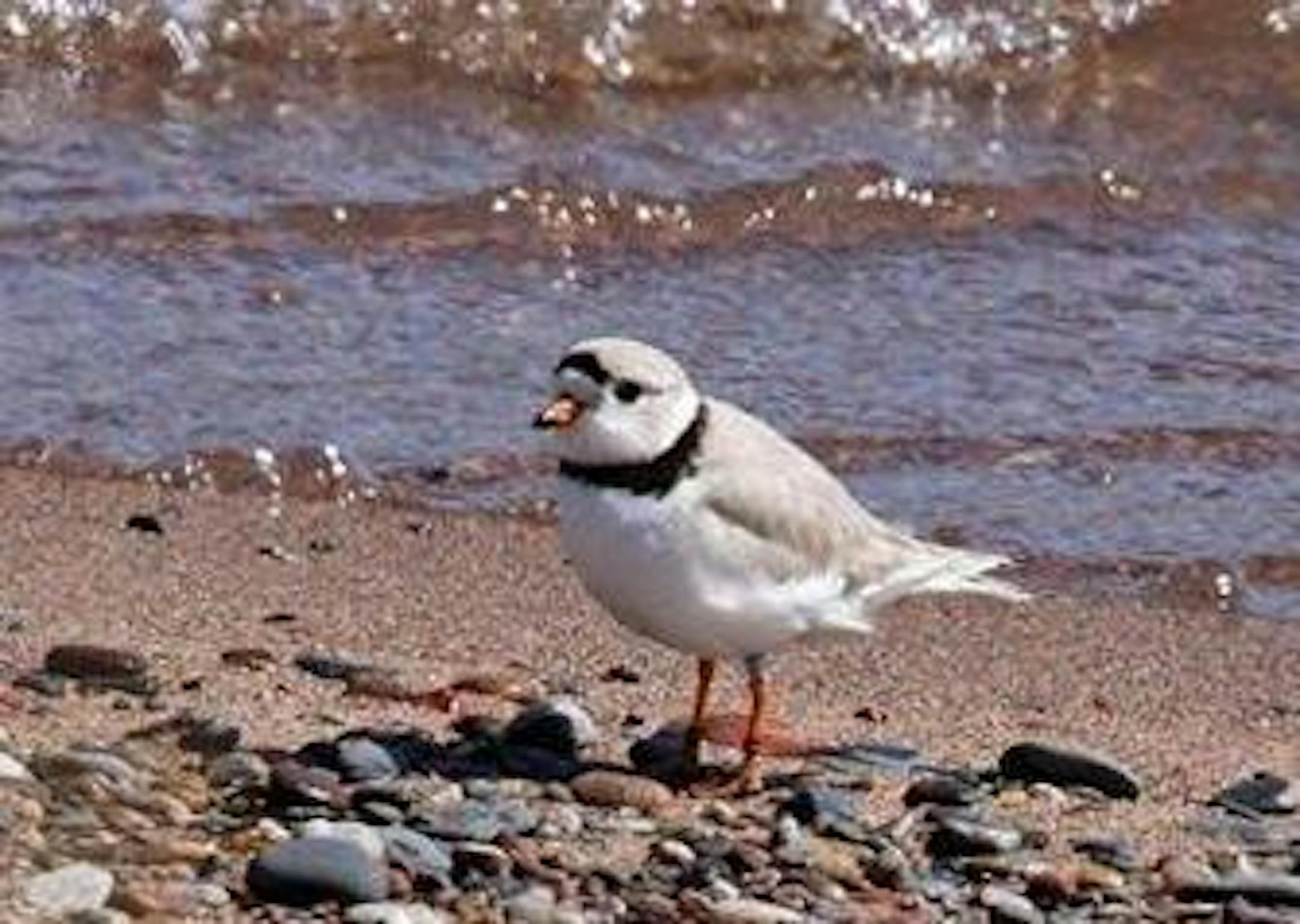
Kris Eilers spotted it even as she was putting up signs three weeks ago at Duluth's Park Point to try and protect it: a small gray and white bird, its neck and forehead banded in black, an orange beak, orange legs. A piping plover.
Now Eilers, her environmental group and Duluth city officials are hoping that the male plover, an endangered shorebird once plentiful around Lake Superior, and another male seen recently will stay long enough to mate with a female and nurture fledglings before leaving town.
To encourage the birds to nest at Park Point, the tip of a 7-mile-long sand spit that juts into the lake, volunteers are asking residents and visitors — especially those with unleashed dogs — to steer clear of a mile-long stretch of beach near Sky Harbor Airport through mid-June. That's the area where spotters saw the plovers.
Eilers said that a couple of people wandered into the area on Sunday, a warm but overcast day, but that most avoided it. There were few people on the beach Monday, which was rainy and windy.
One of the plovers was seen again last Tuesday, she said.
"There have been years that we didn't get reports of any stopping here, so even to see one is pretty special," said Eilers, project manager for the St. Louis River Alliance, a nonprofit that seeks to protect and restore the river. The habitat project is funded with a grant from the U.S. Fish and Wildlife Service.
"What makes this really unusual is that they've never hung around this long before," she said. "We've never seen one for more than a day, and we've never seen two."
It's been nearly 30 years since a pair of piping plovers nested in the Duluth area. Now the only breeding population on the western end of Lake Superior, consisting of six nesting pairs, is located on Wisconsin's Apostle Islands.


