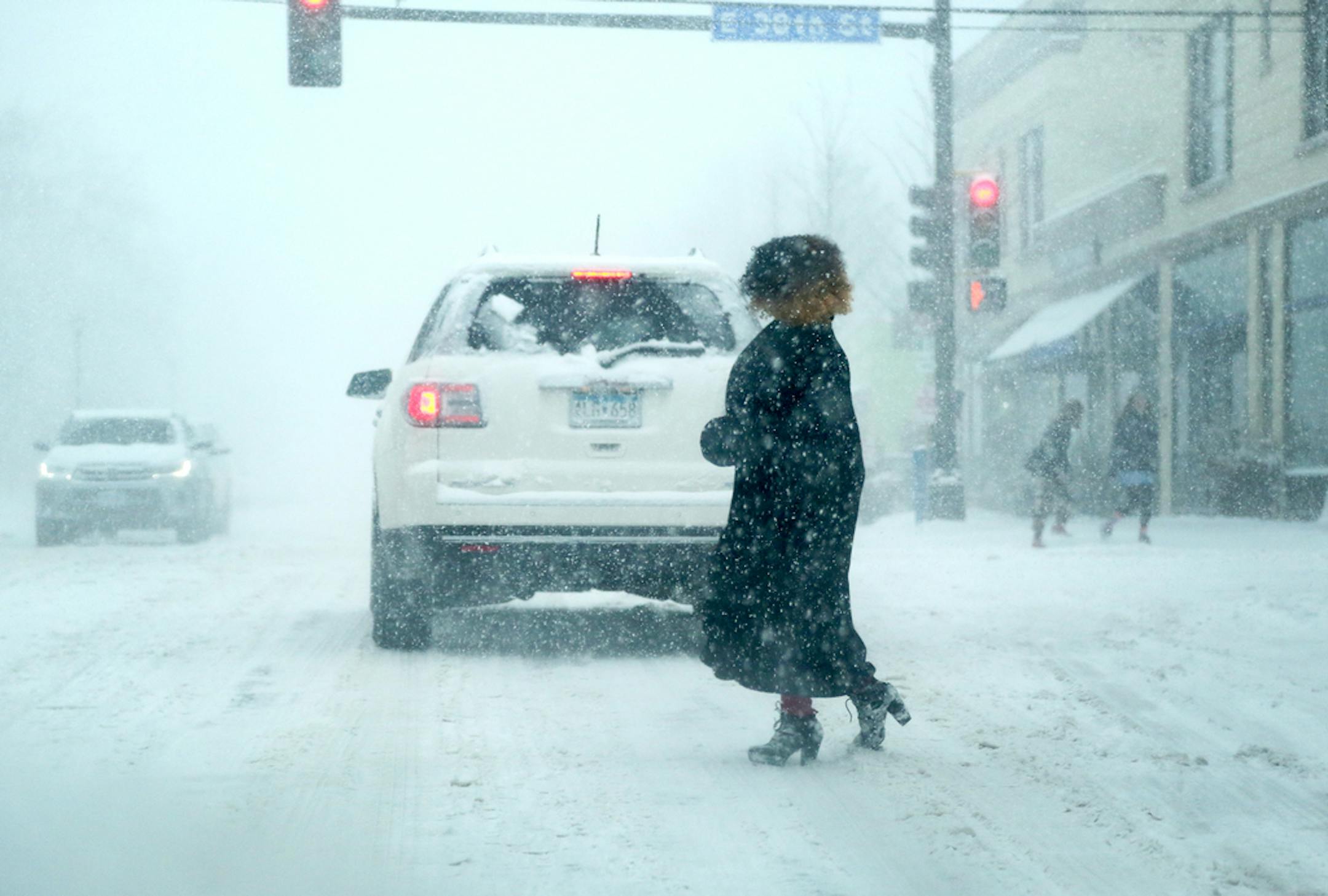
A blizzard packing heavy snow and high winds raged across much of western and southern Minnesota late Saturday, making roads impassable in much of the region, and the dangerous weather is likely to continue well into Sunday evening.
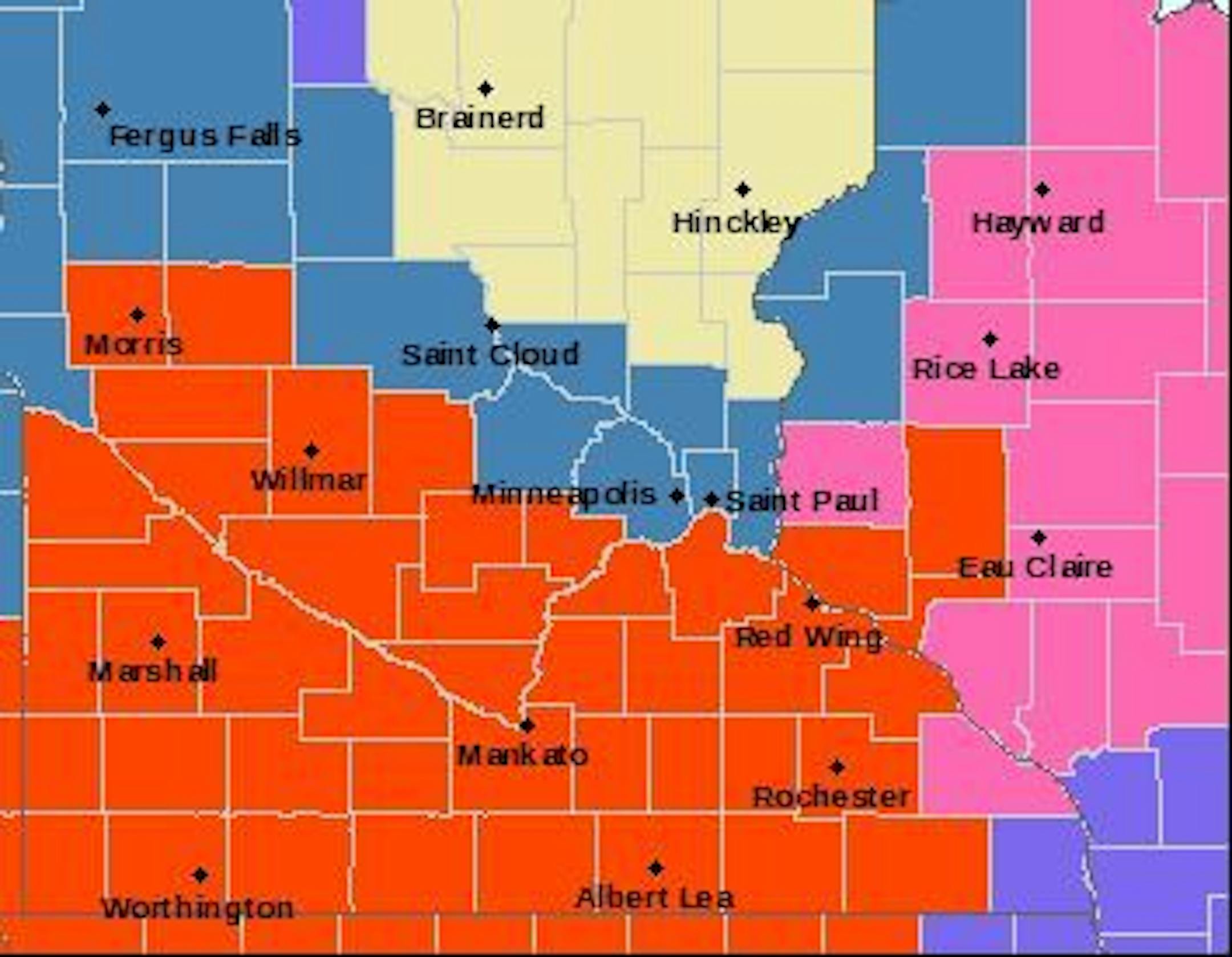
Falling snow followed by winds gusting as high as 50 miles an hour were creating whiteout conditions across southern Minnesota, from Worthington, Marshall, Willmar and Morris in the west, to Mankato and Albert Lea in the central part of the state, to Red Wing, Wabasha and Rochester in the east.
Late Saturday, Gov. Tim Walz declared a state of emergency in Freeborn and Steele counties, authorizing National Guard personnel to rescue stranded travelers. Armories will be open in Albert Lea and Owatonna to help those caught in the heavy snow and strong wind.
A few hours earlier, the National Weather Service had extended the blizzard warning northward, adding Stevens, Pope, Kandiyohi, Swift and Meeker counties to a broad zone that also included south metro counties Carver, Scott and Dakotas. It also upgraded the severity of forecasts for Hennepin, Ramsey and Washington counties, placing them under a winter storm warning.
Several counties in western Wisconsin were also under blizzard or winter storm warnings, with up to a foot of snow expected in Eau Claire and other communities.
"Please stay off the roads tonight," the National Weather Service in Chanhassen warned. By 10:30 p.m., whiteout conditions had made roads nearly impassable in south-central Minnesota. A long stretch of Interstate 90 was closed and many smaller highways and county roads were closed. In the Rochester area and around Red Wing, Kenyon, Kasson, Owatonna, New Ulm, St. James and Windom, visibility was near zero.
By the time it's all over, snow totals will vary widely — from just an inch or two in western Minnesota, 4 inches in the Twin Cities, 9 inches in Red Wing and 11 or 12 inches in Albert Lea, Rochester and Eau Claire.
But snow totals aren't the best gauge of weather severity, the Weather Service warned — it's the high winds blowing whatever snow is at hand around that will create the greatest danger — low or zero visibility.